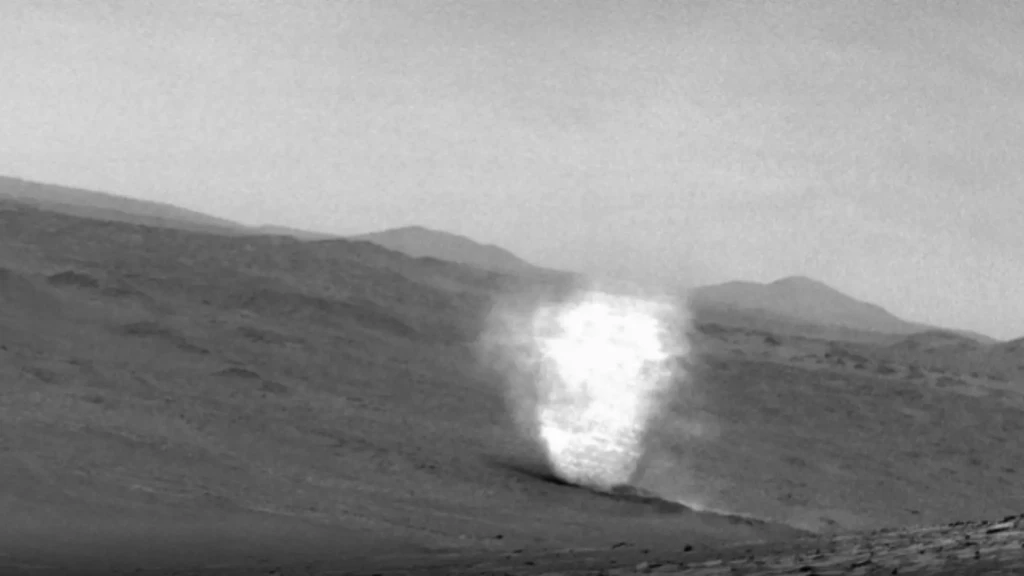
NASA’s latest discovery on Mars has dramatically changed scientists’ understanding of the planet’s atmosphere. Its Mars Perseverance rover has recorded sounds of sparks and mini sonic booms in ‘dust devils’, confirming a long-standing theory. In a study published in the journal Nature, researchers said that this finding could help understand the Martian atmospheric chemistry, climate and habitability. It also has implications for future robotic and crew missions.
Snap, crackle, boom ⚡
Our Perseverance Mars rover recorded a long-suspected phenomena—electrical sparks and mini-sonic booms created by dust devils on Mars. Learn more about this discovery and what it means for our understanding of the Red Planet: https://t.co/k1YvAWNe9g pic.twitter.com/J0oFZUtvCM
— NASA (@NASA) December 8, 2025
Dust devils and their significance
Dust devils are tiny tornado-like features that form from rising and rotating columns of warm air. These features interest scientists because they can reveal a lot about wind patterns and surface-atmosphere interaction on Mars. They can also reveal how dust lifting can affect the planet’s climate over time. The size of dust devils could range anywhere from a few feet to nearly 20 kilometres high.
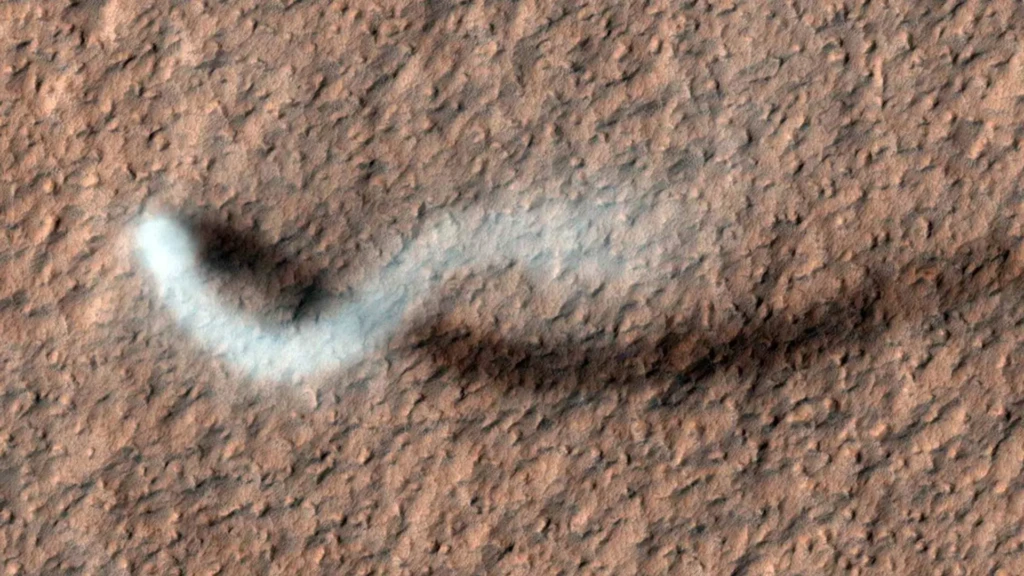
Perseverance’s SuperCam first picked up the electrical sounds in October 2021 and has made 55 recordings over the last four years (two years on Mars). NASA says sixteen of them were recorded when the dust devils passed directly over the rover.
NASA rover’s audio of dust devil sparks
NASA has released crackling sounds of the sparks captured by the SuperCam instrument’s microphone. Scientists had theorised that the friction generated by the dust grains rubbing against each other may produce the electrical discharges, and named it the triboelectric effect.
“Triboelectric charging of sand and snow particles is well documented on Earth, particularly in desert regions, but it rarely results in actual electrical discharges,” said Baptiste Chide, a member of the Perseverance science team in a statement. “On Mars, the thin atmosphere makes the phenomenon far more likely, as the amount of charge required to generate sparks is much lower than what is required in Earth’s near-surface atmosphere.”
Apart from the dust devils, the rover’s mic also recorded sparks produced during regional dust storms – which can cover the entire planet and increase the presence of atmospheric dust. However, researchers say high dust density is not enough to produce the sparks and that the electrical buildup is rather linked to localised and turbulent lifting of sand and dust.
ALSO READ: Mars On Earth: Why NASA Is Training Humans To Live Like Martians
Why this discovery matters
Researchers said that the presence of electric sparks could reveal what chemical processes may be happening on Mars. These sparks could charge the Martian atmosphere, activating chemical reactions which may produce oxidised compounds like chlorates and percholates. These compounds can destroy organic molecules, including some components of life, and alter the chemical balance.
This may be the reason why methane vanishes rapidly from the planet. If methane produced by ancient microbes are wiped out due to these electric discharges, finding clues of past life may be more difficult than it already is. Understanding the dangers of these sparks may also help NASA protect equipment of future spacecraft and understand the risks current robotic missions face.
ALSO READ: Neil deGrasse Tyson Shares The Only Reasons Humans May Reach Mars