Blue Terra Journal

  • Home
  • Spaceflight
    SpaceflightShow More
    SpaceX Starship
    SpaceX Starship’s 12th Test Flight Targeted On May 20; No Booster Catch This Time
    May 13, 2026
    SpaceX's Starship during launch rehearsal.
    SpaceX Completes Starship’s Launch Rehearsal For Flight 12 This Week; What To Expect?
    May 13, 2026
    China US rivalry reach new heights.
    ‘Rival’ China Is Unintentionally The Biggest Motivator For NASA’s Moon Ambitions
    April 28, 2026
    NASA Voyager 1 illustration
    NASA Shuts Down Another Voyager 1 Instrument; How Long Can This Spacecraft Last?
    April 22, 2026
    NASA's SR-1 Freedom spacecraft.
    What Is NASA’s SR-1 Freedom Mission? The First Nuclear Reactor In Space Explained
    March 27, 2026
  • Astronomy
    AstronomyShow More
    Artist's impression of NASA's Psyche spacecraft.
    NASA’s Psyche Spacecraft Will Zoom Past Mars Today On Its Way To Metal-Rich Asteroid
    May 15, 2026
    Comet MAPS image
    Video: Comet MAPS destroyed after plunging into the Sun; event caught by NASA missions
    April 18, 2026
    Apophis asteroid flyby
    ‘God Of Chaos’: Apophis Asteroid Will Fly Dangerously Close To Earth Exactly 5 Years From Now
    April 14, 2026
    Meteor spotted over Houston.
    Video Captures 1-Ton Meteor Exploding Over Houston Skies, NASA Releases Statement
    March 22, 2026
    NASA black hole simulation
    Fall Into A Black Hole With This Incredibly Scary Simulation Made By NASA
    March 18, 2026
  • India
    IndiaShow More
    Shubhanshu Shukla aboard the ISS.
    ISRO Astronaut Shubhanshu Shukla Awarded Ashoka Chakra For Heroic Ax-4 Mission
    February 9, 2026
    ISRO's PSLV lifts off to space.
    ISRO’s PSLV Rocket Suffers Third Stage Failure After Successful Liftoff; Payloads Lost
    January 23, 2026
    Dhruva Space team at ISRO facility.
    India’s Dhruva Space To Launch 10 Missions, Including 1st Northeastern Satellite, On ISRO’s PSLV
    January 12, 2026
    ISRO's PSLV rocket
    ISRO To Seek Redemption With PSLV-C62 Mission Launch On January 12
    January 12, 2026
    ISRO SSLV
    ISRO’s SSLV Rocket Just Got Better After Latest Third Stage Test Fire
    December 31, 2025
  • Artemis
    ArtemisShow More
    NASA Artemis II mission
    Welcome Home! NASA’s Artemis II Astronauts Are Back After Historic Moon Voyage
    April 22, 2026
    NASA Artemis II iPhone image
    iPhones Reigned Supreme On NASA’s Artemis II Moon Mission
    April 10, 2026
    Artemis II NASA
    All Eyes On Scary Artemis II Reentry As NASA Moon Mission Nears Completion
    April 9, 2026
    NASA Artemis II
    NASA Artemis II Crew Names Moon Crater ‘Carroll’ After Commander Reid Wiseman’s Late Wife
    April 7, 2026
    NASA Artemis II
    Watch: NASA Artemis II Astronauts Begin Flyby Of Moon’s Far Side For The First Time Ever
    April 9, 2026
  • More
    • About
    • Privacy Policy
    • Terms
    • Contact

Blue Terra Journal

  • Home
  • Spaceflight
  • Astronomy
  • India
  • Artemis
Search
  • Pages
    • About
    • Contact
    • Privacy Policy
    • Terms

Home - Astronomy - SpaceX Launches NASA’s Exoplanet Exploring Telescope Pandora On Twilight Mission

Astronomy

SpaceX Launches NASA’s Exoplanet Exploring Telescope Pandora On Twilight Mission

Pandora will observe at least 20 exoplanets in one year of its planned operations.

Harsh Vardhan
Last updated: January 19, 2026 12:51 PM
Harsh Vardhan
Share
4 Min Read
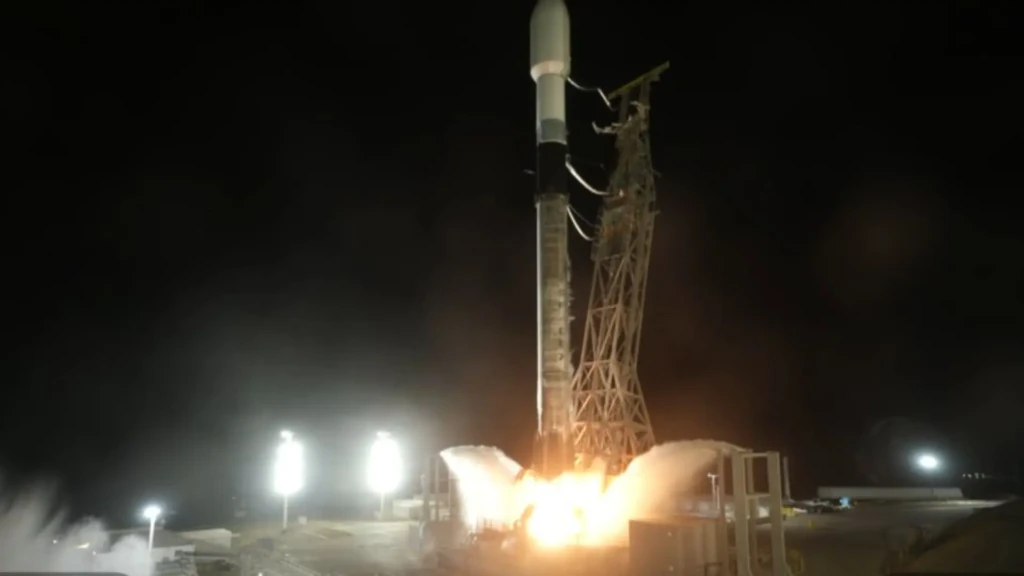
SpaceX launches NASA telescope.
SpaceX's Falcon 9 lifts off with NASA's Pandora telescope. Image: SpaceX
SHARE

SpaceX on Sunday launched NASA’s Pandora telescope on the Twilight rideshare mission. The Falcon 9 rocket lifted off at 7:15 pm IST [9:45 am EST] from the Vandenberg Space Force Base in California carrying about 40 payloads including the telescope. Apart from Pandora, NASA owns two other payloads – shoebox-sized satellites named BlackCAT (Black Hole Coded Aperture Telescope) and SPARCS (Star-Planet Activity Research CubeSat) to find answers to fundamental questions like “how does the universe work?” and “are we alone?”

Liftoff! pic.twitter.com/3MTtlIVlAA

— SpaceX (@SpaceX) January 11, 2026

In a post on X, SpaceX said – “The payloads on this mission will be deployed to a dusk-dawn Sun-synchronous orbit, meaning the spacecraft will be flying roughly along the boundary between day and night, or Twilight, where it’s always breaking dawn.”
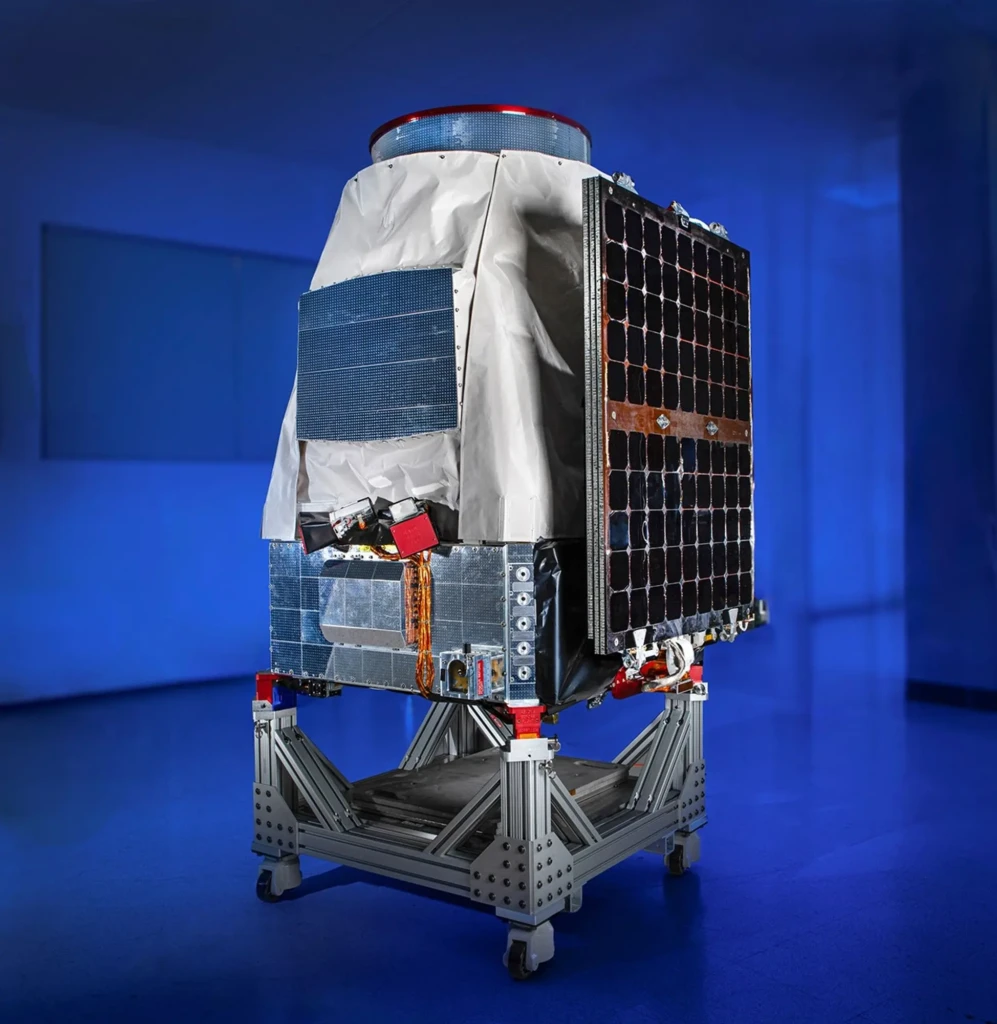
NASA's Pandora telescope.
The Pandora telescope. Image: NASA

Pandora will be deployed at an altitude of 600 kilometres where it will study the atmospheres of exoplanets – worlds outside our solar system – and their stars in visible and near-infrared light. Weighing 325 kilograms, Pandora carries a 17-inch-wide (45 centimeters) primary mirror and a near-infrared detector that was a spare developed for the James Webb Space Telescope.

Objectives of NASA’s Pandora telescope

The telescope’s objective is studying the atmosphere of exoplanets as they pass in front of their stars as seen from our perspective – an event called a transit.

When starlight passes through a planet’s atmosphere, it interacts with elements like water and oxygen. Pandora will collect this light carrying ‘fingerprints’ of a planetary atmosphere and its spectroscope will split it into different colours to determine what elements the atmosphere is composed of.

Pandora will observe at least 20 exoplanets in one year of its planned operations. Apart from studying the planetary atmosphere, it will also help scientists differentiate signals of water and oxygen from an alien world and a star. The surface of stars have brighter and darker regions that grow, shrink, and change position over time and some of these areas may contain the same chemicals that astronomers hope to find in the planet’s atmosphere, such as water vapour.

The telescope will look at each planet and its star 10 times, with each observation lasting a total of 24 hours.

“The long stares with both detectors are critical for tracing the exact origins of elements and compounds scientists consider indicators of potential habitability,” Jordan Karburn, Pandora’s deputy project manager said in a statement.

Daniel Apai, professor at Arizona University where the mission’s operations center lies, said that Pandora’s data will “help scientists interpret observations from past and current missions like NASA’s Kepler and Webb space telescopes. And it will guide future projects in their search for habitable worlds.”

ALSO READ: Meet Pandora, The NASA Observatory Made With James Webb Telescope’s Spare Parts

ALSO READ: James Webb Space Telescope Finds Strongest Clues Of Atmosphere On A Scorching Super-Earth


TAGGED:ExoplanetNASAPandora telescopeSpaceX
Share This Article
Facebook Pinterest Whatsapp Whatsapp LinkedIn Copy Link Print

Latest News

Artist's impression of NASA's Psyche spacecraft.
NASA’s Psyche Spacecraft Will Zoom Past Mars Today On Its Way To Metal-Rich Asteroid
Astronomy
SpaceX Starship
SpaceX Starship’s 12th Test Flight Targeted On May 20; No Booster Catch This Time
Spaceflight
SpaceX's Starship during launch rehearsal.
SpaceX Completes Starship’s Launch Rehearsal For Flight 12 This Week; What To Expect?
Spaceflight
China US rivalry reach new heights.
‘Rival’ China Is Unintentionally The Biggest Motivator For NASA’s Moon Ambitions
Spaceflight

You Might Also Like

NASA Artemis II
Artemis

NASA Artemis II Crew Names Moon Crater ‘Carroll’ After Commander Reid Wiseman’s Late Wife

April 7, 2026
Elon Musk SpaceX
Spaceflight

Elon Musk Confirms SpaceX Is Going Public. Will It Affect His Mars Plan?

January 2, 2026
Voyager 1 illustration
Astronomy

NASA’s Voyager 1 Will Be One Light-Day Away From Earth In 2026 – What This Means

January 26, 2026
ISRO LVM3.
India

ISRO Gears Up To Launch SpaceX Rival’s Broadband Satellite On Dec 15

December 15, 2025
© 2026, Blue Terra Journal
  • About
  • Privacy Policy
  • Terms
  • Contact
Welcome Back!

Sign in to your account

Username or Email Address
Password

Lost your password?