Blue Terra Journal

  • Home
  • Spaceflight
    SpaceflightShow More
    NASA's MAVEN orbiter
    NASA’s MAVEN Orbiter Confirmed Dead On Mars; What Did It Achieve In 11 Years?
    June 5, 2026
    Blue Origin's New Glenn rocket.
    What Blue Origin’s New Glenn Explosion Means For NASA And Its Moon Ambitions
    June 10, 2026
    Elon Musk SpaceX Starship
    Elon Musk’s SpaceX launches new Starship V3 on 12th mission, but it wasn’t flawless
    June 5, 2026
    SpaceX Starship
    SpaceX Starship’s 12th Test Flight Targeted On May 20; No Booster Catch This Time
    May 31, 2026
    SpaceX's Starship during launch rehearsal.
    SpaceX Completes Starship’s Launch Rehearsal For Flight 12 This Week; What To Expect?
    May 13, 2026
  • Astronomy
    AstronomyShow More
    The galactic bulge by Euclid telescope. Credit: European Space Agency
    This Euclid Telescope Image Of Milky Way’s Centre With 60 Million Stars May Break Your Brain
    June 27, 2026
    UFO videos shared by US government
    UFO Alert! US Government Releases New Videos Of Glowing Orbs Floating In The Sky
    June 13, 2026
    Meteor over Mayon volcano
    Watch: Flashy Green Meteor Streaks Over Erupting Volcano In The Philippines
    May 27, 2026
    Artist's impression of NASA's Psyche spacecraft.
    NASA’s Psyche Spacecraft Will Zoom Past Mars Today On Its Way To Metal-Rich Asteroid
    May 15, 2026
    Comet MAPS image
    Video: Comet MAPS destroyed after plunging into the Sun; event caught by NASA missions
    April 18, 2026
  • India
    IndiaShow More
    Shubhanshu Shukla aboard the ISS.
    ISRO Astronaut Shubhanshu Shukla Awarded Ashoka Chakra For Heroic Ax-4 Mission
    February 9, 2026
    ISRO's PSLV lifts off to space.
    ISRO’s PSLV Rocket Suffers Third Stage Failure After Successful Liftoff; Payloads Lost
    January 23, 2026
    Dhruva Space team at ISRO facility.
    India’s Dhruva Space To Launch 10 Missions, Including 1st Northeastern Satellite, On ISRO’s PSLV
    January 12, 2026
    ISRO's PSLV rocket
    ISRO To Seek Redemption With PSLV-C62 Mission Launch On January 12
    January 12, 2026
    ISRO SSLV
    ISRO’s SSLV Rocket Just Got Better After Latest Third Stage Test Fire
    December 31, 2025
  • Artemis
    ArtemisShow More
    NASA Artemis III crew
    NASA Artemis III: Meet The Astronauts Who Will Set The Stage For 2028 Moon Landing
    June 10, 2026
    Blue Origin's New Glenn rocket.
    What Blue Origin’s New Glenn Explosion Means For NASA And Its Moon Ambitions
    June 10, 2026
    NASA Artemis II mission
    Welcome Home! NASA’s Artemis II Astronauts Are Back After Historic Moon Voyage
    April 22, 2026
    NASA Artemis II iPhone image
    iPhones Reigned Supreme On NASA’s Artemis II Moon Mission
    April 10, 2026
    Artemis II NASA
    All Eyes On Scary Artemis II Reentry As NASA Moon Mission Nears Completion
    April 9, 2026
  • More
    • About
    • Privacy Policy
    • Terms
    • Contact

Blue Terra Journal

  • Home
  • Spaceflight
  • Astronomy
  • India
  • Artemis
Search
  • Pages
    • About
    • Contact
    • Privacy Policy
    • Terms

Home - Astronomy - This Euclid Telescope Image Of Milky Way’s Centre With 60 Million Stars May Break Your Brain

Astronomy

This Euclid Telescope Image Of Milky Way’s Centre With 60 Million Stars May Break Your Brain

The image was captured over 26 hours.

Blue Terra Journal
Last updated: June 27, 2026 11:50 AM
Blue Terra Journal
Share
3 Min Read
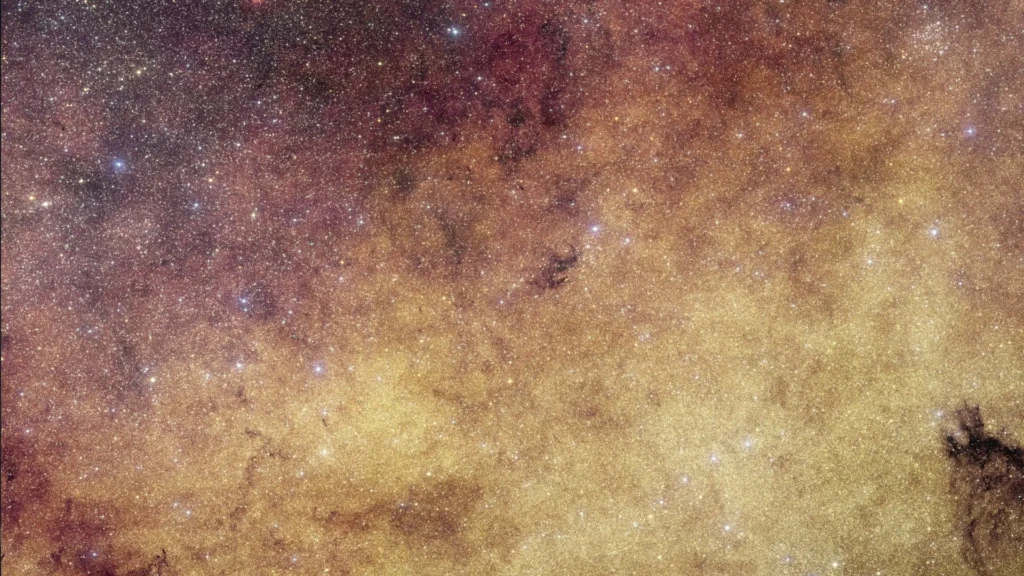
The galactic bulge by Euclid telescope. Credit: European Space Agency
SHARE

The European Space Agency (ESA) has dropped another picture captured by the Euclid telescope and it’s possible it might break your brain. Captured over 26 hours, this brand new image focuses on the centre of the Milky Way and features over 60 million stars. ESA says that Euclid, which is installed in space at second Lagrange Point (L2), leveraged its multi-wavelength observation capability to observe a patch of the sky larger than the full Moon (when viewed from Earth) in visible light.

Today, our Euclid mission revealed the largest, most detailed photo ever taken of our galaxy’s centre in visible light.

🔗 https://t.co/JFEIkHuraz pic.twitter.com/9YZr5AAbVH

— European Space Agency (@esa) June 24, 2026

The image was taken during a survey in March 2025 to observe the galactic bulge – the extremely bright inner region of the Milky Way.

Euclid telescope and its groundbreaking science

A team of astronomers led by Jean-Philippe Beaulieu of the Institut d’Astrophysique de Paris in France wanted to study this bulge because they believe it’s the perfect place to search for exoplanets using a phenomenon called microlensing.

Microlensing is a form of gravitational lensing – the phenomenon in which the gravity of a foreground object (stars or galaxies) bends the light from a background object, causing the latter to appear brighter and slightly magnified.
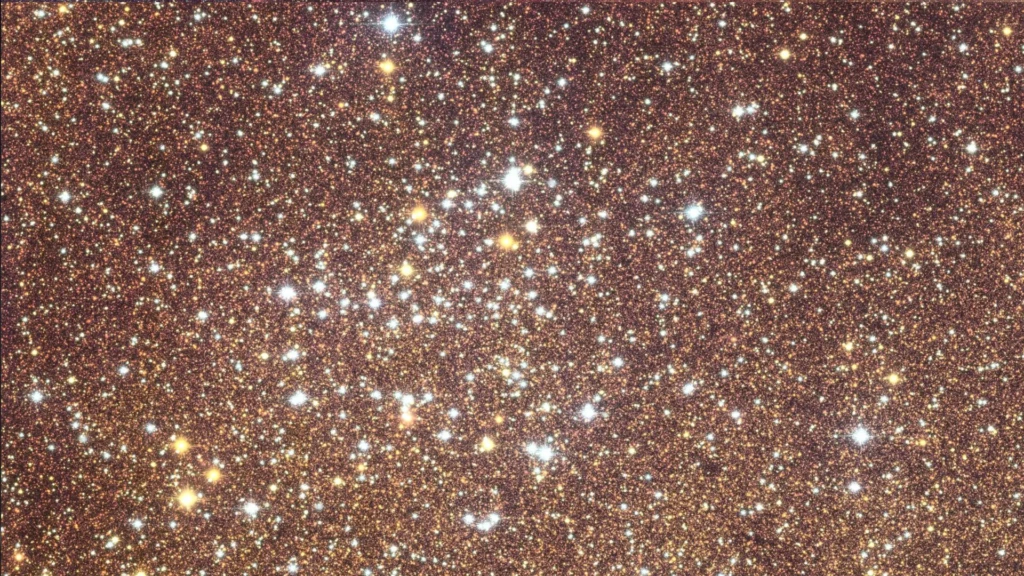
The galactic bulge by Euclid telescope.
The galactic bulge by Euclid telescope. Credit: European Space Agency

ESA says that Euclid is capable of unravelling massive faraway objects through gravitational lensing but the new image could help scientists study small-scale lenses and discover exoplanets. Microlensing happens when two stars align with the observer and when one star crosses another, the nearest one (to that of the observer) acts as a magnifying glass. During this magnification, the light bends and the background star’s light gets brighter. But if there’s a planet orbiting the nearer star, it also bends the light in an uneven way; this acts as a telltale sign of the presence of a planet.

“To catch microlensing, you need to observe parts of the sky that are crowded with stars, such as close to the centre of our galaxy,” Jean-Philippe Beaulieu said in a statement. Almost 300 exoplanets have been discovered using this technique in the last two decades all towards the Milky Way’s centre.

“This image from Euclid includes 51 known planetary systems – and it will assist in studying many more that will be found,” he said.

Euclid is primarily built to explore the composition and evolution of the dark universe. It launched in July 2023 and is tasked with creating a 3D map of the universe by observing billions of galaxies out to 10 billion light-years. While planetary science is secondary, Euclid’s exceptional capabilities make it scientifically valuable.


TAGGED:astronomyESAEuclid TelescopeEuropean Space AgencyMilky Way
Share This Article
Facebook Pinterest Whatsapp Whatsapp LinkedIn Copy Link Print

Latest News

UFO videos shared by US government
UFO Alert! US Government Releases New Videos Of Glowing Orbs Floating In The Sky
Astronomy
NASA Artemis III crew
NASA Artemis III: Meet The Astronauts Who Will Set The Stage For 2028 Moon Landing
Artemis
NASA's MAVEN orbiter
NASA’s MAVEN Orbiter Confirmed Dead On Mars; What Did It Achieve In 11 Years?
Spaceflight
Blue Origin's New Glenn rocket.
What Blue Origin’s New Glenn Explosion Means For NASA And Its Moon Ambitions
Spaceflight Artemis

You Might Also Like

Comet 3I/ATLAS NASA
Astronomy

NASA Finally Releases Comet 3I/ATLAS Images Captured From Mars & Beyond

November 26, 2025
NASA Comet 3I/ATLAS
Astronomy

Is 3I/ATLAS Really A Comet? Its Strange Anti-Tail May Hold The Answer

January 6, 2026
Comet 3I/ATLAS captured by NASA SPHEREx telescope
Astronomy

NASA Releases New Comet 3I/ATLAS Pictures As It Glows Up On An Outbound Journey

February 8, 2026
Comet 3I/ATLAS
Astronomy

Comet 3I/ATLAS Live Tracking: How To Keep An Eye On This Interstellar Visitor?

January 5, 2026
© 2026, Blue Terra Journal
  • About
  • Privacy Policy
  • Terms
  • Contact
Welcome Back!

Sign in to your account

Username or Email Address
Password

Lost your password?