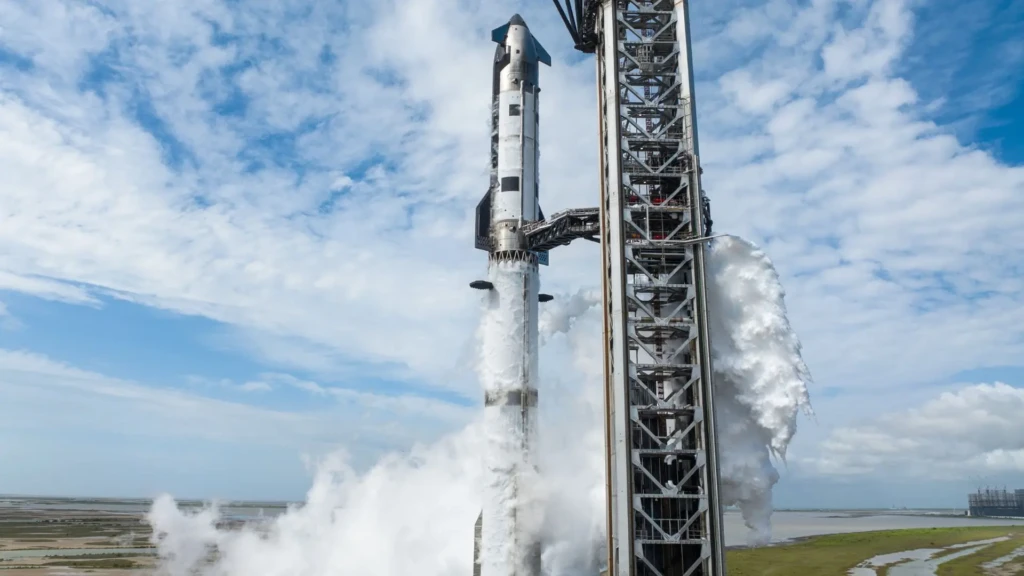
The Starship rocket will be flying on its 12th test flight on May 20, SpaceX announced on May 13. The liftoff is targeted at 4 am IST (5:30 pm CT) from the Starbase in Texas and the live webcast will begin 30 minutes prior to liftoff.
Flight 12 will mark the debut of Starship’s V3 rocket which has undergone several upgrades from its previous iteration. Equipped with new Raptor 3 engines, Starship’s Super Heavy Booster and upper stage, which are a few metres taller, will produce significantly higher thrust. The upcoming mission will also mark Starship’s first launch from Pad 2 at Starbase.
Starship’s twelfth flight test will debut the next generation Starship and Super Heavy vehicles, powered by the next evolution of the Raptor engine and launching from a newly designed pad at Starbase. The launch is targeted as early as Tuesday, May 19 → https://t.co/2gZQUxS6mm pic.twitter.com/JxmpL2WE4w
— SpaceX (@SpaceX) May 12, 2026
Objectives set by SpaceX for Starship flight 12
SpaceX says the primary objective of the mission is to test new pieces of the V3 rocket in the stressful flight environment.
The other objectives are similar to previous missions such as executing the Booster’s launch, ascent, stage separation, boostback burn, and landing burn at an offshore landing point in the Gulf of Mexico. Notably, SpaceX will not attempt to catch the Booster using the launch tower this time as well.
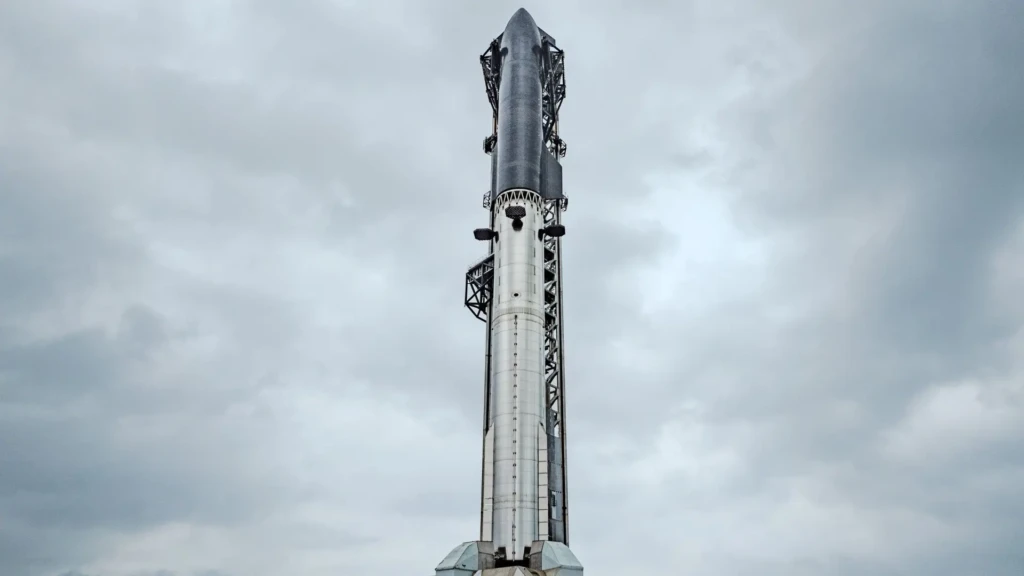
Besides, the upper stage will be required to deploy 22 Starlink simulators similar in size to next-gen Starlink satellites and teams will assess the performance of the heatshield during reentry.
Changes made on Starship V3
The first major change is reduction of grid fins on the Booster from four to three. These fins help it steer back to Earth after launch and are also used to catch the Booster by the tower. Their size have also been increased by 50 per cent and made significantly stronger, SpaceX says.
Moreover, the new Raptor 3 engines now produce 250 tf (551,000 lbf) up from 230 tf (507,000 lbf), while vacuum engines produce 275 tf (606,000 lbf) up from 258 tf (568,000 lbf), providing greater thrust than previous versions of the rocket. All this has been done while reducing the engine’s mass from 1,630 kg to 1,525 kg.
SpaceX has also changed the interstage which connects the Booster with the upper stage and it has been upgraded to protect the Booster from the upper stage’s exhaust during stage separation. There are numerous other changes in the propulsion and avionics systems of the rocket stages that will provide better vehicle control and an efficient flight.
ALSO READ: NASA Moon Base: How The US Will Spend $20 Billion On This Ambitious Project
ALSO READ: What Is NASA’s SR-1 Freedom Mission? The First Nuclear Reactor In Space Explained