Blue Terra Journal

  • Home
  • Spaceflight
    SpaceflightShow More
    SpaceX Starship
    SpaceX Starship’s 12th Test Flight Targeted On May 20; No Booster Catch This Time
    May 13, 2026
    SpaceX's Starship during launch rehearsal.
    SpaceX Completes Starship’s Launch Rehearsal For Flight 12 This Week; What To Expect?
    May 13, 2026
    China US rivalry reach new heights.
    ‘Rival’ China Is Unintentionally The Biggest Motivator For NASA’s Moon Ambitions
    April 28, 2026
    NASA Voyager 1 illustration
    NASA Shuts Down Another Voyager 1 Instrument; How Long Can This Spacecraft Last?
    April 22, 2026
    NASA's SR-1 Freedom spacecraft.
    What Is NASA’s SR-1 Freedom Mission? The First Nuclear Reactor In Space Explained
    March 27, 2026
  • Astronomy
    AstronomyShow More
    Artist's impression of NASA's Psyche spacecraft.
    NASA’s Psyche Spacecraft Will Zoom Past Mars Today On Its Way To Metal-Rich Asteroid
    May 15, 2026
    Comet MAPS image
    Video: Comet MAPS destroyed after plunging into the Sun; event caught by NASA missions
    April 18, 2026
    Apophis asteroid flyby
    ‘God Of Chaos’: Apophis Asteroid Will Fly Dangerously Close To Earth Exactly 5 Years From Now
    April 14, 2026
    Meteor spotted over Houston.
    Video Captures 1-Ton Meteor Exploding Over Houston Skies, NASA Releases Statement
    March 22, 2026
    NASA black hole simulation
    Fall Into A Black Hole With This Incredibly Scary Simulation Made By NASA
    March 18, 2026
  • India
    IndiaShow More
    Shubhanshu Shukla aboard the ISS.
    ISRO Astronaut Shubhanshu Shukla Awarded Ashoka Chakra For Heroic Ax-4 Mission
    February 9, 2026
    ISRO's PSLV lifts off to space.
    ISRO’s PSLV Rocket Suffers Third Stage Failure After Successful Liftoff; Payloads Lost
    January 23, 2026
    Dhruva Space team at ISRO facility.
    India’s Dhruva Space To Launch 10 Missions, Including 1st Northeastern Satellite, On ISRO’s PSLV
    January 12, 2026
    ISRO's PSLV rocket
    ISRO To Seek Redemption With PSLV-C62 Mission Launch On January 12
    January 12, 2026
    ISRO SSLV
    ISRO’s SSLV Rocket Just Got Better After Latest Third Stage Test Fire
    December 31, 2025
  • Artemis
    ArtemisShow More
    NASA Artemis II mission
    Welcome Home! NASA’s Artemis II Astronauts Are Back After Historic Moon Voyage
    April 22, 2026
    NASA Artemis II iPhone image
    iPhones Reigned Supreme On NASA’s Artemis II Moon Mission
    April 10, 2026
    Artemis II NASA
    All Eyes On Scary Artemis II Reentry As NASA Moon Mission Nears Completion
    April 9, 2026
    NASA Artemis II
    NASA Artemis II Crew Names Moon Crater ‘Carroll’ After Commander Reid Wiseman’s Late Wife
    April 7, 2026
    NASA Artemis II
    Watch: NASA Artemis II Astronauts Begin Flyby Of Moon’s Far Side For The First Time Ever
    April 9, 2026
  • More
    • About
    • Privacy Policy
    • Terms
    • Contact

Blue Terra Journal

  • Home
  • Spaceflight
  • Astronomy
  • India
  • Artemis
Search
  • Pages
    • About
    • Contact
    • Privacy Policy
    • Terms

Home - Spaceflight - SpaceX’s Starlink Satellite Is Breaking Apart In Orbit, Will Crash Within Weeks

Spaceflight

SpaceX’s Starlink Satellite Is Breaking Apart In Orbit, Will Crash Within Weeks

The satellite is tumbling and creating debris.

Harsh Vardhan
Last updated: December 22, 2025 12:51 PM
Harsh Vardhan
Share
4 Min Read
SpaceX Starlink
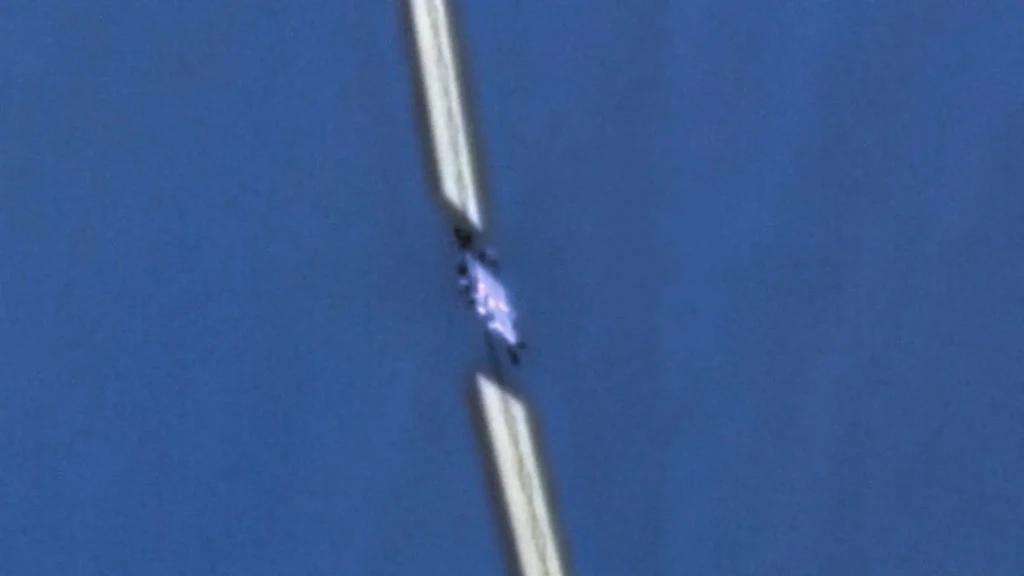
The doomed Starlink satellite captured over Alaska. Image: Vantor
SHARE

A Starlink satellite is breaking apart in space and will soon re-enter Earth. The SpaceX-owned company Starlink announced on December 18 that one of its internet-providing satellites experienced an anomaly followed by a loss of signal 418 kilometres above surface. 

According to Starlink, the satellite is largely intact but it’s tumbling and creating debris.

On December 17, Starlink experienced an anomaly on satellite 35956, resulting in loss of communications with the vehicle at 418 km. The anomaly led to venting of the propulsion tank, a rapid decay in semi-major axis by about 4 km, and the release of a small number of trackable…

— Starlink (@Starlink) December 18, 2025

“The anomaly led to venting of the propulsion tank, a rapid decay in semi-major axis by about 4 km, and the release of a small number of trackable low relative velocity objects,” Starlink said in a statement. It is expected to re-enter Earth’s atmosphere and meet its full demise in a few weeks. Starlink assured that the satellite does not pose any danger to the International Space Station (ISS) since its trajectory is below the orbital lab.
SpaceX Starlink
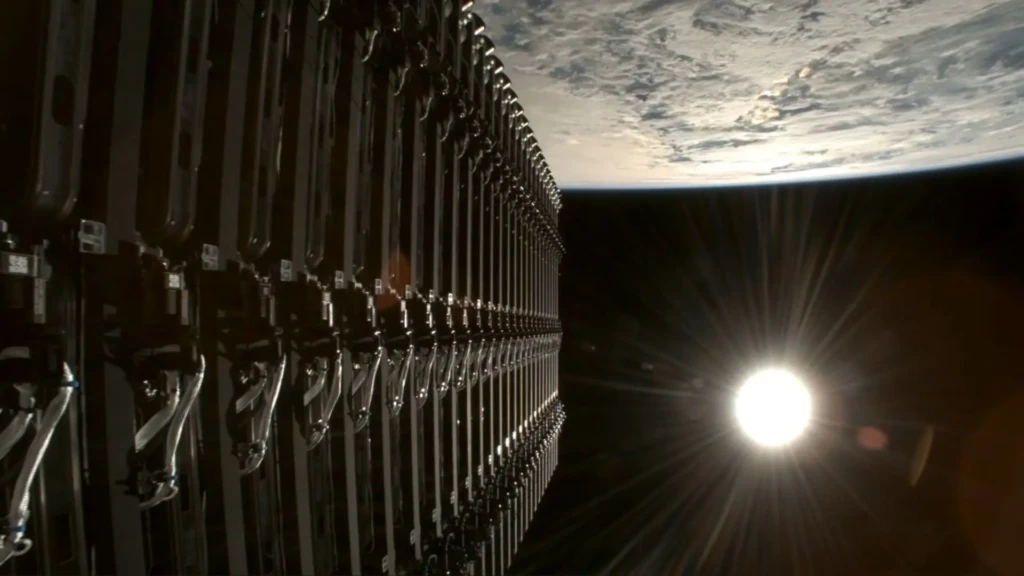
Onboard camera views from a Starlink satellite. Image: SpaceX

“As the world’s largest satellite constellation operator, we are deeply committed to space safety. We take these events seriously. Our engineers are rapidly working to root cause and mitigate the source of the anomaly and are already in the process of deploying software to our vehicles that increases protections against this type of event,” it further added.

Doomed Starlink photographed from Earth

Michael Nicolls, VP of Starlink engineering, shared a picture of the doomed satellite captured by Vantor. Nicolls noted that the image was taken when the satellite was over Alaska from a distance of 241 kilometres a day after the anomaly occurred. The satellite appears intact although there is some amount of trackable debris.

Imagery collected by Vantor’s WorldView-3 satellite about 1 day after the anomaly shows that @starlink Satellite 35956 is largely intact. The 12-cm resolution image was collected over Alaska from 241 km away. We appreciate the rapid response by @vantortech to provide this… https://t.co/8OcTZsk5Gx pic.twitter.com/1PafjFwuRP

— Michael Nicolls (@michaelnicollsx) December 20, 2025

“Additional data suggest that there is a small number of trackable debris objects from the event, and we expect the satellite and debris to reenter and fully demise within weeks,” Nicolls posted on X.

This comes about a week after another Starlink satellite avoided a collision with one of the nine satellites launched from China. Nicolls had revealed that the satellites came as close as 200 metres from each other at an altitude of 560 kilometres.

Starlink currently has the largest constellation with nearly 9,500 satellites and SpaceX wants to expand it to 42,000. Not only these satellites are reportedly hindering astronomy but their fragmentation is adding to the growing debris problem.

ALSO READ: SpaceX’s Starlink Narrowly Dodged A Satellite Launched From China

ALSO READ: China’s Shenzhou-20 Mission Crisis Exposes Growing Menace Of Space Debris

TAGGED:ChinaSpace DebrisSpaceXstarlink
Share This Article
Facebook Pinterest Whatsapp Whatsapp LinkedIn Copy Link Print

Latest News

Artist's impression of NASA's Psyche spacecraft.
NASA’s Psyche Spacecraft Will Zoom Past Mars Today On Its Way To Metal-Rich Asteroid
Astronomy
SpaceX Starship
SpaceX Starship’s 12th Test Flight Targeted On May 20; No Booster Catch This Time
Spaceflight
SpaceX's Starship during launch rehearsal.
SpaceX Completes Starship’s Launch Rehearsal For Flight 12 This Week; What To Expect?
Spaceflight
China US rivalry reach new heights.
‘Rival’ China Is Unintentionally The Biggest Motivator For NASA’s Moon Ambitions
Spaceflight

You Might Also Like

Jared Isaacman
Spaceflight

Jared Isaacman Is Back As Trump Renominates Him For NASA Head Post

November 9, 2025
Russia's Soyuz 2.1a rocket
Spaceflight

Russia Launches Three Humans, Including NASA Astronaut, To ISS On Thanksgiving

November 28, 2025
International Space Station gets extension to beat China
Spaceflight

Watch Out China! US Proposes Extending International Space Station Lifespan To 2032

March 10, 2026
NASA Japan
Spaceflight

NASA Lends Support To Japan After H3 Rocket Failure; Here’s What Went Wrong

December 23, 2025
© 2026, Blue Terra Journal
  • About
  • Privacy Policy
  • Terms
  • Contact
Welcome Back!

Sign in to your account

Username or Email Address
Password

Lost your password?