Blue Terra Journal

  • Home
  • Spaceflight
    SpaceflightShow More
    NASA's MAVEN orbiter
    NASA’s MAVEN Orbiter Confirmed Dead On Mars; What Did It Achieve In 11 Years?
    June 5, 2026
    Blue Origin's New Glenn rocket.
    What Blue Origin’s New Glenn Explosion Means For NASA And Its Moon Ambitions
    June 10, 2026
    Elon Musk SpaceX Starship
    Elon Musk’s SpaceX launches new Starship V3 on 12th mission, but it wasn’t flawless
    June 5, 2026
    SpaceX Starship
    SpaceX Starship’s 12th Test Flight Targeted On May 20; No Booster Catch This Time
    May 31, 2026
    SpaceX's Starship during launch rehearsal.
    SpaceX Completes Starship’s Launch Rehearsal For Flight 12 This Week; What To Expect?
    May 13, 2026
  • Astronomy
    AstronomyShow More
    The galactic bulge by Euclid telescope. Credit: European Space Agency
    This Euclid Telescope Image Of Milky Way’s Centre With 60 Million Stars May Break Your Brain
    June 27, 2026
    UFO videos shared by US government
    UFO Alert! US Government Releases New Videos Of Glowing Orbs Floating In The Sky
    June 13, 2026
    Meteor over Mayon volcano
    Watch: Flashy Green Meteor Streaks Over Erupting Volcano In The Philippines
    May 27, 2026
    Artist's impression of NASA's Psyche spacecraft.
    NASA’s Psyche Spacecraft Will Zoom Past Mars Today On Its Way To Metal-Rich Asteroid
    May 15, 2026
    Comet MAPS image
    Video: Comet MAPS destroyed after plunging into the Sun; event caught by NASA missions
    April 18, 2026
  • India
    IndiaShow More
    Shubhanshu Shukla aboard the ISS.
    ISRO Astronaut Shubhanshu Shukla Awarded Ashoka Chakra For Heroic Ax-4 Mission
    February 9, 2026
    ISRO's PSLV lifts off to space.
    ISRO’s PSLV Rocket Suffers Third Stage Failure After Successful Liftoff; Payloads Lost
    January 23, 2026
    Dhruva Space team at ISRO facility.
    India’s Dhruva Space To Launch 10 Missions, Including 1st Northeastern Satellite, On ISRO’s PSLV
    January 12, 2026
    ISRO's PSLV rocket
    ISRO To Seek Redemption With PSLV-C62 Mission Launch On January 12
    January 12, 2026
    ISRO SSLV
    ISRO’s SSLV Rocket Just Got Better After Latest Third Stage Test Fire
    December 31, 2025
  • Artemis
    ArtemisShow More
    NASA Artemis III crew
    NASA Artemis III: Meet The Astronauts Who Will Set The Stage For 2028 Moon Landing
    June 10, 2026
    Blue Origin's New Glenn rocket.
    What Blue Origin’s New Glenn Explosion Means For NASA And Its Moon Ambitions
    June 10, 2026
    NASA Artemis II mission
    Welcome Home! NASA’s Artemis II Astronauts Are Back After Historic Moon Voyage
    April 22, 2026
    NASA Artemis II iPhone image
    iPhones Reigned Supreme On NASA’s Artemis II Moon Mission
    April 10, 2026
    Artemis II NASA
    All Eyes On Scary Artemis II Reentry As NASA Moon Mission Nears Completion
    April 9, 2026
  • More
    • About
    • Privacy Policy
    • Terms
    • Contact

Blue Terra Journal

  • Home
  • Spaceflight
  • Astronomy
  • India
  • Artemis
Search
  • Pages
    • About
    • Contact
    • Privacy Policy
    • Terms

Home - Spaceflight - Watch Out China! US Proposes Extending International Space Station Lifespan To 2032

Spaceflight

Watch Out China! US Proposes Extending International Space Station Lifespan To 2032

'If America hesitates, China will fill the void.'

Blue Terra Journal
Last updated: March 10, 2026 12:22 AM
Blue Terra Journal
Share
4 Min Read
International Space Station gets extension to beat China
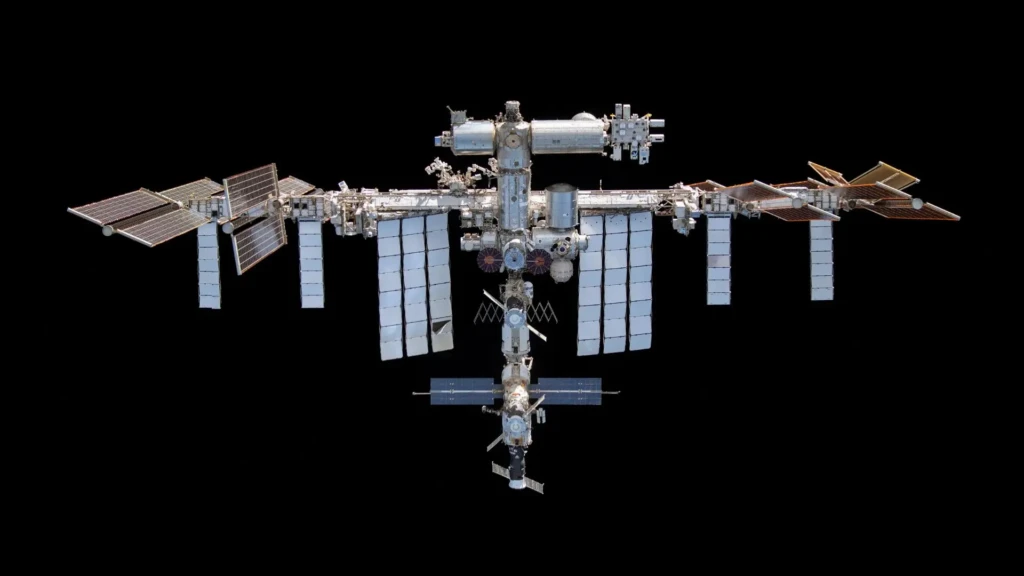
The International Space Station. Image: ESA
SHARE

A NASA Authorisation bill has proposed extending the lifespan of the International Space Station (ISS) two years beyond its planned retirement in 2030. The bill approved by the US Senate Committee on Commerce, Science and Transportation outlined several objectives for NASA to achieve, including stopping China from outrunning the Americans in the space domain.

The NASA Authorisation bill says that an extension for the ISS to 2032 is necessary “to avoid a gap in continuous human presence and capabilities in LEO, thus avoiding ceding leadership to China before commercial stations are ready.” The ISS is managed by the US, Russia, Europe, Canada and Japan. Russia has announced that it will exit the partnership in 2028, leaving just four players keeping the lab afloat.

US plans to extend International Space Station lifespan to beat China.
The International Space Station. Image: NASA

NASA had announced plans to deorbit the ISS by early 2031 and even awarded SpaceX more than $800 million to develop a spacecraft that would pull the orbital lab from low-Earth orbit. The idea is to crash the space station into Point Nemo of the Pacific Ocean and make way for private space stations that would ensure human presence in orbit.

US genuinely concerned about rival China

The bill explicitly names China as a rival, calling for American dominance in the modern era space race. “The United States is in an intensifying strategic space race with the People’s Republic of China, spanning Earth’s orbit, the Moon, and the broader expanse of deep space,” it states.

“Beijing is rapidly advancing its lunar ambitions, expanding its on-orbit capabilities, constructing supporting infrastructure beyond Earth, and promoting alternative governance frameworks such as the International Lunar Research Station – all with a clear objective: dominate the Moon, control strategic terrain in space, and write the rules of the 21st century,” the bill further says.

NASA administrator Jared Isaacman has also vowed to beat China to the Moon, something which he reiterated during the Senate hearing in December after his nomination as the agency chief.

The race back to the Moon is measured in months.
⁰China has made its ambitions clear. They’re going to get there BEFORE 2030.

America must lead on the ultimate high ground of space—returning astronauts to the Moon and winning the second space race, and we’re going to take… pic.twitter.com/QEQpmazRLm

— NASA Administrator Jared Isaacman (@NASAAdmin) March 6, 2026

Calling China a “great rival,” Isaacman said that falling behind in space would mean the shift of “balance of power on Earth.”

Isaacman, the billionaire founder of Shift4 payments company, is currently leading NASA through the Artemis Program, which has suffered a slew of delays allowing China to catch up. Beijing wants to land humans on the Moon by 2030.

Artemis II is currently scheduled for launch in April this year followed by two Moon landing missions in 2028, given NASA sticks to schedule.

ALSO READ: Four Moon Missions By 2028? How NASA Envisions Artemis Program After Sweeping Changes

ALSO READ: NASA Shifts Moon Landing To Artemis IV, Alters Artemis III To Test Mission

TAGGED:ArtemisChinaInternational Space StationmoonNASA
Share This Article
Facebook Pinterest Whatsapp Whatsapp LinkedIn Copy Link Print

Latest News

The galactic bulge by Euclid telescope. Credit: European Space Agency
This Euclid Telescope Image Of Milky Way’s Centre With 60 Million Stars May Break Your Brain
Astronomy
UFO videos shared by US government
UFO Alert! US Government Releases New Videos Of Glowing Orbs Floating In The Sky
Astronomy
NASA Artemis III crew
NASA Artemis III: Meet The Astronauts Who Will Set The Stage For 2028 Moon Landing
Artemis
NASA's MAVEN orbiter
NASA’s MAVEN Orbiter Confirmed Dead On Mars; What Did It Achieve In 11 Years?
Spaceflight

You Might Also Like

Neil deGrasse Tyson's thoughts on Mars.
Spaceflight

Neil deGrasse Tyson Shares The Only Reasons Humans May Reach Mars

November 14, 2025
Russia Soyuz
Spaceflight

Russia’s Baikonur Pad Collapses After Soyuz Launch To International Space Station

November 28, 2025
China rivals Jared Isaacman's NASA
Artemis

NASA Chief Nominee Jared Isaacman Reiterates Pledge To Beat China In Moon Race

December 12, 2025
Hubble discovers Cloud-9.
Astronomy

Hubble Telescope Uncovers New Object ‘Cloud-9’ – A ‘Failed Galaxy’ With No Stars

January 13, 2026
© 2026, Blue Terra Journal
  • About
  • Privacy Policy
  • Terms
  • Contact
Welcome Back!

Sign in to your account

Username or Email Address
Password

Lost your password?