Blue Terra Journal

  • Home
  • Spaceflight
    SpaceflightShow More
    SpaceX Starship
    SpaceX Starship’s 12th Test Flight Targeted On May 20; No Booster Catch This Time
    May 13, 2026
    SpaceX's Starship during launch rehearsal.
    SpaceX Completes Starship’s Launch Rehearsal For Flight 12 This Week; What To Expect?
    May 13, 2026
    China US rivalry reach new heights.
    ‘Rival’ China Is Unintentionally The Biggest Motivator For NASA’s Moon Ambitions
    April 28, 2026
    NASA Voyager 1 illustration
    NASA Shuts Down Another Voyager 1 Instrument; How Long Can This Spacecraft Last?
    April 22, 2026
    NASA's SR-1 Freedom spacecraft.
    What Is NASA’s SR-1 Freedom Mission? The First Nuclear Reactor In Space Explained
    March 27, 2026
  • Astronomy
    AstronomyShow More
    Artist's impression of NASA's Psyche spacecraft.
    NASA’s Psyche Spacecraft Will Zoom Past Mars Today On Its Way To Metal-Rich Asteroid
    May 15, 2026
    Comet MAPS image
    Video: Comet MAPS destroyed after plunging into the Sun; event caught by NASA missions
    April 18, 2026
    Apophis asteroid flyby
    ‘God Of Chaos’: Apophis Asteroid Will Fly Dangerously Close To Earth Exactly 5 Years From Now
    April 14, 2026
    Meteor spotted over Houston.
    Video Captures 1-Ton Meteor Exploding Over Houston Skies, NASA Releases Statement
    March 22, 2026
    NASA black hole simulation
    Fall Into A Black Hole With This Incredibly Scary Simulation Made By NASA
    March 18, 2026
  • India
    IndiaShow More
    Shubhanshu Shukla aboard the ISS.
    ISRO Astronaut Shubhanshu Shukla Awarded Ashoka Chakra For Heroic Ax-4 Mission
    February 9, 2026
    ISRO's PSLV lifts off to space.
    ISRO’s PSLV Rocket Suffers Third Stage Failure After Successful Liftoff; Payloads Lost
    January 23, 2026
    Dhruva Space team at ISRO facility.
    India’s Dhruva Space To Launch 10 Missions, Including 1st Northeastern Satellite, On ISRO’s PSLV
    January 12, 2026
    ISRO's PSLV rocket
    ISRO To Seek Redemption With PSLV-C62 Mission Launch On January 12
    January 12, 2026
    ISRO SSLV
    ISRO’s SSLV Rocket Just Got Better After Latest Third Stage Test Fire
    December 31, 2025
  • Artemis
    ArtemisShow More
    NASA Artemis II mission
    Welcome Home! NASA’s Artemis II Astronauts Are Back After Historic Moon Voyage
    April 22, 2026
    NASA Artemis II iPhone image
    iPhones Reigned Supreme On NASA’s Artemis II Moon Mission
    April 10, 2026
    Artemis II NASA
    All Eyes On Scary Artemis II Reentry As NASA Moon Mission Nears Completion
    April 9, 2026
    NASA Artemis II
    NASA Artemis II Crew Names Moon Crater ‘Carroll’ After Commander Reid Wiseman’s Late Wife
    April 7, 2026
    NASA Artemis II
    Watch: NASA Artemis II Astronauts Begin Flyby Of Moon’s Far Side For The First Time Ever
    April 9, 2026
  • More
    • About
    • Privacy Policy
    • Terms
    • Contact

Blue Terra Journal

  • Home
  • Spaceflight
  • Astronomy
  • India
  • Artemis
Search
  • Pages
    • About
    • Contact
    • Privacy Policy
    • Terms

Home - Astronomy - Comet C/2026 A1 MAPS: What Are ‘Sun-Grazer’ Comets And Why Are They Special?

Astronomy

Comet C/2026 A1 MAPS: What Are ‘Sun-Grazer’ Comets And Why Are They Special?

A comet is heading toward its destruction.

Blue Terra Journal
Last updated: March 12, 2026 11:21 AM
Blue Terra Journal
Share
4 Min Read
Comet C/2026 A1 MAPS
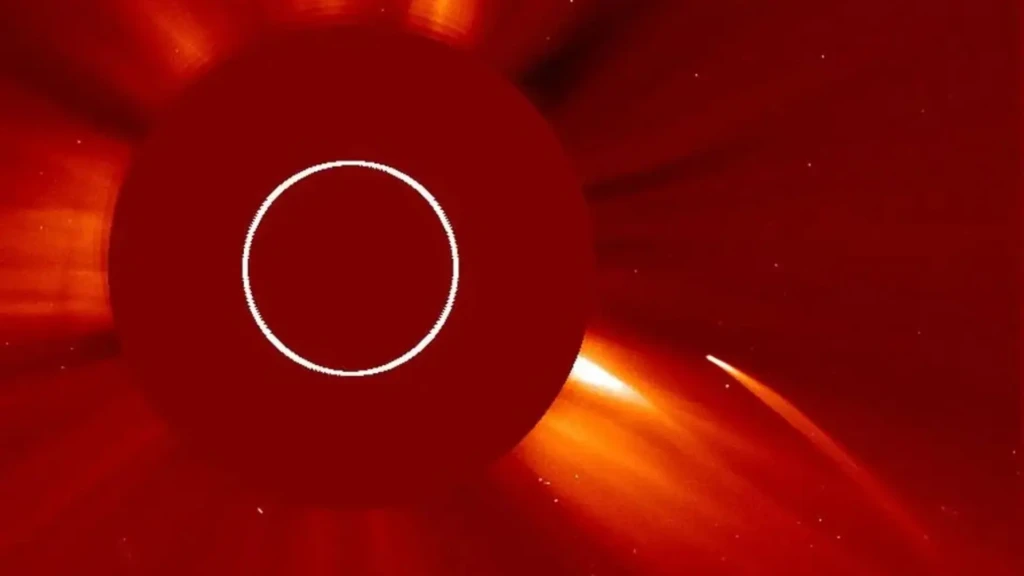
A Sun-grazer comet photographed near the Sun. Image: NASA
SHARE


Contents
  • But what is a Sun-grazer comet?
  • Where is Comet C/2026 A1 (MAPS) now?

Astronomers earlier this year discovered a ‘sun-grazer’ comet which is heading for a close encounter with the Sun and might put on a brilliant show during daytime. It is named comet C/2026 A1 MAPS and it is predicted to fly through the Sun’s photosphere – lowest layer of the Sun’s atmosphere – on April 4. As we move towards that day, the comet will grow significantly brighter for viewers on Earth and if A1 MAPS is not durable enough, it might get ripped apart during the solar encounter.

But what is a Sun-grazer comet?

Sun-grazer comets are those that get very close to the Sun during their nearest approach, with some even diving into the Sun and meeting their end. According to NASA, a comet should be within 13,68,422 km or (8,50,000 miles) from the Sun at perihelion (closest point) to be considered a Sun-grazer.

Comet C/2023 A3 (Tsuchinshan-ATLAS) is captured in coronagraph imagery. This animation, courtesy of jhelioviewer, shows the events. Follow comet progression for yourself through October 10th at https://t.co/tvi8ZIJBRw and see the main story at https://t.co/FoVdofdW5m pic.twitter.com/Uj6s9sklUC

— NOAA Space Weather Prediction Center (@NWSSWPC) October 8, 2024

The potentially doomed A1 MAPS comet, for example, will pass about 1,60,000 kilometers (99,000 miles) above the photosphere – less than half the Earth-Moon distance. These kinds of comets belong to several groups such as Kreutz, Marsden, Meyer and Kracht, with Kreutz family being the dominant one. A1 MAPS belongs to the Kreutz group, that consititutes fragments from a larger ‘progenitor’ comet that disintegrated thousands of years ago.

NASA says these comets move on the Kreutz Path and close to 85% of the Sun-grazers have been seen by the Solar and Heliospheric Observatory (SOHO) satellite on this orbital highway.
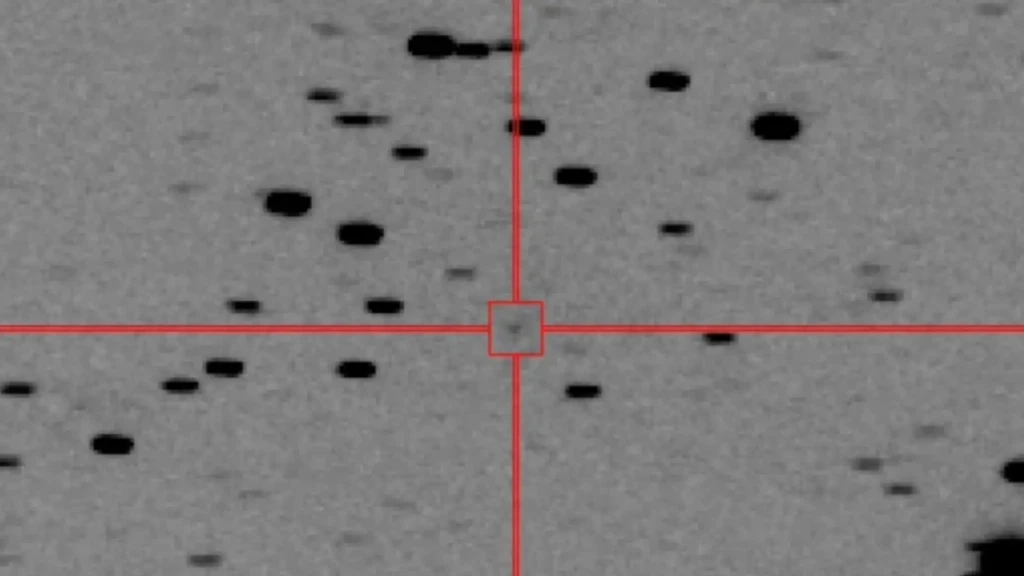
Comet C/2026 A1 MAPS
The Comet C/2026 A1. Image: Project MAPS 2026

These comets are special because of their incredible brightness, plus they’re a scientific treasure trove. They can reveal about cometary compositions, dust properties, fragmentation and even the solar corona – Sun’s outermost atmospheric layer.

Where is Comet C/2026 A1 (MAPS) now?

The comet, according to The Sky Live, is around 185 million kilometres from Earth in the constellation Cetus. It was discovered on January 13 by a team of four astronomers at the AMACS1 observatory in San Pedro de Atacama, Chile, and the word MAPS is an acronym of their last names – Alain Maury, Georges Attard, Daniel Parrott, and Florian Signoret.

Since it’s a lot closer now, the comet is bright enough to be visible through amateur telescopes.

Scientists say that if it survives the immense heat and tidal forces of the Sun, the comet could be visible during daytime in April.

Considering A1 MAPS does survive perihelion, it will be visible low in the western sky from mid-northern latitudes shortly after sunset for several days. From northern hemisphere, daytime viewing will be very challenging or unlikely due to the comet’s position near the Sun. If you’re unable to, NASA’s SOHO is likely to capture the rare encounter for everyone’s safe viewing.

ALSO READ: The Moon Is Safe! James Webb Space Telescope Rules Out Asteroid 2024 YR4’s Collision

ALSO READ: NASA Releases New Comet 3I/ATLAS Pictures As It Glows Up On An Outbound Journey

TAGGED:astronomycometComet C/2026 A1 MAPSNASAskywatchingSOHOSolar Systemsungrazer comet
Share This Article
Facebook Pinterest Whatsapp Whatsapp LinkedIn Copy Link Print

Latest News

Artist's impression of NASA's Psyche spacecraft.
NASA’s Psyche Spacecraft Will Zoom Past Mars Today On Its Way To Metal-Rich Asteroid
Astronomy
SpaceX Starship
SpaceX Starship’s 12th Test Flight Targeted On May 20; No Booster Catch This Time
Spaceflight
SpaceX's Starship during launch rehearsal.
SpaceX Completes Starship’s Launch Rehearsal For Flight 12 This Week; What To Expect?
Spaceflight
China US rivalry reach new heights.
‘Rival’ China Is Unintentionally The Biggest Motivator For NASA’s Moon Ambitions
Spaceflight

You Might Also Like

SpaceX Starship
Spaceflight

SpaceX Starship’s V3 Booster Damaged During Pressure Testing; Picture Surfaces

November 23, 2025
Comet 3I/ATLAS pre-perihelion.
Astronomy

Comet 3I/ATLAS Is NOT Changing Colours, But Sudden Brightness Remains A Mystery

November 19, 2025
James Webb Space Telescope NASA
Astronomy

James Webb Space Telescope Finds Strongest Clues Of Atmosphere On A Scorching Super-Earth

December 12, 2025
NASA Artemis II
Artemis

Watch: NASA Artemis II Astronauts Begin Flyby Of Moon’s Far Side For The First Time Ever

April 9, 2026
© 2026, Blue Terra Journal
  • About
  • Privacy Policy
  • Terms
  • Contact
Welcome Back!

Sign in to your account

Username or Email Address
Password

Lost your password?