Blue Terra Journal

  • Home
  • Spaceflight
    SpaceflightShow More
    NASA's MAVEN orbiter
    NASA’s MAVEN Orbiter Confirmed Dead On Mars; What Did It Achieve In 11 Years?
    June 5, 2026
    Blue Origin's New Glenn rocket.
    What Blue Origin’s New Glenn Explosion Means For NASA And Its Moon Ambitions
    June 10, 2026
    Elon Musk SpaceX Starship
    Elon Musk’s SpaceX launches new Starship V3 on 12th mission, but it wasn’t flawless
    June 5, 2026
    SpaceX Starship
    SpaceX Starship’s 12th Test Flight Targeted On May 20; No Booster Catch This Time
    May 31, 2026
    SpaceX's Starship during launch rehearsal.
    SpaceX Completes Starship’s Launch Rehearsal For Flight 12 This Week; What To Expect?
    May 13, 2026
  • Astronomy
    AstronomyShow More
    The galactic bulge by Euclid telescope. Credit: European Space Agency
    This Euclid Telescope Image Of Milky Way’s Centre With 60 Million Stars May Break Your Brain
    June 27, 2026
    UFO videos shared by US government
    UFO Alert! US Government Releases New Videos Of Glowing Orbs Floating In The Sky
    June 13, 2026
    Meteor over Mayon volcano
    Watch: Flashy Green Meteor Streaks Over Erupting Volcano In The Philippines
    May 27, 2026
    Artist's impression of NASA's Psyche spacecraft.
    NASA’s Psyche Spacecraft Will Zoom Past Mars Today On Its Way To Metal-Rich Asteroid
    May 15, 2026
    Comet MAPS image
    Video: Comet MAPS destroyed after plunging into the Sun; event caught by NASA missions
    April 18, 2026
  • India
    IndiaShow More
    Shubhanshu Shukla aboard the ISS.
    ISRO Astronaut Shubhanshu Shukla Awarded Ashoka Chakra For Heroic Ax-4 Mission
    February 9, 2026
    ISRO's PSLV lifts off to space.
    ISRO’s PSLV Rocket Suffers Third Stage Failure After Successful Liftoff; Payloads Lost
    January 23, 2026
    Dhruva Space team at ISRO facility.
    India’s Dhruva Space To Launch 10 Missions, Including 1st Northeastern Satellite, On ISRO’s PSLV
    January 12, 2026
    ISRO's PSLV rocket
    ISRO To Seek Redemption With PSLV-C62 Mission Launch On January 12
    January 12, 2026
    ISRO SSLV
    ISRO’s SSLV Rocket Just Got Better After Latest Third Stage Test Fire
    December 31, 2025
  • Artemis
    ArtemisShow More
    NASA Artemis III crew
    NASA Artemis III: Meet The Astronauts Who Will Set The Stage For 2028 Moon Landing
    June 10, 2026
    Blue Origin's New Glenn rocket.
    What Blue Origin’s New Glenn Explosion Means For NASA And Its Moon Ambitions
    June 10, 2026
    NASA Artemis II mission
    Welcome Home! NASA’s Artemis II Astronauts Are Back After Historic Moon Voyage
    April 22, 2026
    NASA Artemis II iPhone image
    iPhones Reigned Supreme On NASA’s Artemis II Moon Mission
    April 10, 2026
    Artemis II NASA
    All Eyes On Scary Artemis II Reentry As NASA Moon Mission Nears Completion
    April 9, 2026
  • More
    • About
    • Privacy Policy
    • Terms
    • Contact

Blue Terra Journal

  • Home
  • Spaceflight
  • Astronomy
  • India
  • Artemis
Search
  • Pages
    • About
    • Contact
    • Privacy Policy
    • Terms

Home - Astronomy - Leonid Meteor Shower: When And Where To Look In India Tonight?

Astronomy

Leonid Meteor Shower: When And Where To Look In India Tonight?

The Leonids are some of the fastest known meteors.

Harsh Vardhan
Last updated: November 17, 2025 3:07 PM
Harsh Vardhan
Share
3 Min Read
Leonid meteor shower
The Leonid meteor shower will be visible late at night into the early hours of Nov 18.
SHARE

Contents
  • About the Leonid Meteor Shower
  • Viewing in India

We have another meteor shower heading our way. The Leonid Meteor Shower is expected to peak on the night of November 17 as Earth passes through a debris trail of a comet. According to the American Meteor Society, one can expect up to 10 meteors per hour in perfect viewing conditions.

What’s up, skywatchers?

The Leonid meteor shower peaks Nov. 16-18. Meteors will radiate from the constellation Leo in the eastern sky.

The shower runs through Dec. 2, but at its peak, you could see up to 10-15 meteors per hour in dark skies! pic.twitter.com/M04sownAto

— NASA JPL (@NASAJPL) November 15, 2025

About the Leonid Meteor Shower

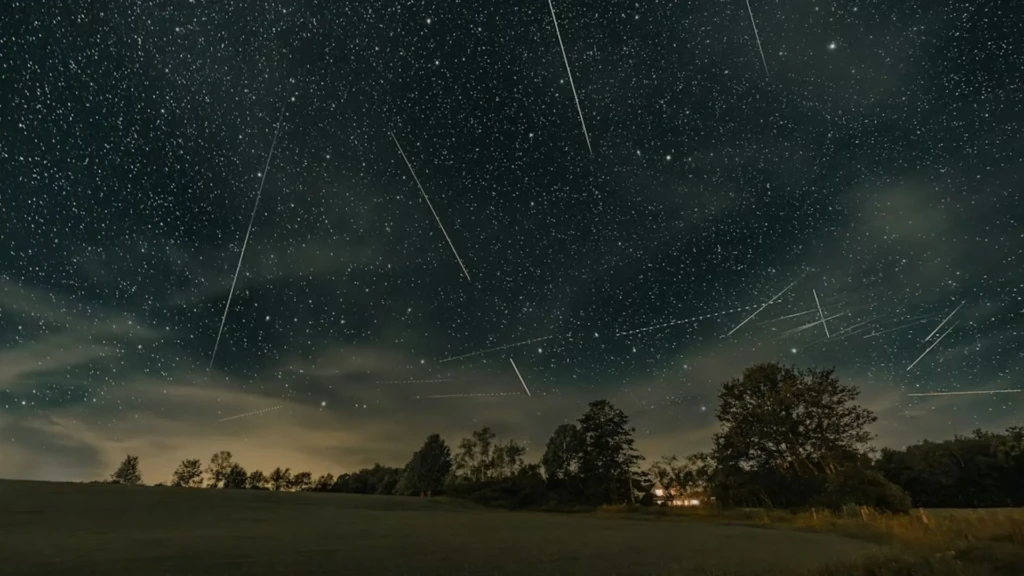
The Leonid meteor shower, which is active from November 3 to December 2, results from the debris left behind by the comet 55P/Tempel-Tuttle as it orbits the Sun. When our planet crosses this debris trail, the fragments burn up in the atmosphere creating bright streaks of light.

According to NASA, the comet 55P/Tempel-Tuttle was discovered twice independently – in 1865 by Ernst Tempel and in 1866 by Horace Tuttle. The comet’s nucleus has an estimated diameter of roughly 3.6 kilometers.
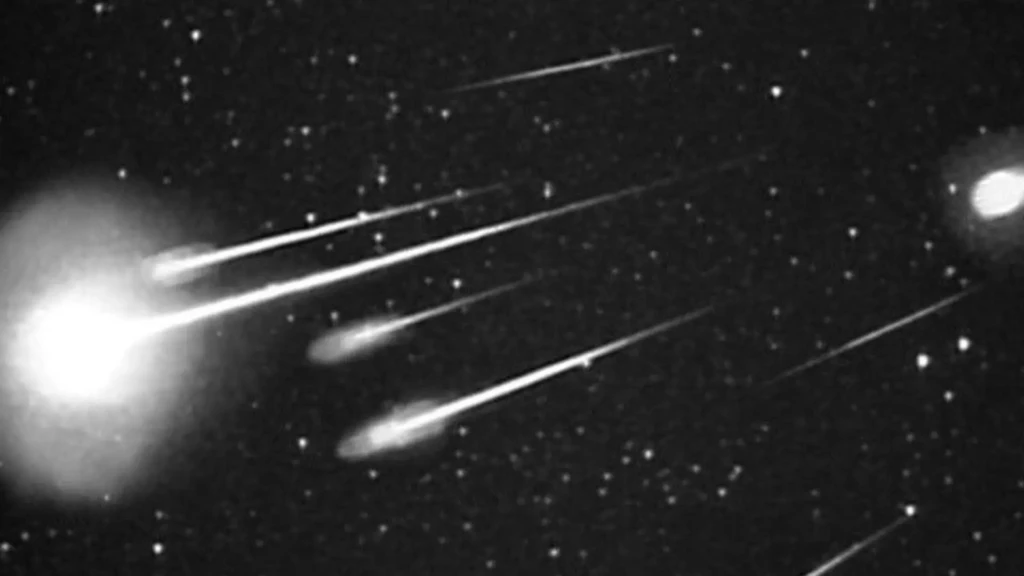
Leonid Meteor Shower
Leonid meteor shower, 1999. Image: NASA

Interestingly, the Leonids generate a magnificent storm, illuminating the night sky with thousands of meteors every 33 years. The most memorable of these storms occurred in 1833, when tens of thousands of them appeared over North America.

The Leonids appear to emerge in the constellation Leo and its meteors (travelling at 71 km per second) are considered some of the fastest known so far. However, NASA says – “You should not look only to the constellation of Leo to view the Leonids – they are visible across the night sky. It is actually better to view the Leonids away from the radiant (point of origin).”

“They will appear longer and more spectacular from this perspective. If you do look directly at the radiant, you will find that the meteors will be short – this is an effect of perspective called foreshortening,” it added.

ALSO READ: What Are Interstellar Comets And What Makes Them Special?

Viewing in India

The Leonid meteor shower will be visible in all parts of northern hemisphere including India. The best time to spot the meteors is late at night into the early hours of November 18.

The Moon will be in its waning crescent phase with a visibility of a little over 7%, meaning there won’t be overwhelming moonlight to drown out the meteoric illumination. NASA says the shower will last until dawn, so viewers will have plenty of time to spot a few meteors.

ALSO READ: The Fermi Paradox: Why We’ve Never Seen Aliens

TAGGED:cometindiaLeonid meteor showerNASASpace
Share This Article
Facebook Pinterest Whatsapp Whatsapp LinkedIn Copy Link Print

Latest News

The galactic bulge by Euclid telescope. Credit: European Space Agency
This Euclid Telescope Image Of Milky Way’s Centre With 60 Million Stars May Break Your Brain
Astronomy
UFO videos shared by US government
UFO Alert! US Government Releases New Videos Of Glowing Orbs Floating In The Sky
Astronomy
NASA Artemis III crew
NASA Artemis III: Meet The Astronauts Who Will Set The Stage For 2028 Moon Landing
Artemis
NASA's MAVEN orbiter
NASA’s MAVEN Orbiter Confirmed Dead On Mars; What Did It Achieve In 11 Years?
Spaceflight

You Might Also Like

Hubble discovers Cloud-9.
Astronomy

Hubble Telescope Uncovers New Object ‘Cloud-9’ – A ‘Failed Galaxy’ With No Stars

January 13, 2026
ISRO Gaganyaan drop test.
India

ISRO Completes Parachute Air Drop Test Of Gaganyaan Crew Module | Video

November 21, 2025
Artist's impression of NASA's Psyche spacecraft.
Astronomy

NASA’s Psyche Spacecraft Will Zoom Past Mars Today On Its Way To Metal-Rich Asteroid

May 15, 2026
Blue Origin NS-37 mission
Spaceflight

Blue Origin To Attempt Launch Of NS-37 Mission With Six Humans Again On Dec 20

December 20, 2025
© 2026, Blue Terra Journal
  • About
  • Privacy Policy
  • Terms
  • Contact
Welcome Back!

Sign in to your account

Username or Email Address
Password

Lost your password?