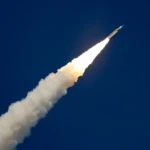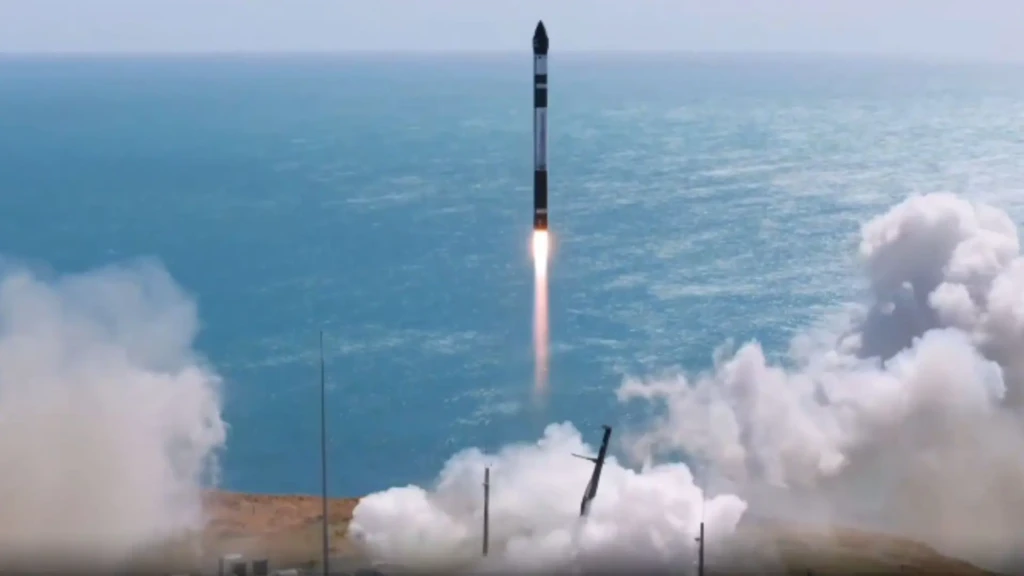
California-based Rocket Lab successfully launched its first mission for the Japan Aerospace Exploration Agency (JAXA) on Sunday. The Electron rocket lifted off at 8:39 am IST [10:09 p.m. EST] from Rocket Lab’s launch site in Mahia, New Zealand for the ‘RAISE and Shine’ mission.
The payload included one satellite – the RApid Innovative payload demonstration Satellite E-4 (RAISE-4) and eight CubeSats developed by private companies, universities and research institutes. All these satellites were part of the Innovative Satellite Technology Demonstration No. 4 program to test and validate key technologies.
MISSION SUCCESS! Payload deployment confirmed for Electron’s 77th launch, releasing @JAXA_en‘s RAISE-4 satellite to a 540km LEO 🛰️🚀 pic.twitter.com/gJP0Mxrd1w
— Rocket Lab (@RocketLab) December 14, 2025
At 9:37 am IST, Rocket Lab confirmed that the payload has been deployed in a 540-km Sun synchronous orbit, marking the successful completion of Electron’s 77th launch. It also marked the launch vehicle’s 19th mission of 2025, 16 of which were orbitals flight and three were suborbital, Space.com reported. The company’s previous best is 16 launches in 2024. It was also Rocket Lab’s first mission directly contracted by JAXA.
JAXA’s ‘RAISE and Shine’ mission
About the RAISE and Shine mission, JAXA said – “The 4th small demonstration satellite (RAISE-4: RApid Innovative payload demonstration Satellite E-4) is a satellite for demonstrating in orbit the demonstration themes of eight components and equipment selected through a public call for proposals.” The RAISE-4 satellite weighs 110 kg and has a planned lifespan of 15 months.
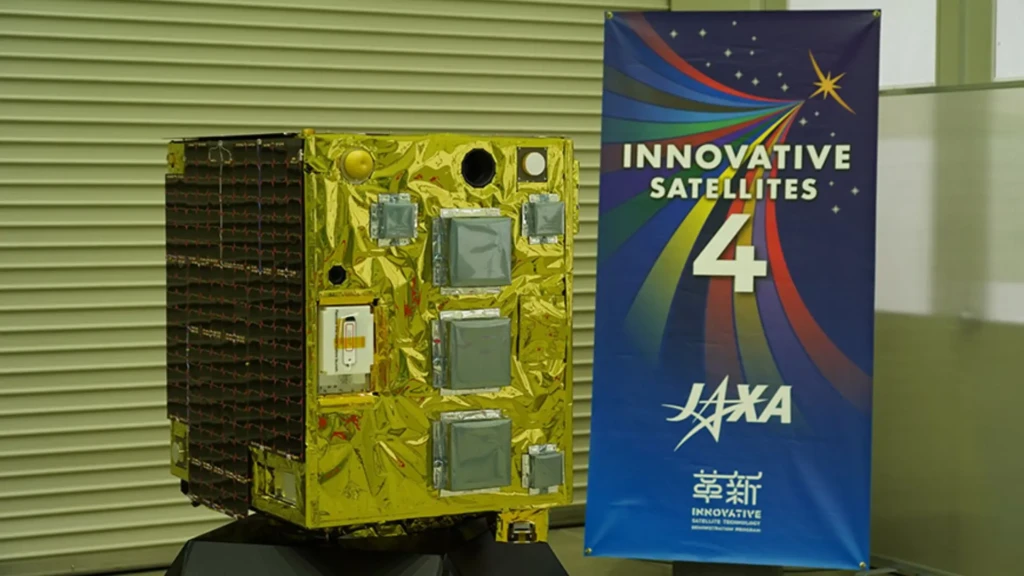
RAISE-4 has eight components that are designed to test next-generation technologies that will make future small satellites faster, smarter and more efficient. Together, they will demonstrate advanced communications, ultra-high-speed onboard computing using a computer GPU and multiple new propulsion systems for better maneuvering and quicker de-orbiting.
They will also test compact electric thrusters, lightweight membrane structures for power and antennas, and radiation-resistant imaging hardware. The components will also explore autonomous onboard AI capable of detecting ships, sending down only essential data and retraining itself in orbit.
Objectives of CubeSats launched by Rocket Lab
- MAGNARO-II: Test a new way for linked nanosatellites to spin, separate, and form a constellation for multi-point Earth observation.
- KOSEN-2R: Demonstrate improved seafloor data collection, precise attitude control and efficient satellite to satellite communication.
- WASEDA-SAT-ZERO: Use fully 3D-printed, screwless satellite body to test safe, debris-free membrane deployment.
- FSI-SAT2: Test a tiny, low cost multispectral camera system designed for simple Earth imaging.
- OrigamiSat-2: Demonstrate a lightweight antenna that unfolds like origami to become 25 times larger in space.
- Mono-Nikko: Test intelligent power system that can monitor small satellite batteries and detect problems instantly.
- PRELUDE: Use plasma sensors to search for potential ionospheric signals that might precede earthquakes.
- ARICA-2: Test a rapid alert system for sudden astronomical events using private satellite system.
ALSO READ: Japan’s Akatsuki Orbiter Goes Silent Forever Ending Our Venus Presence
ALSO READ: Blue Origin To Launch NS-37 Mission With First Wheelchair User On December 18