Blue Terra Journal

  • Home
  • Spaceflight
    SpaceflightShow More
    SpaceX Starship
    SpaceX Starship’s 12th Test Flight Targeted On May 20; No Booster Catch This Time
    May 13, 2026
    SpaceX's Starship during launch rehearsal.
    SpaceX Completes Starship’s Launch Rehearsal For Flight 12 This Week; What To Expect?
    May 13, 2026
    China US rivalry reach new heights.
    ‘Rival’ China Is Unintentionally The Biggest Motivator For NASA’s Moon Ambitions
    April 28, 2026
    NASA Voyager 1 illustration
    NASA Shuts Down Another Voyager 1 Instrument; How Long Can This Spacecraft Last?
    April 22, 2026
    NASA's SR-1 Freedom spacecraft.
    What Is NASA’s SR-1 Freedom Mission? The First Nuclear Reactor In Space Explained
    March 27, 2026
  • Astronomy
    AstronomyShow More
    Artist's impression of NASA's Psyche spacecraft.
    NASA’s Psyche Spacecraft Will Zoom Past Mars Today On Its Way To Metal-Rich Asteroid
    May 15, 2026
    Comet MAPS image
    Video: Comet MAPS destroyed after plunging into the Sun; event caught by NASA missions
    April 18, 2026
    Apophis asteroid flyby
    ‘God Of Chaos’: Apophis Asteroid Will Fly Dangerously Close To Earth Exactly 5 Years From Now
    April 14, 2026
    Meteor spotted over Houston.
    Video Captures 1-Ton Meteor Exploding Over Houston Skies, NASA Releases Statement
    March 22, 2026
    NASA black hole simulation
    Fall Into A Black Hole With This Incredibly Scary Simulation Made By NASA
    March 18, 2026
  • India
    IndiaShow More
    Shubhanshu Shukla aboard the ISS.
    ISRO Astronaut Shubhanshu Shukla Awarded Ashoka Chakra For Heroic Ax-4 Mission
    February 9, 2026
    ISRO's PSLV lifts off to space.
    ISRO’s PSLV Rocket Suffers Third Stage Failure After Successful Liftoff; Payloads Lost
    January 23, 2026
    Dhruva Space team at ISRO facility.
    India’s Dhruva Space To Launch 10 Missions, Including 1st Northeastern Satellite, On ISRO’s PSLV
    January 12, 2026
    ISRO's PSLV rocket
    ISRO To Seek Redemption With PSLV-C62 Mission Launch On January 12
    January 12, 2026
    ISRO SSLV
    ISRO’s SSLV Rocket Just Got Better After Latest Third Stage Test Fire
    December 31, 2025
  • Artemis
    ArtemisShow More
    NASA Artemis II mission
    Welcome Home! NASA’s Artemis II Astronauts Are Back After Historic Moon Voyage
    April 22, 2026
    NASA Artemis II iPhone image
    iPhones Reigned Supreme On NASA’s Artemis II Moon Mission
    April 10, 2026
    Artemis II NASA
    All Eyes On Scary Artemis II Reentry As NASA Moon Mission Nears Completion
    April 9, 2026
    NASA Artemis II
    NASA Artemis II Crew Names Moon Crater ‘Carroll’ After Commander Reid Wiseman’s Late Wife
    April 7, 2026
    NASA Artemis II
    Watch: NASA Artemis II Astronauts Begin Flyby Of Moon’s Far Side For The First Time Ever
    April 9, 2026
  • More
    • About
    • Privacy Policy
    • Terms
    • Contact

Blue Terra Journal

  • Home
  • Spaceflight
  • Astronomy
  • India
  • Artemis
Search
  • Pages
    • About
    • Contact
    • Privacy Policy
    • Terms

Home - Astronomy - Japan’s Akatsuki Orbiter Goes Silent Forever Ending Our Venus Presence

Astronomy

Japan’s Akatsuki Orbiter Goes Silent Forever Ending Our Venus Presence

Akatsuki lasted way longer than its planned lifespan.

Harsh Vardhan
Last updated: November 6, 2025 10:03 PM
Harsh Vardhan
Share
4 Min Read
image
JAXA's Akatsuki orbiter launched in 2010 and arrived at Venus in 2015. (Image: JAXA)
SHARE

Contents
  • The mission
  • Akatsuki’s discoveries

Humanity’s only active mission at Venus has officially come to an end. The Japan Aerospace Exploration Agency (JAXA) recently announced that its Akatsuki Venus Climate Orbiter mission has been terminated. In an official statement released on October 28, JAXA said that the mission team has accepted the “inevitable” after multiple failed attempts of establishing communications with the spacecraft. Akatsuki went incommunicado in May 2024, and JAXA officials had been trying to bring it online ever since. According to the agency, it started the termination procedure of the mission in September.
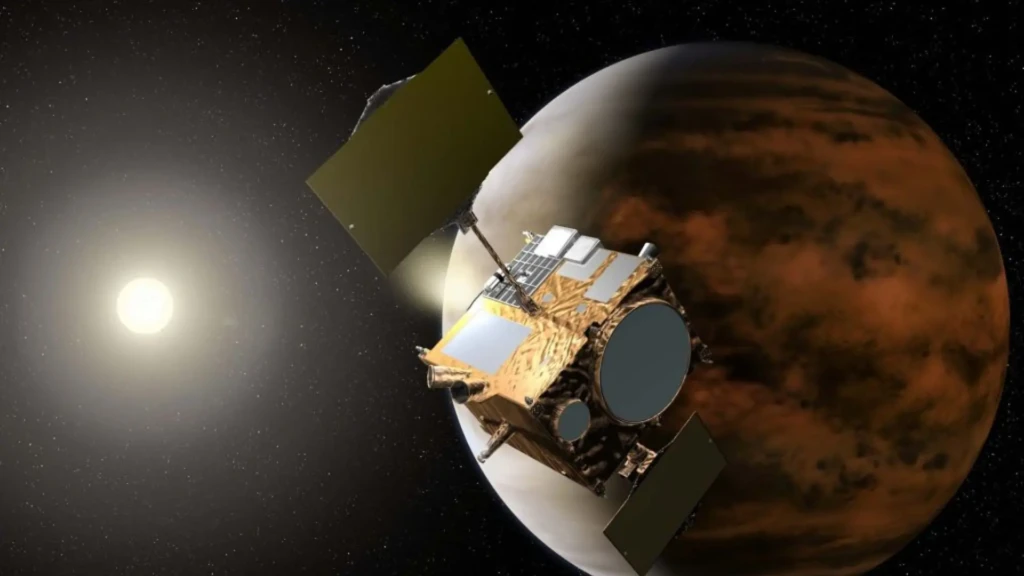
Image (1)
Artist’s impression of the Akatsuki orbiter. Image: JAXA

The mission

Akatsuki launched in May 2010 and was the only active mission around Venus. While it did survive longer than its expected lifespan of 4.5 years, Akatsuki faced setbacks right from the start. In December 2010, the fuel valve of the orbiter’s main engine malfunctioned, causing it to miss an orbital injection manoeuvre into the Venusian orbit. But the mission team improvised using secondary thrusters and five years later, in December 2015, managed to successfully insert it into orbit.

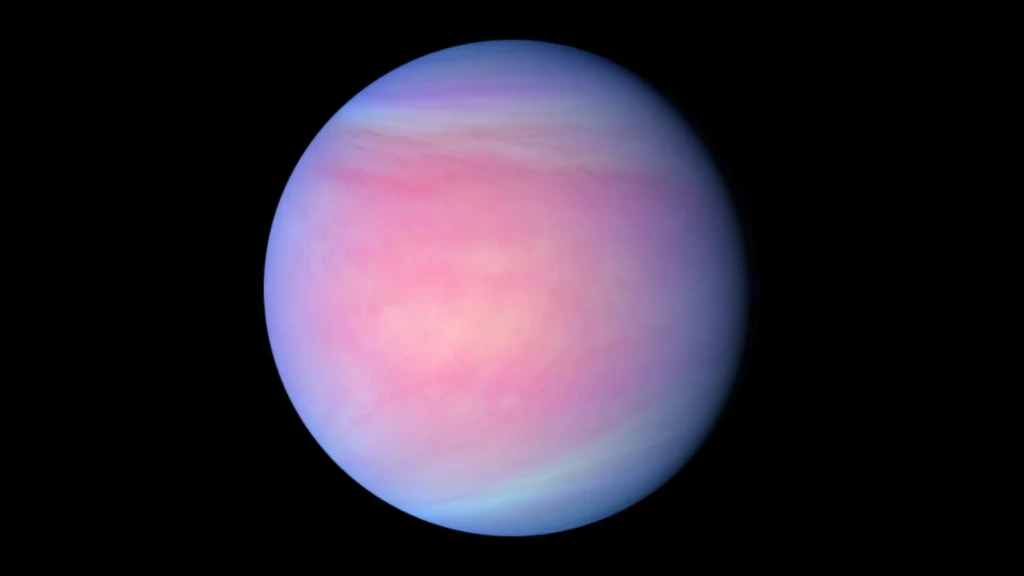
Image (2)
Venus captured by Akatsuki orbiter. Image: JAXA

From this point on, began Akatsuki’s groundbreaking discoveries using its six instruments. While two of its infrared cameras stopped working, four other instruments were still functioning when Akatsuki went offline.

This planet, which is called Earth’s twin, has unbearable surface conditions due to dense carbon dioxide atmosphere which drives temperatures high enough to melt lead (464°C).

ALSO READ: China’s Tiangong Space Station Will Host Pakistani Astronaut In 2026

Akatsuki’s discoveries

Interestingly, a day on Venus (243) is longer than its year (225), and scientists were puzzled by how winds between 50–70 kilometres above surface whip 60 times faster than the planet retrograde rotation despite such a slow pace. With Akatsuki, scientists now know that the incredible rotation speeds were being maintained by solar heating.

Another interesting aspect of Venus’ rotation is the planet being almost tidally locked to the Sun, meaning one side experiences eternal day while other experiences everlasting night. While it is not completely locked like the Moon around Earth, the rotation speed is slow enough for similar conditions to arise. However, what’s fascinating is that despite or as a result of ‘near-lock condition’, Venus undergoes atmospheric circulation which circulates warm air from the dayside and cold air from the nightside.

Scientists say that if there’s no mechanism to redistribute heat on a tidally-locked planet, air on the planet’s nightside would freeze and cause global atmospheric collapse.

Another captivating discovery by Akatsuki was a drawn bow-shaped structure extending over 10,000 km from the north pole to south. This structure was undisturbed despite the ferocious winds and scientists think this was caused by mountain ranges pushing the dense lower atmosphere gas to higher altitudes to create a gravity wave. This is the first time gravity waves have been seen on this scale on a planet other than Earth.

JAXA revealed that Akatsuki’s data has resulted in 178 journal papers and deep insights into Venus’ atmospheric behaviour. “This was a mission that changed our view of our Earth-sized neighbour, and laid the path for new discoveries about what it takes to become heaven or hell,” the agency stated.

ALSO READ: Comet 3I/ATLAS: Should We Take Avi Loeb’s Alien Theory Seriously?

TAGGED:Akatsuki OrbiterastronomyJapanJAXASpaceVenus
Share This Article
Facebook Pinterest Whatsapp Whatsapp LinkedIn Copy Link Print

Latest News

Artist's impression of NASA's Psyche spacecraft.
NASA’s Psyche Spacecraft Will Zoom Past Mars Today On Its Way To Metal-Rich Asteroid
Astronomy
SpaceX Starship
SpaceX Starship’s 12th Test Flight Targeted On May 20; No Booster Catch This Time
Spaceflight
SpaceX's Starship during launch rehearsal.
SpaceX Completes Starship’s Launch Rehearsal For Flight 12 This Week; What To Expect?
Spaceflight
China US rivalry reach new heights.
‘Rival’ China Is Unintentionally The Biggest Motivator For NASA’s Moon Ambitions
Spaceflight

You Might Also Like

ISRO Gaganyaan
India

ISRO Aces Drogue Parachute Tests Of Gaganyaan Crew Module | Video

January 2, 2026
eclipse supermoon
Astronomy

Biggest Skywatching Events Of 2026: Solar Eclipses, Meteor Showers, Supermoons And More

January 17, 2026
NASA's MAVEN orbiter
Spaceflight

Has MAVEN Mars Orbiter Met Its End? NASA Says It Was Rotating Unexpectedly

December 27, 2025
ISRO Aditya-L1
Astronomy

ISRO’s Aditya-L1 And NASA Missions Uncover Reason Behind 2024 Solar Storm Fury

December 13, 2025
© 2026, Blue Terra Journal
  • About
  • Privacy Policy
  • Terms
  • Contact
Welcome Back!

Sign in to your account

Username or Email Address
Password

Lost your password?