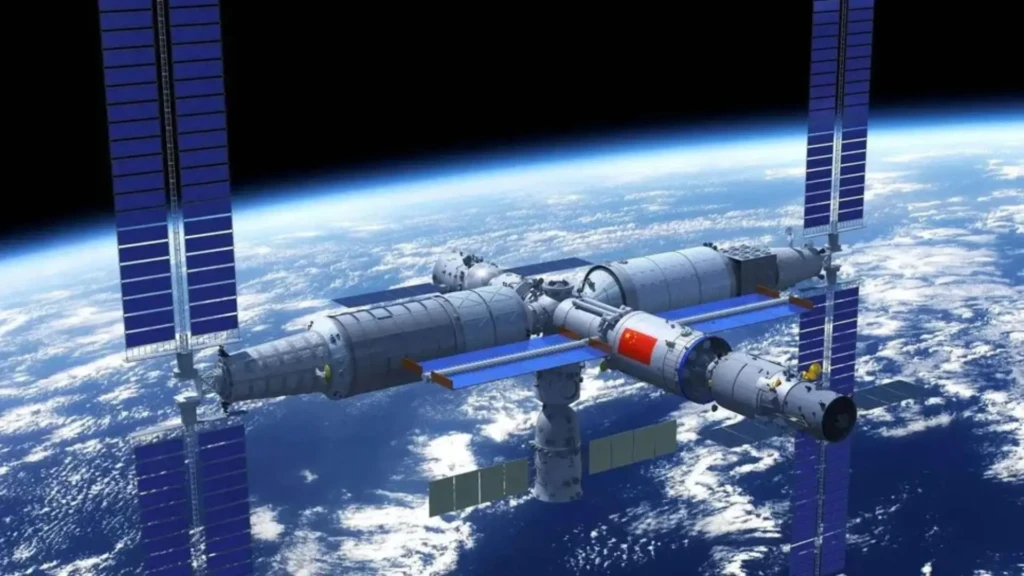
Pakistan and China have reportedly agreed to a timeline to launch a Pakistani astronaut to the Tiangong Space Station. According to Pakistani media outlet Dawn, the two sides are targeting October-November 2026 to launch the manned mission which will include crew members from both nations.
This mission is materialising under an agreement signed between Pakistan’s Space and Upper Atmosphere Research Commission (Suparco) and China Manned Space Agency (CMSA) in February 2025.
Pakistan’s candidates in training
The agreement requires a 6-month “advanced astronaut training” of two Pakistani candidates at the Astronaut Centre of China (ACC). One will serve as the backup while other as a core member (payload specialist) of the mission team.
According to the statement released by Inter-Services Public Relations (ISPR), the two undisclosed candidates have already undergone comprehensive medical, psychological, and aptitude assessments to test their readiness for a spaceflight.
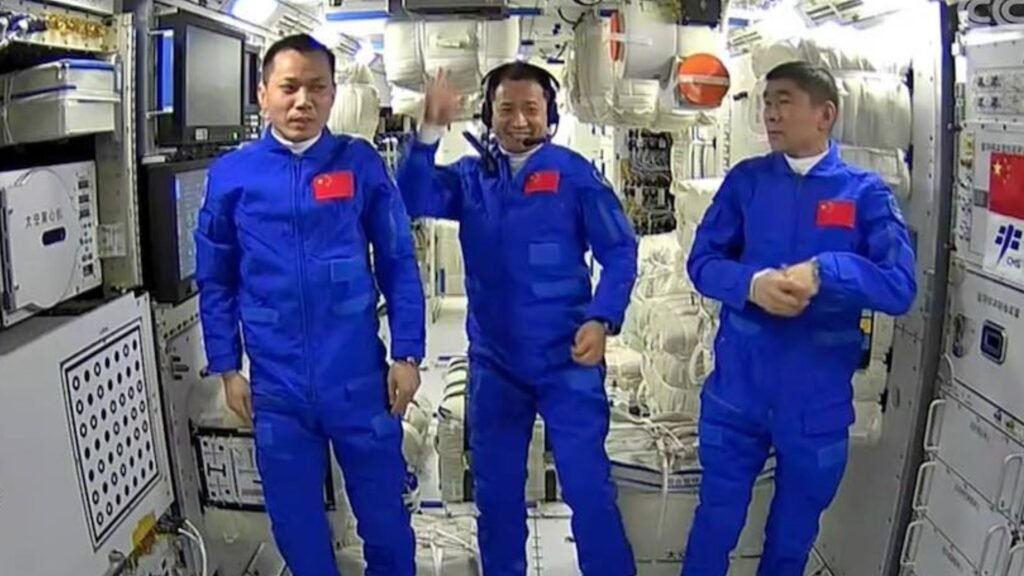
The mission will be historic as no national astronaut from Pakistan has ever visited space. Besides, the candidate will also be the first international crew member to enter the Tiangong Space Station.
CMSA spokesperson Lin Xiqiang revealed that the Pakistani astronaut would conduct scientific experiments while performing standard crew duties aboard Tiangong.
The three-module Tiangong station, which was completely assembled in November 2022, is the only active owned independently by a country. The other is the International Space Station (ISS) which is managed by the US, Canada, Japan, Russia and Europe. Its first module was launched in November 1998 and astronauts have occupied it for 25 years since 2000.
Notably, Pakistan is currently China’s only serious partner in space and the two have collaborated on multiple occasions. It started in 2011 when Beijing built and launched the PakSat-1R communication satellite on its Long March rocket. More launches for communication and remote sensing satellites followed in 2018, 2024 and 2025. The two nations have also signed a pact for construction of China’s International Lunar Research Station (ILRS) – which is targeted for completion in the Moon’s south pole in 2035. Russia is also a founding and active partner in the lunar base – posing as a direct competitor to the US which plans to build its own permanent settlement on the Moon under the Artemis Program.
ALSO READ: NASA’s Artemis II Astronauts Will Launch With Smartphones To The Moon, So Will Other Fliers
ALSO READ: Blue Origin Halts New Shepard Missions For At Least 2 Years To Land Humans On The Moon