The year 2025 was a memorable one thanks to the record breaking missions and astronomical discoveries but 2026 is going to be even more historic. Get ready to see humans fly to the Moon for the first time in 54 years and more revolutionary telescopes launch into space as we step into the new year. Here are the biggest events that you should not miss in 2026.
NASA’s Artemis II
NASA’s second lunar mission of the Artemis Program – Artemis II – will launch no later than April and could fly as soon as February. It will be the first time humans will reach the lunar vicinity since Apollo 17 – the last crewed NASA mission launched in 1972. Four astronauts will fly around the Moon in the Orion spacecraft and return after ten days without landing.

The objective of Artemis II is to test the Orion spacecraft components in deep space. The Artemis II crew includes Reid Wiseman (mission commander), Christina Koch (mission specialist), Victor Glover (mission pilot) and Jeremy Hansen (mission specialist) and they’re undergoing final phases of pre-flight training.
The Artemis Program kickstarted in November 2022 with the launch of Artemis I. NASA administrator Jared Isaacman has pledged to build a permanent base on the Moon which is the primary objective of the program.
Blue Origin’s Moon lander launch
Blue Origin’s Blue Moon Mark 1 Pathfinder mission is also scheduled to launch to the Moon’s south pole in the first quarter of 2026. In this mission, Blue Origin intends to test the lander prototype on a lunar journey before debuting the Mark 2 crew lander.
The Blue Moon MK1 flight vehicle that will land near Shackleton crater. We’ll soon be doing fully integrated checkout tests. At over 26 feet tall (8 meters), it’s smaller than our MK2 human lander but larger than the historic Apollo lander. pic.twitter.com/N8V8vqOYaV
— Jeff Bezos (@JeffBezos) November 21, 2025
The 26-feet-tall (8 metres) lander will carry payloads built by NASA for exploration purposes and test critical systems, including the BE-7 engine, cryogenic fluid power and propulsions systems, avionics, continuous downlink communications and precision landing. It will launch on Blue Origin’s New Glenn which debuted in January 2025 and has flown twice. New Glenn’s most recent launch was in November 2025 for NASA’s ESCAPADE mission to Mars.
Astrobotic’s Griffin lander launch
Astrobotic is also planning to launch its Griffin lander to the lunar south pole in 2026. It will carry the FLIP rover built by Astrolab and validate several key components and subsystems like full-sized batteries, tires, avionics systems, sensors and software that will later be used on FLEX, a larger rover being built for astronauts.
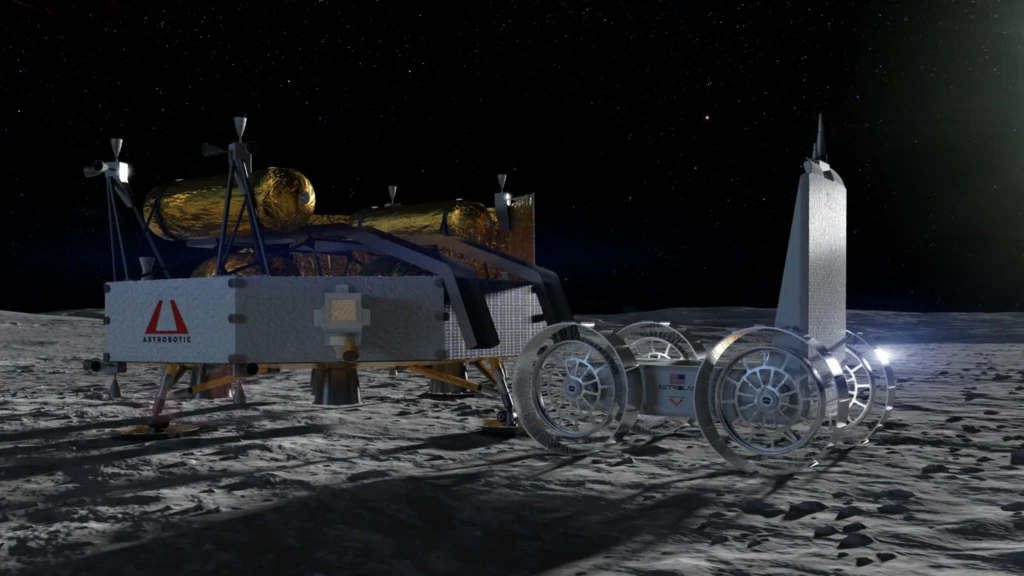
Both Astrobotic and Astrolab are part of this mission through NASA’s Commercial Lunar Payload Services (CLPS) initiative which funds commercial companies to deliver the agency’s payloads to the Moon.
Starship Version 3 debut
SpaceX will launch Starship’s Version 3 this year. With refined technology and several improvements, this launch vehicle will be slightly taller than the previous iteration (123 metres/403 feet).

SpaceX launched five Starship missions in 2025 but only one (Flight 11) on October 13 was fully successful. With Version 3, SpaceX will also aim to achieve in-orbit refuelling necessary for missions to the Moon and Mars.
The setbacks Starship has faced in its development has pushed NASA’s Artemis 3 Moon landing mission beyond its deadline multiple times. NASA is a major contractor for Starship flights and is relying on the rocket to land its astronauts on the lunar surface during Artemis 3 – likely to launch no earlier than 2028.
NASA’s Nancy Grace Roman Telescope
Named after the mother of dark matter, the Nancy Grace Roman Telescope is scheduled for launch in fall of 2026. Its assembly was complete in December 2025 and it’s undergoing final phases of pre-flight tests.
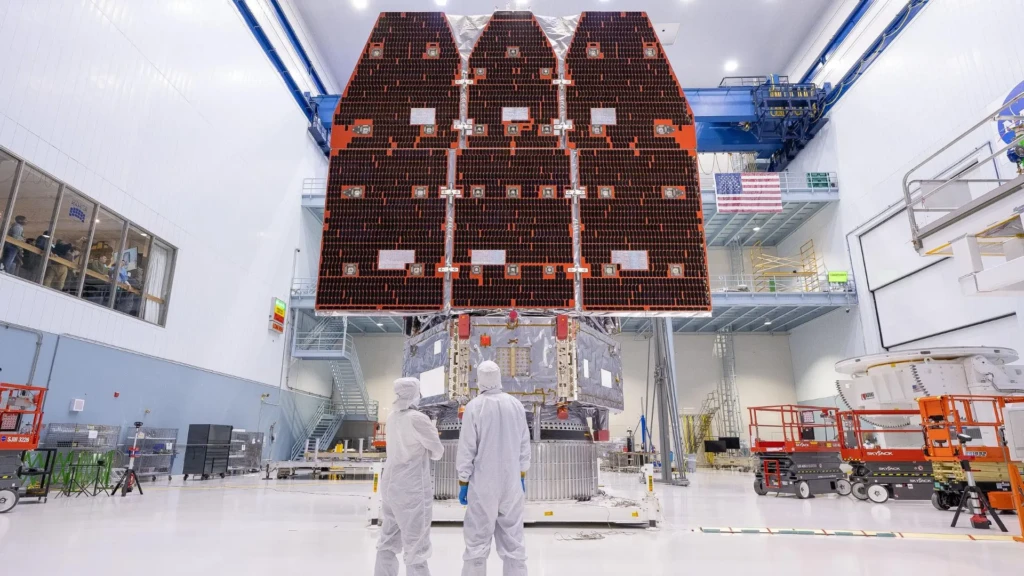
Measuring over 12.7 metres (42 feet) long, this telescope is designed to study billions of stars, supernovae, new planetary systems and hundreds of thousands of exoplanets. NASA says it will answer fundamental questions about the dark universe and the expansion of the universe. The telescope will be installed at the second Earth-Sun Lagrange Point or L2 where the James Webb Space Telescope is placed.
ESA’s PLATO mission
The European Space Agency’s (ESA) PLAnetary Transits and Oscillations of stars or PLATO telescope is also targeted for launch in late 2026. Using its 26 cameras, this observatory will study exoplanets orbiting Sun-like stars in the habitable zone.

According to ESA, it will measure the sizes of exoplanets and discover exomoons and rings around them. Similar to the Nancy Grace telescope, PLATO will be installed at the second Lagrange Point.
ISRO’s Gaganyaan test flight
Delayed from 2025, the first test mission of ISRO’s Gaganyaan program will take place this year. ISRO will launch the crew module carrying a humanoid robot Vyommitra to low-Earth orbit to validate critical elements like life support and escape systems.

The agency has planned three tests missions to test the crew module before launching astronauts. ISRO is developing the program in collaboration with Russia which has helped train four of Gaganyaan’s astronauts in Moscow. One of the crew members – Group Captain Shubhanshu Shukla – flew to the International Space Station (ISS) on Axiom Space’s Ax-4 mission in June 2025. Shukla became the first Indian in space in 41 years after Rakesh Sharma who flew in 1984.
VAST space station module launch
VAST is planning to launch the first module of its space station HAVEN-1 in 2026 atop the SpaceX Falcon 9 rocket. Measuring 10.1 metres long and 4.4 metres in diameter, HAVEN-1 is being designed to support four missions with four astronauts each over three years.
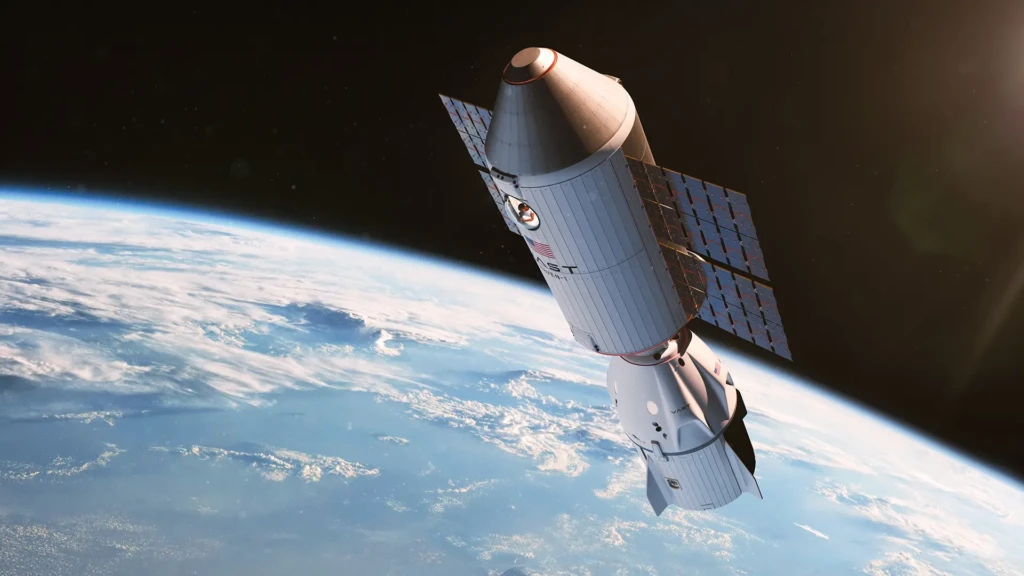
HAVEN-2 will be next and it will feature four modules, offering a bigger and better platform to continue human presence in low-Earth orbit. VAST will be one of the many companies like Blue Origin, Sierra Space and Axiom Space that are building their private habitats to replace the ISS that will retire in 2030.
Firefly Blue Ghost Mission II
After acing its debut Moon landing mission in March 2025, Firefly is planning to repeat history in late 2026. Unlike Blue Ghost 1 which landed on the near side of the Moon, the second lander will touchdown on the far side.
Watch Firefly land on the Moon! After identifying surface hazards and selecting a safe landing site, #BlueGhost landed directly over the target in Mare Crisium. A historic moment on March 2 we’ll never forget. We have Moon dust on our boots! #BGM1 pic.twitter.com/02DQJzn0hL
— Firefly Aerospace (@FireflySpace) March 4, 2025
According to Firefly, Blue Ghost 2 will have a dual spacecraft configuration and it will be stacked on the Elytra Dark orbital vehicle. This vehicle’s job is to deploy Blue Ghost and a second payload – ESA’s Lunar Pathfinder satellite – and offer communications relay and radio frequency calibration services from lunar orbit. It has a lifespan of five years.
On the other hand, Blue Ghost will spend approximately 10 days conducting lunar surface operations using several payloads.
ALSO READ: Ax-4, NISAR And More: Reliving ISRO’s Biggest Spaceflight Milestones In 2025
ALSO READ: From Moon & Mars Missions To Starship Flights, A Recap Of 2025’s Biggest Spaceflight Moments