Blue Terra Journal

  • Home
  • Spaceflight
    SpaceflightShow More
    SpaceX Starship
    SpaceX Starship’s 12th Test Flight Targeted On May 20; No Booster Catch This Time
    May 13, 2026
    SpaceX's Starship during launch rehearsal.
    SpaceX Completes Starship’s Launch Rehearsal For Flight 12 This Week; What To Expect?
    May 13, 2026
    China US rivalry reach new heights.
    ‘Rival’ China Is Unintentionally The Biggest Motivator For NASA’s Moon Ambitions
    April 28, 2026
    NASA Voyager 1 illustration
    NASA Shuts Down Another Voyager 1 Instrument; How Long Can This Spacecraft Last?
    April 22, 2026
    NASA's SR-1 Freedom spacecraft.
    What Is NASA’s SR-1 Freedom Mission? The First Nuclear Reactor In Space Explained
    March 27, 2026
  • Astronomy
    AstronomyShow More
    Artist's impression of NASA's Psyche spacecraft.
    NASA’s Psyche Spacecraft Will Zoom Past Mars Today On Its Way To Metal-Rich Asteroid
    May 15, 2026
    Comet MAPS image
    Video: Comet MAPS destroyed after plunging into the Sun; event caught by NASA missions
    April 18, 2026
    Apophis asteroid flyby
    ‘God Of Chaos’: Apophis Asteroid Will Fly Dangerously Close To Earth Exactly 5 Years From Now
    April 14, 2026
    Meteor spotted over Houston.
    Video Captures 1-Ton Meteor Exploding Over Houston Skies, NASA Releases Statement
    March 22, 2026
    NASA black hole simulation
    Fall Into A Black Hole With This Incredibly Scary Simulation Made By NASA
    March 18, 2026
  • India
    IndiaShow More
    Shubhanshu Shukla aboard the ISS.
    ISRO Astronaut Shubhanshu Shukla Awarded Ashoka Chakra For Heroic Ax-4 Mission
    February 9, 2026
    ISRO's PSLV lifts off to space.
    ISRO’s PSLV Rocket Suffers Third Stage Failure After Successful Liftoff; Payloads Lost
    January 23, 2026
    Dhruva Space team at ISRO facility.
    India’s Dhruva Space To Launch 10 Missions, Including 1st Northeastern Satellite, On ISRO’s PSLV
    January 12, 2026
    ISRO's PSLV rocket
    ISRO To Seek Redemption With PSLV-C62 Mission Launch On January 12
    January 12, 2026
    ISRO SSLV
    ISRO’s SSLV Rocket Just Got Better After Latest Third Stage Test Fire
    December 31, 2025
  • Artemis
    ArtemisShow More
    NASA Artemis II mission
    Welcome Home! NASA’s Artemis II Astronauts Are Back After Historic Moon Voyage
    April 22, 2026
    NASA Artemis II iPhone image
    iPhones Reigned Supreme On NASA’s Artemis II Moon Mission
    April 10, 2026
    Artemis II NASA
    All Eyes On Scary Artemis II Reentry As NASA Moon Mission Nears Completion
    April 9, 2026
    NASA Artemis II
    NASA Artemis II Crew Names Moon Crater ‘Carroll’ After Commander Reid Wiseman’s Late Wife
    April 7, 2026
    NASA Artemis II
    Watch: NASA Artemis II Astronauts Begin Flyby Of Moon’s Far Side For The First Time Ever
    April 9, 2026
  • More
    • About
    • Privacy Policy
    • Terms
    • Contact

Blue Terra Journal

  • Home
  • Spaceflight
  • Astronomy
  • India
  • Artemis
Search
  • Pages
    • About
    • Contact
    • Privacy Policy
    • Terms

Home - Artemis - Artemis 1 Launch Anniversary: Revisiting NASA’s Historic Moon Mission

Artemis

Artemis 1 Launch Anniversary: Revisiting NASA’s Historic Moon Mission

Artemis 1 turns three.

Abhishek Raval
Last updated: November 17, 2025 1:54 PM
Abhishek Raval
Share
4 Min Read
NASA Artemis 1.
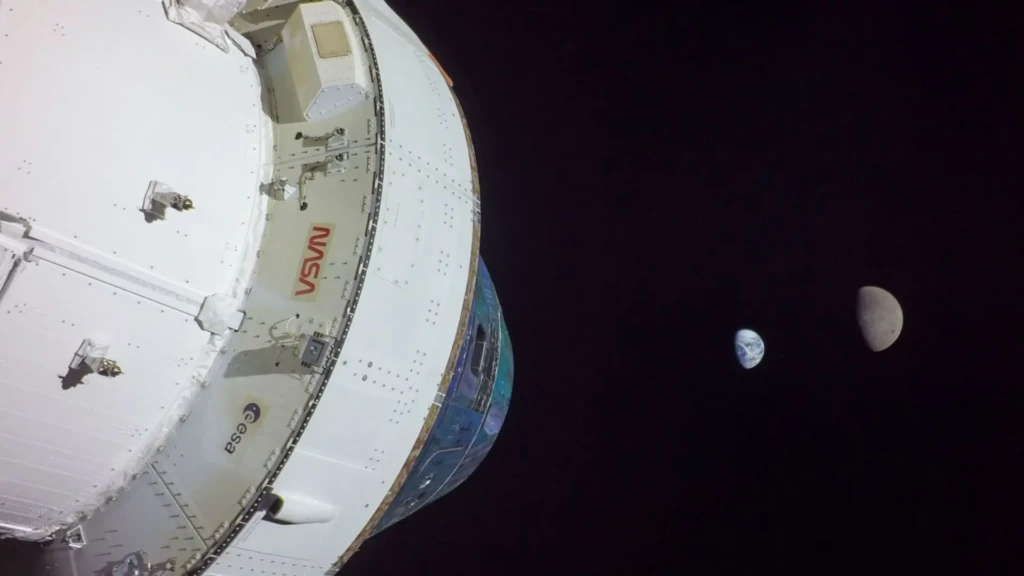
The Orion spacecraft with the Earth and Moon in background during Artemis 1. Image: NASA
SHARE

Contents
  • The liftoff
  • Artemis 1 successes and setbacks
  • Artemis 2: The sequel

It has been three years since NASA launched the first integrated Moon mission of the Artemis Program. Artemis 1 lifted off on November 16, 2022, from NASA’s Kennedy Space Center notching up several historic feats along the way. Apart from being the first rocket launch by NASA since 2011, Artemis 1 marked the debut flight of the Space Launch System (SLS) rocket and it sent a human-rated spacecraft to the farthest distance ever. As we mark the third anniversary of this historic mission, here’s a quick look at its highlights.

The liftoff

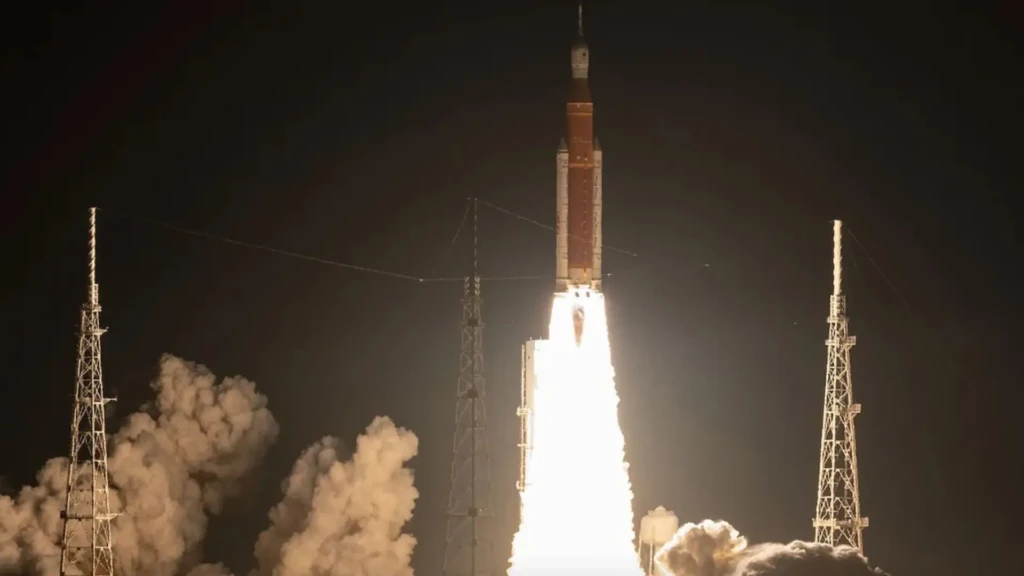
The liftoff of the SLS rocket was a long-time coming as it ended a six-year wait for its launch. The launch vehicle roared into the night sky generating 8.8 million pounds of thrust and becoming the world’s most powerful operational rocket at the time.
NASA Artemis 1.
The SLS rocket lifts off from NASA’s Kennedy Space Center for Artemis 1. Image: NASA

According to NASA, Artemis 1 lasted 25 hours, 10 days and 53 minutes. The specific aim of this mission was to test the integrated flight systems – the rocket, the Orion spacecraft, its navigation systems and re-entry performance in a real world environment.

The liftoff was also the official beginning of the Artemis program, built on Apollo‘s legacy, entailing the objective of not only creating sustainable bases on the Moon but also using them as launchpad for crew missions to Mars. The Artemis program is anchored by NASA, however, several other global space agencies have contributed to it. European Space Agency (ESA) provides the Orion spacecraft’s European Service Module (ESM), Japan contributes life support systems and payload, and UAE contributes space robotics and experiments. Private corporations are also a part of the program.

Artemis 1 successes and setbacks

During the mission, NASA successfully tested Orion’s European Service Module, solar arrays, navigation systems, radiation shielding, and Deep Space Network communications – all essential for future crewed flights.
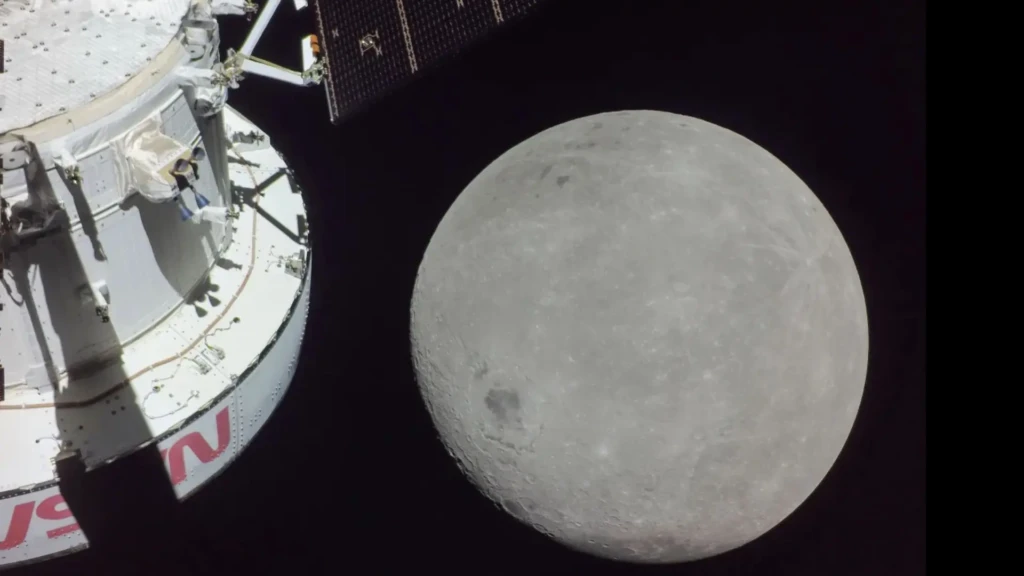
NASA's Orion spacecraft.
Orion spacecraft flies over the Moon. Image: NASA

Orion also set the record of travelling 4,34,523 km, breaking the record of distance travelled by a human-rated spacecraft during Apollo 13.

There were a few scary moments during the mission as Orion experienced multiple intermittent communication losses with the Deep Space Network, and some outages were longer than predicted. Besides, its heatshield eroded more than expected during atmospheric re-entry. Orion is said to have entered Earth’s atmosphere at 39,590 km per hour.

Artemis 2: The sequel

Building on the success of Artemis 1, NASA is now preparing for Artemis 2. The next lunar mission will have four astronauts aboard the Orion spacecraft and it may launch as soon as February 2026.

Notably, Artemis 2 does not involve landing as the crew will return after orbiting the Moon in 10 days. The objective is to test the Orion’s life support systems along with other critical technology and make necessary changes for Artemis 3 – the Moon landing mission targeted for 2027.

ALSO READ: Neil deGrasse Tyson Shares The Only Reasons Humans May Reach Mars

ALSO READ: Artemis 2 Explained: NASA’s First Crewed Moon Mission Since 1972

TAGGED:ArtemisArtemis 1Artemis 2moonNASA
Share This Article
Facebook Pinterest Whatsapp Whatsapp LinkedIn Copy Link Print

Latest News

Artist's impression of NASA's Psyche spacecraft.
NASA’s Psyche Spacecraft Will Zoom Past Mars Today On Its Way To Metal-Rich Asteroid
Astronomy
SpaceX Starship
SpaceX Starship’s 12th Test Flight Targeted On May 20; No Booster Catch This Time
Spaceflight
SpaceX's Starship during launch rehearsal.
SpaceX Completes Starship’s Launch Rehearsal For Flight 12 This Week; What To Expect?
Spaceflight
China US rivalry reach new heights.
‘Rival’ China Is Unintentionally The Biggest Motivator For NASA’s Moon Ambitions
Spaceflight

You Might Also Like

NASA spherex
Astronomy

NASA Releases Insane Cosmic Map Made By Its Brand New SPHEREx Telescope

January 5, 2026
NASA Crew-12 astronauts
Spaceflight

Welcome Aboard! Watch Astronauts Welcome NASA’s Crew-12 On International Space Station

February 21, 2026
Blue Origin's Mars orbiter
Spaceflight

Meet Blue Origin’s Mars Orbiter Designed To Serve NASA’s Red Planet Connectivity Goals

February 12, 2026
Voyager 1 illustration
Astronomy

NASA’s Voyager 1 Will Be One Light-Day Away From Earth In 2026 – What This Means

January 26, 2026
© 2026, Blue Terra Journal
  • About
  • Privacy Policy
  • Terms
  • Contact
Welcome Back!

Sign in to your account

Username or Email Address
Password

Lost your password?