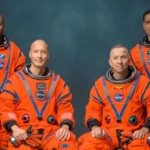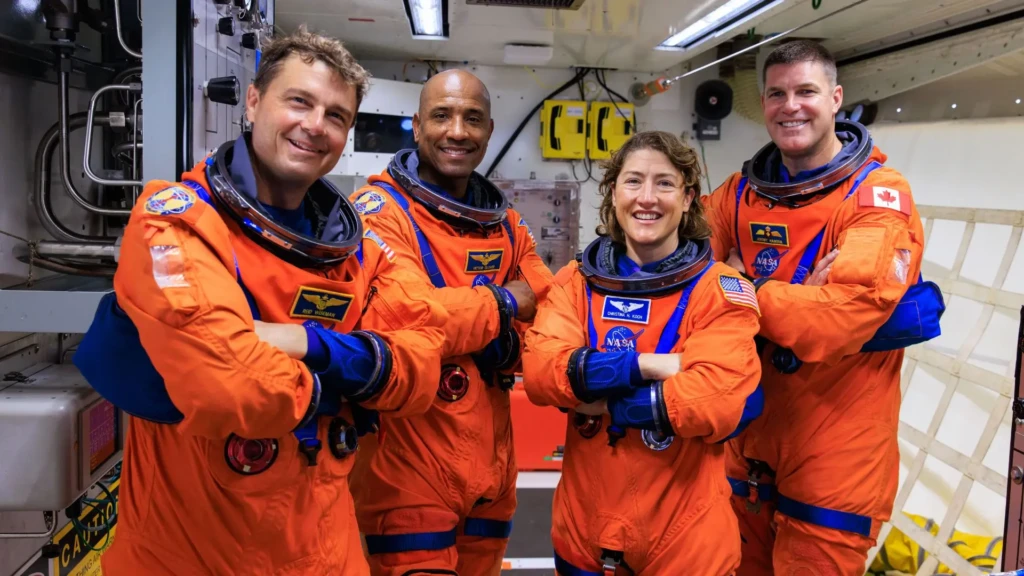
Excitement is building up for the first crewed lunar mission in over 50 years. NASA’s Artemis II astronauts are in the final stages of preparation for the mission which could launch as soon as February 8. American astronauts Reid Wiseman, Christina Koch, Victor Glover and Canada’s Jeremy Hansen will board the Orion spacecraft for a 10-day trip around the Moon, paving way for a lunar landing in 2028.
What will the Artemis II mission around the Moon accomplish? What science will be aboard? How will this lead to crewed missions to Mars? Find these answers in NASA’s Artemis II Reference Guide!
Check it out here: https://t.co/3G3RveNjqe pic.twitter.com/2pRp0xpxbm
— NASA Artemis (@NASAArtemis) January 29, 2026
NASA has lined up several research projects that will be conducted once Orion is in space. They are primarily dedicated to human health that will provide invaluable insights for crewed missions to Mars. Here’s all you need to know about the science on Artemis II.
Major research areas for Artemis II
ARCHeR: Artemis Research for Crew Health and Readiness
This focuses on collecting information on sleep, stress, cognition and teamwork of the four astronauts throughout Artemis II. These factors are considered key in astronaut health and performance but they’ve never been studied during lunar missions.

For this research, the crew will wear wristband devices to allow real-time health monitoring and safety assessments. Comparing this data to preflight information could reveal how these factors are affected.
Immune biomarkers
Immune biomarkers will focus on determining what affects the astronauts’ immune systems in deep space. Researchers will collect dry and wet saliva samples of the crew members before and after the flight to notice changes in the immune system due to radiation, isolation and distance from Earth.
Moon science? Yes. Preparing for our long-term future in space? Also yes. ✅ ✅
The Artemis II lunar flyby mission will give humanity a new perspective on the Moon, and test the systems and technology that will eventually bring astronauts to the lunar surface to stay. pic.twitter.com/z7r4ESarvB
— NASA Solar System (@NASASolarSystem) January 28, 2026
Additionally, dormant viruses which could get reactivated in space will also be monitored. This has been previously seen with chickenpox and shingles causing viruses on the International Space Station (ISS).
AVATAR: A Virtual Astronaut Tissue Analog Response
AVATAR is also meant to study the effects of space on humans. It involves chips the size of USB thumb drives designed to measure how individual astronauts respond to extreme radiation and microgravity.
According to NASA, the organ chips will contain cells developed from preflight blood donations provided by crew members to create miniature stand-ins, or ‘avatars,’ of their bone marrow. Since bone marrow plays a vital role in the immune system and is particularly sensitive to radiation, scientists think it’s the perfect organ for this study.
To validate whether organ chips can serve as accurate tools for measuring and predicting human responses to stressors, researchers will compare the data to findings on the ISS. NASA says this research could lead to treatment of diseases such as cancer.
Artemis II standard measures
This is another health-focused research aimed at developing a comprehensive understanding of astronauts’ minds and bodies. For Artemis II, the crew provided their blood, urine and saliva samples six months ago for evaluation of nutritional status, cardiovascular health, and immunological function.
The crew will also undergo tests of their heads, eyes and body movements among other functional performance tasks for a month after Artemis II ends. This research is supposed to help develop intervention methods and technologies for enhanced adaptability of Mars-bound crews.
Orion radiation study
Similar to Artemis I, which launched on November 2022, Artemis II’s Orion spacecraft will also be equipped with sensors at various locations. Despite confirming that Orion is perfectly capable of protecting the crew members from hazardous radiation levels, NASA wants to continue this study.

Apart from the sensors, astronauts will carry dosimeters in their pockets and these devices will together provide warnings of hazardous radiation levels caused by space weather events.
These sensors have been provided by the German Space Agency, which was a NASA partner for Artemis I as well. The enhanced sensors will provide six times more resolution to distinguish between different types of energy compared to the Artemis I version.
Lunar observation and documentation
Artemis II astronauts will get stunning views of the lunar surface as they swing by the Moon before returning to Earth. NASA wants to use this opportunity to take close ups of the lunar surface because the imagery could drive future scientific investigations into the Moon’s geological history, the lunar environment or new impact sites.
The crew will be the first since Apollo 17 (1972) to get this close to the Moon. Depending on the launch time and date, the astronauts may be the first humans to get a peek at the far side of the Moon. According to NASA, it may consult a team of scientists with expertise in impact cratering, volcanism, tectonism, and lunar ice to provide real-time data analysis and guidance to the astronauts.
The four cubesats
NASA has reduced the number of cubesats from 10 on Artemis I to four on Artemis II. Argentina has contributed the ATENEA satellite to collect data on radiation doses across various shielding methods, measure the radiation spectrum around Earth, collect GPS data to help optimize future mission design, and validate a long-range communications link.
South Korea has built the K-Rad Cube to assess biological effects at various altitudes across the Van Allen Belts (radiation-filled region) using a dosimeter designed to mimic human tissue.
Saudi Arabia is sending the Space Weather CubeSat to measure aspects of space weather, including radiation, solar X-rays, solar energetic particles, and magnetic fields whereas the German Space Agency contributed TACHELES, designed to collect measurements on the effects of the space environment on electrical components to inform technologies for lunar vehicles.
ALSO READ: NASA’s Artemis II To Carry Relic Of Humanity’s First Flight And More To The Moon
ALSO READ: NASA’s Artemis II Crewed Moon Mission May Launch On Feb 6 – All The Records It Will Set