Blue Terra Journal

  • Home
  • Spaceflight
    SpaceflightShow More
    Menstruation cups
    Menstruation Cups May Be The Giant Leap Needed For Women’s Health In Space
    December 7, 2025
    Blue Origin NS-37 mission
    Blue Origin Will Launch First Wheelchair User To Space On New Shepard Mission
    December 4, 2025
    Jared Isaacman SpaceX
    Jared Isaacman Defends Ties With Elon Musk And SpaceX: ‘No Different Than NASA’
    December 4, 2025
    China Zhuque-3
    China’s Private Rocket Fails To Land After Successful Liftoff; Crash Video Surfaces
    December 3, 2025
    NASA Roscosmos
    NASA Drops Russian Cosmonaut From Crew-12 Amid Reports of ‘Leaked’ SpaceX Secrets
    December 3, 2025
  • Astronomy
    AstronomyShow More
    Earth geomagnetic storm
    Earth Gets Another Geomagnetic Storm Warning After Strong Solar Eruption | Video
    December 8, 2025
    Alaknanda galaxy gravitational lensing
    What is ‘Gravitational Lensing’ That Made Alaknanda Galaxy’s Discovery Possible?
    December 6, 2025
    NASA telescope
    NASA’s Incredible Nancy Grace Roman Telescope Is Assembled – Here’s What It Will Do
    December 6, 2025
    Bennu asteroid
    Asteroid Bennu Has More Than Just Ingredients Of Life – What NASA Found
    December 6, 2025
    ESA comet 3I/ATLAS
    ESA Drops Surprise Preview Of Comet 3I/ATLAS Images From JUICE Spacecraft
    December 5, 2025
  • India
    IndiaShow More
    ISRO NISAR satellite
    ISRO Releases Image Of Godavari Delta Captured By $1.5 Billion NISAR Satellite
    December 2, 2025
    Skyroot Aerospace Vikram-I rocket.
    Skyroot Aerospace’s First Commercial Rocket Vikram-I Unveiled; Launch Soon
    November 27, 2025
    ISRO LVM3.
    ISRO Gears Up To Launch SpaceX Rival’s Broadband Satellite On Dec 15
    November 24, 2025
    ISRO
    ISRO’s Bahubali Milestone: Cryogenic Edge To Power Multiple Satellite Injections
    November 17, 2025
    ISRO Gaganyaan drop test.
    ISRO Completes Parachute Air Drop Test Of Gaganyaan Crew Module | Video
    November 21, 2025
  • Artemis
    ArtemisShow More
    NASA Artemis IV
    NASA Picks $50 Million Tools To Unlock The Moon’s Secrets On Artemis IV Mission
    December 7, 2025
    Jared Isaacman NASA
    NASA Chief Nominee Jared Isaacman Reiterates Pledge To Beat China In Moon Race
    December 3, 2025
    NASA Artemis 2 Orion spacecraft.
    Artemis 2: Unraveling NASA Orion Capsule – Humanity’s Ride To The Moon
    November 26, 2025
    NASA Artemis 2
    NASA Stacks Artemis 2 Spacecraft On Moon Rocket; Here’s What’s Next
    December 4, 2025
    Artemis vs apollo suit
    Artemis Vs Apollo: Why New Prada Spacesuits Are Better For NASA Astronauts
    November 27, 2025
  • More
    • About
    • Privacy Policy
    • Terms
    • Contact

Blue Terra Journal

  • Home
  • Spaceflight
  • Astronomy
  • India
  • Artemis
Search
  • Pages
    • About
    • Contact
    • Privacy Policy
    • Terms

Home - Astronomy - When NASA’s DART Mission Proved We Could Stop Armageddon

Astronomy

When NASA’s DART Mission Proved We Could Stop Armageddon

'So you're telling me there's a chance?'

Harsh Vardhan
Last updated: November 18, 2025 9:58 PM
Harsh Vardhan
Share
5 Min Read
NASA DART
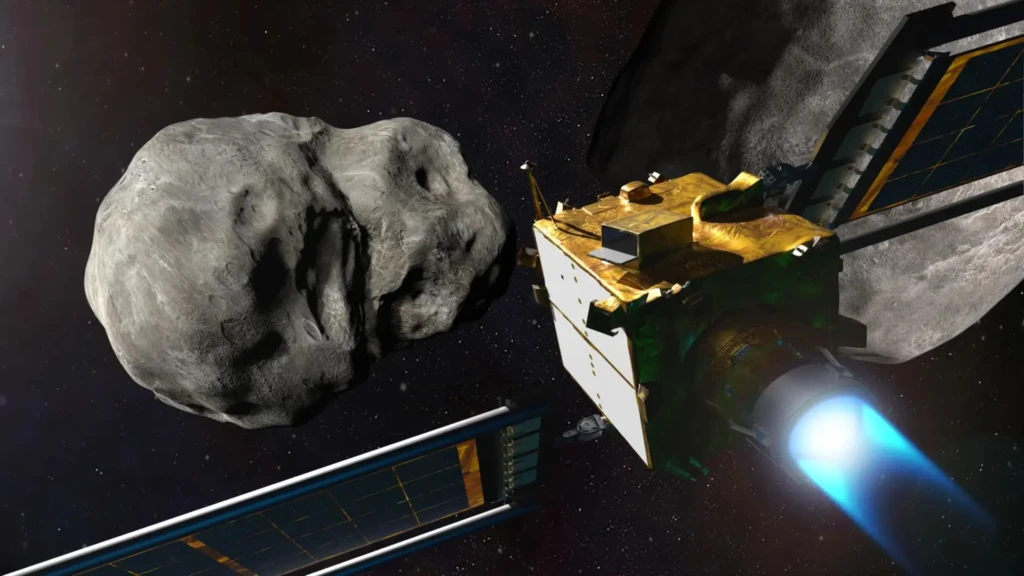
Artist's impression of DART impacting an asteroid. Image: NASA
SHARE


Contents
  • Killer rocks: The threat is real
  • Can asteroids be neutralised?

In November 2021, NASA launched a daring mission to smack a space rock lying 27 million kilometres from Earth. About 10 months later, the world saw, for the first time, a spacecraft deliberately slamming into an asteroid, in what was a bold step to build a planetary defense technology.

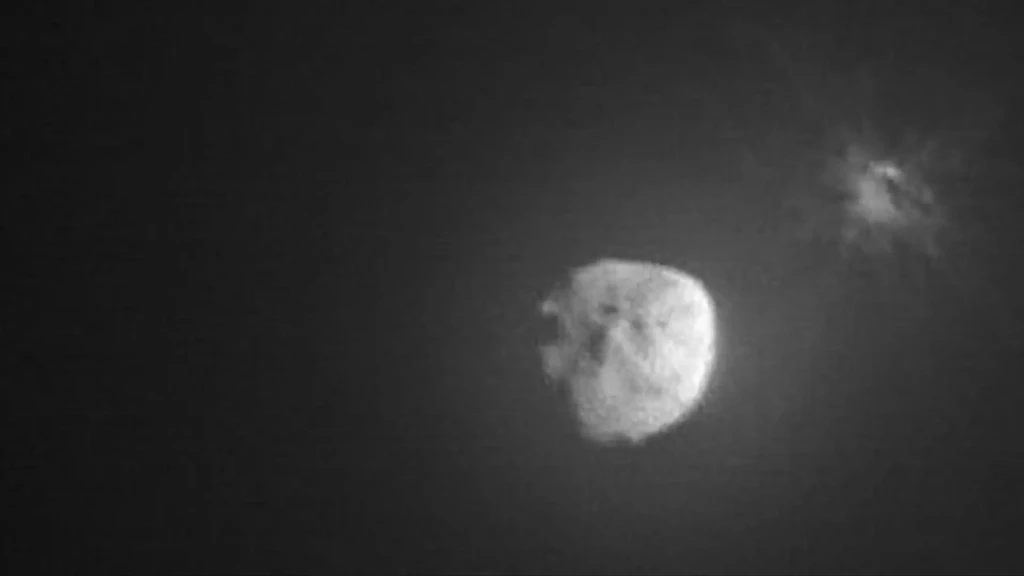
The mission was the Double Asteroid Redirection Test (DART) and the target was Dimorphos, a 525 feet or 160 meters wide rock that was orbiting another asteroid Didymos (measuring 2,559 feet or 780 meters).
NASA DART mission.
Dimorphos (left) next to Didymos (center) after DART’s impact. Image: NASA

When the impact occurred on September 26, 2022, it didn’t just prove a concept, it demonstrated that humanity can deflect a threatening asteroid and fundamentally enhance our planetary defense capabilities.

Killer rocks: The threat is real

The NASA’s Planetary Defense Coordination Office leads the search for potentially hazardous asteroids using telescopes like Catalina Sky Survey, Pan-STARRS and ATLAS, and space-based observatories such as NEOWISE. As of September 2025, the agency has discovered 39,123 near-Earth asteroids of all sizes, out of which 873 are larger than 1 km wide and 11,343 are larger than 140 meters.

Between October and September alone, as many as 12 near-Earth asteroids passed closer to the Earth than the Moon, and there were 176 asteroids which made their closest approach to our planet in the last 365 days. NASA says that their flybys bombarded Earth with 100 tons of dust and sand-sized particles, but since most of them burnup in the atmosphere, they never make it to the surface.

However, there have been instances when we were not so lucky. The Tunguska event of 1908 is one of the most talked about when one discusses the threat of asteroid impacts (other than the Chicxulub that killed the dinosaurs).

Tunguska asteroid impact.
Fallen trees after Tunguska asteroid event. Image: NASA

It was a quiet morning of June 30, 1908 when an asteroid exploded in the sky over Tunguska in Russia, at 7:15 am. The space rock was estimated to be between 30-40 meters wide and was travelling at approximately 1,00,000 km per hour. Even though it exploded between 6-10 km above the surface, the explosion released energy equivalent to 10-15 megatons of TNT. An expedition team, which went to explore the site nearly 20 years after the event, discovered that the asteroid had knocked over 80 million trees and completely destroyed more than 2,200 square km of forest area.

While there were no confirmed deaths from the explosion, several locals were knocked unconscious and herds of reindeers in the forest perished.

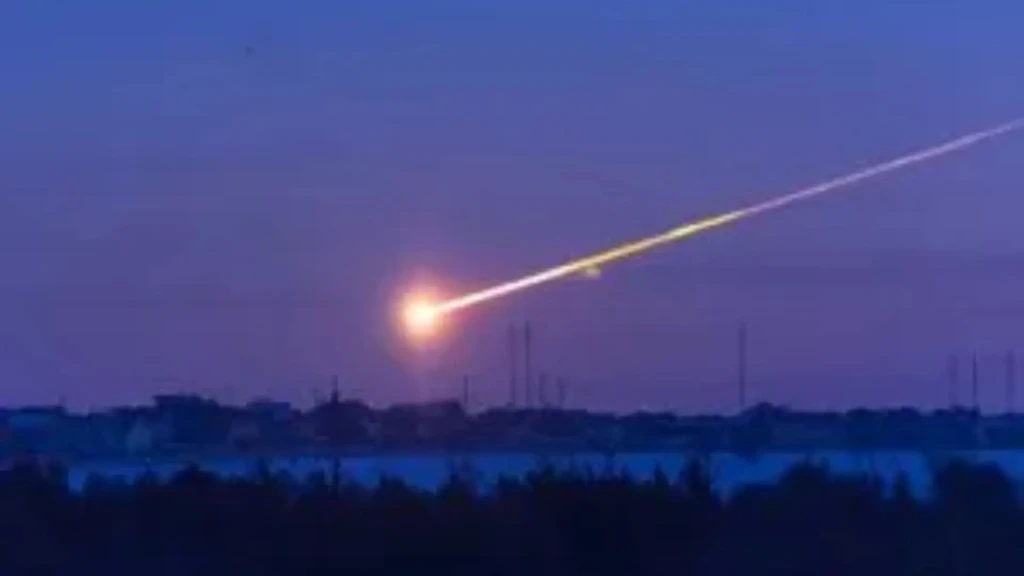
Russia witnessed a similar event in 2013, now remembered as the Chelyabinsk Impact, due to an explosion caused by an asteroid that impacted Earth’s atmosphere.
Chelyabinsk asteroid
The Chelyabinsk asteroid entering Earth’s atmosphere. Image: NASA

This also occurred several kilometres above the ground releasing energy equivalent to 4,40,000 tons of TNT and injuring 1,600 people within a radius of over 500 square km.

ALSO READ: Artemis 3 Delayed To 2028? Report Says SpaceX’s Starship May Hurt NASA Again

Can asteroids be neutralised?

It may have seemed impossible before but DART proved it can be done. With this mission, NASA wanted to test and demonstrate a method of changing an asteroid’s motion in space using a ‘kinetic impactor.’

When the small car-sized DART spacecraft impacted Dimorphos at 21,960 km per hour, it managed to change the asteroid’s orbital period from 11 hours and 55 minutes to 11 hours and 23 minutes, shortening it by 32 minutes. The mission was flawlessly successful, proving that a mission like DART could be used to protect Earth from a collision with an asteroid.

Space agencies are now doubling down on this defense technique. In October 2024, the European Space Agency (ESA) launched the Hera mission that will rendezvous with Dimorphos in December 2026. The objective is to examine the twin-asteroid system post-collision and measure Dimorphos’s mass, study the crater left behind by DART and analyse the asteroid’s composition.

NASA is also building the NEO Surveyor space telescope to locate hazardous near-Earth asteroids that are hard to spot from the ground because they approach Earth from the direction of the Sun.
ALSO READ: The Fermi Paradox: Why We’ve Never Seen Aliens

TAGGED:asteroidDARTEuropean Space AgencyNASA
Share This Article
Facebook Pinterest Whatsapp Whatsapp LinkedIn Copy Link Print

Latest News

Earth geomagnetic storm
Earth Gets Another Geomagnetic Storm Warning After Strong Solar Eruption | Video
Astronomy
Menstruation cups
Menstruation Cups May Be The Giant Leap Needed For Women’s Health In Space
Spaceflight
NASA Artemis IV
NASA Picks $50 Million Tools To Unlock The Moon’s Secrets On Artemis IV Mission
Artemis
Alaknanda galaxy gravitational lensing
What is ‘Gravitational Lensing’ That Made Alaknanda Galaxy’s Discovery Possible?
Astronomy

You Might Also Like

SpaceX Starship Artemis 3
Artemis

Artemis 3 Delayed To 2028? Report Says SpaceX’s Starship May Hurt NASA Again

December 5, 2025
Blue Origin will attempt booster landing on November 10.
Spaceflight

Like SpaceX, Blue Origin Eyes Landing New Glenn Booster During ESCAPADE Launch

November 8, 2025
Saturn NASA
Astronomy

Saturn’s Rings Have Disappeared Again Due To This Cosmic Illusion

November 24, 2025
European Space Agency
Astronomy

Massive Coronal Mass Ejection Spotted On Another Star For The First Time

November 13, 2025
© 2025, Blue Terra Journal
  • About
  • Privacy Policy
  • Terms
  • Contact
Welcome Back!

Sign in to your account

Username or Email Address
Password

Lost your password?