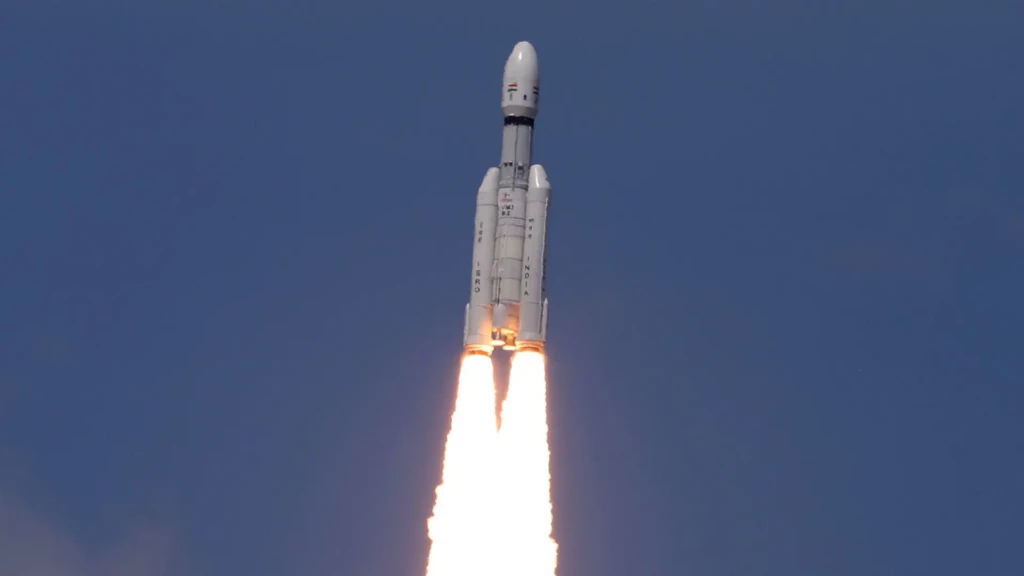
ISRO is gearing up for another major mission of 2025 next month. The launch of AST Spacemobile’s communication satellite will take place on December 15 atop its heaviest rocket LVM3 from ISRO‘s Satish Dhawan Space Center in Sriharikota. This rocket recently completed its fifth operational flight on November 2 with the successful completion of CMS-03 satellite for the Indian Navy.
AST SpaceMobile Announces BlueBird 6 Launch Date, the Largest Commercial Communications Array Ever Deployed in Low Earth Orbithttps://t.co/KJ1UMskCLn pic.twitter.com/FlaYgbmk5e
— AST SpaceMobile (@AST_SpaceMobile) November 21, 2025
LVM3 prepares for sixth flight
The LVM3 rocket will be lifting off with AST Spacemobile’s next-generation satellite BlueBird 6 that will provide cellular broadband coverage directly to everyday smartphones for commercial and government applications. It will feature the largest commercial phased array in low-Earth orbit at around 2,400 square feet, making it 3.5 times bigger than BlueBirds 1-5. This satellite also has 10 times the data capacity.
World’s largest commercial LEO spacecraft meets the world’s largest cargo aircraft. En route to India.
Many more coming soon! Our next-gen launch campaign has officially started 🚀🚀🚀🚀🚀🚀#ASTSpaceMobile #NextGenBlueBird #ConnectingtheUnconnected pic.twitter.com/opNUaQlTln
— AST SpaceMobile (@AST_SpaceMobile) October 12, 2025
In a statement, AST said it is accelerating production of satellites and expects five orbital launches by the end of Q1 2026. It also said that launches will occur “every one to two months on average to reach 45–60 satellites launched by the end of 2026 and support continuous coverage across the United States and select markets.“
The upcoming mission will mark ISRO’s sixth mission with LVM3. Prior to CMS-03, the rocket has previously supported two commercial launches for OneWeb, and two lunar missions Chandrayaan-2 (2019) and Chandrayaan-3 (2023).
ISRO boosts SpaceX rival’s business
AST Spacemobile is competing with SpaceX‘s Starlink, OneWeb and Amazon’s Leo (previously named Kuiper) that intend to provide high-speed internet via satellites. But AST is playing a different game. Its satellites will connect directly to normal smartphones and doesn’t require terminals, satellite dishes or special hardware.

On the other hand, companies like Starlink, OneWeb and Kuiper require terminals and dishes to avail internet services.
Another major difference between AST and its competitors is that the former is meant for nationwide mobile coverage via government and mobile networks whereas others can be personalised for home and office use because they use their own satellite spectrum.
However, all of them are rushing to launch their satellites, with Starlink owning the biggest constellation with nearly 9,000 satellites to date. Reports say SpaceX plans to beef up Starlink’s constellation to 42,000 satellites.
ALSO READ: ISRO Completes Parachute Air Drop Test Of Gaganyaan Crew Module | Video
ALSO READ: ISRO’s Bahubali Milestone: Cryogenic Edge To Power Multiple Satellite Injections