Blue Terra Journal

  • Home
  • Spaceflight
    SpaceflightShow More
    SpaceX Starship
    SpaceX Starship’s 12th Test Flight Targeted On May 20; No Booster Catch This Time
    May 13, 2026
    SpaceX's Starship during launch rehearsal.
    SpaceX Completes Starship’s Launch Rehearsal For Flight 12 This Week; What To Expect?
    May 13, 2026
    China US rivalry reach new heights.
    ‘Rival’ China Is Unintentionally The Biggest Motivator For NASA’s Moon Ambitions
    April 28, 2026
    NASA Voyager 1 illustration
    NASA Shuts Down Another Voyager 1 Instrument; How Long Can This Spacecraft Last?
    April 22, 2026
    NASA's SR-1 Freedom spacecraft.
    What Is NASA’s SR-1 Freedom Mission? The First Nuclear Reactor In Space Explained
    March 27, 2026
  • Astronomy
    AstronomyShow More
    Artist's impression of NASA's Psyche spacecraft.
    NASA’s Psyche Spacecraft Will Zoom Past Mars Today On Its Way To Metal-Rich Asteroid
    May 15, 2026
    Comet MAPS image
    Video: Comet MAPS destroyed after plunging into the Sun; event caught by NASA missions
    April 18, 2026
    Apophis asteroid flyby
    ‘God Of Chaos’: Apophis Asteroid Will Fly Dangerously Close To Earth Exactly 5 Years From Now
    April 14, 2026
    Meteor spotted over Houston.
    Video Captures 1-Ton Meteor Exploding Over Houston Skies, NASA Releases Statement
    March 22, 2026
    NASA black hole simulation
    Fall Into A Black Hole With This Incredibly Scary Simulation Made By NASA
    March 18, 2026
  • India
    IndiaShow More
    Shubhanshu Shukla aboard the ISS.
    ISRO Astronaut Shubhanshu Shukla Awarded Ashoka Chakra For Heroic Ax-4 Mission
    February 9, 2026
    ISRO's PSLV lifts off to space.
    ISRO’s PSLV Rocket Suffers Third Stage Failure After Successful Liftoff; Payloads Lost
    January 23, 2026
    Dhruva Space team at ISRO facility.
    India’s Dhruva Space To Launch 10 Missions, Including 1st Northeastern Satellite, On ISRO’s PSLV
    January 12, 2026
    ISRO's PSLV rocket
    ISRO To Seek Redemption With PSLV-C62 Mission Launch On January 12
    January 12, 2026
    ISRO SSLV
    ISRO’s SSLV Rocket Just Got Better After Latest Third Stage Test Fire
    December 31, 2025
  • Artemis
    ArtemisShow More
    NASA Artemis II mission
    Welcome Home! NASA’s Artemis II Astronauts Are Back After Historic Moon Voyage
    April 22, 2026
    NASA Artemis II iPhone image
    iPhones Reigned Supreme On NASA’s Artemis II Moon Mission
    April 10, 2026
    Artemis II NASA
    All Eyes On Scary Artemis II Reentry As NASA Moon Mission Nears Completion
    April 9, 2026
    NASA Artemis II
    NASA Artemis II Crew Names Moon Crater ‘Carroll’ After Commander Reid Wiseman’s Late Wife
    April 7, 2026
    NASA Artemis II
    Watch: NASA Artemis II Astronauts Begin Flyby Of Moon’s Far Side For The First Time Ever
    April 9, 2026
  • More
    • About
    • Privacy Policy
    • Terms
    • Contact

Blue Terra Journal

  • Home
  • Spaceflight
  • Astronomy
  • India
  • Artemis
Search
  • Pages
    • About
    • Contact
    • Privacy Policy
    • Terms

Home - Astronomy - Saturn’s Rings Have Disappeared Again Due To This Cosmic Illusion

Astronomy

Saturn’s Rings Have Disappeared Again Due To This Cosmic Illusion

The rings won't be visible for a while.

Harsh Vardhan
Last updated: November 24, 2025 12:35 PM
Harsh Vardhan
Share
4 Min Read
Saturn NASA
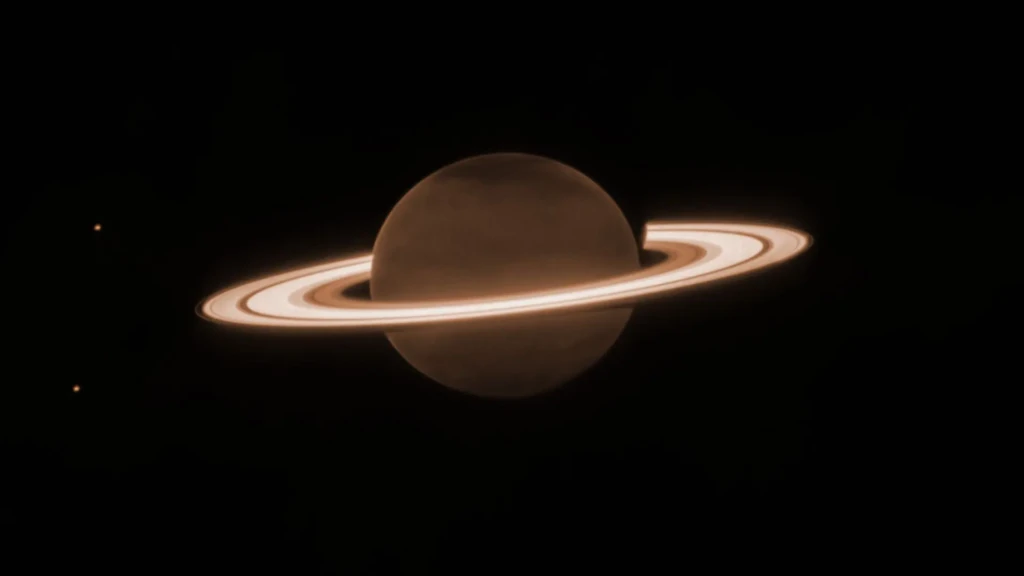
Saturn photographed by James Webb Space Telescope. Image: NASA
SHARE

Contents
  • Why Saturn’s rings disappear occasionally?
  • Where to spot Saturn?
  • Saturn’s ring may disappear for real

Saturn’s rings have ‘disappeared’ from our view and they won’t be visible in the coming weeks. The disappearance is an illusion caused by Saturn‘s position in its orbit around the Sun. This phenomenon called ‘ring plane crossing’ occurs every 13 to 15 years, making the its majestic rings almost invisible from a certain vantage point.

Saturn’s rings have disappeared! (Kind of.)

Due to their tilt from the perspective of Earth, the planet’s rings have appeared to vanish. But don’t worry – as Saturn continues to rotate, the rings will become visible again. 🪐 pic.twitter.com/e9Y9gW4ulf

— NASA JPL (@NASAJPL) November 23, 2025

Why Saturn’s rings disappear occasionally?

According to NASA, Saturn is tilted about 26.7 degrees on its axis and this tilt decides the visibility of the rings. For a viewer on Earth, the rings either tilt toward or away as both planets orbit the Sun.

Occasionally, Saturn reaches a point where we see the rings edge-on rather than the full breadth. When the two planets align themselves this way, Saturn’s rings appear to vanish. This ‘disappearance’ lasts from a few days to several weeks. As Earth and Saturn continue on their orbits, the rings gradually tilt back and become more visible.
Saturn NASA
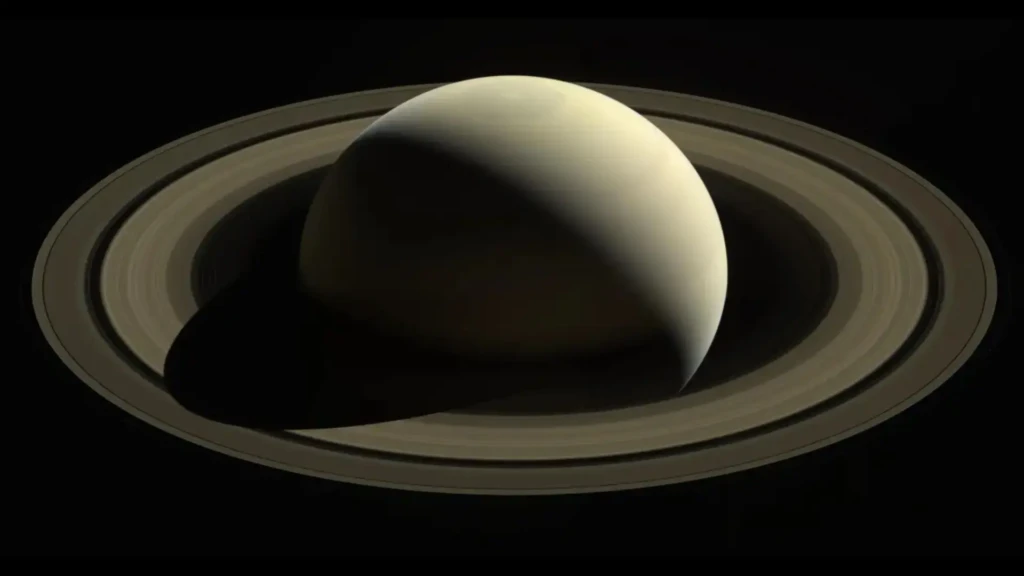
Saturn’s rings captured by NASA’s Cassini spacecraft. Image: NASA

During the ‘ring plane crossing’, the rings are difficult to spot even with telescopes.

Interestingly, Saturn went through a similar phase in March this year but it was only a near-edge alignment. But this also made the rings appear extremely thin. It is different from a ‘ring plane crossing’ which happens over longer periods of time due to Saturn’s 29.5 year-orbital period.

Saturn’s majestic rings will appear to disappear tonight (Nov 23) as they turn edge-on from Earth. Try a small telescope and look toward Saturn!
See how 👇 pic.twitter.com/NNTqtiiY0b

— Olamide Jabar (@olamidejabar1) November 23, 2025

ALSO READ: Why Are Comet 3I/ATLAS Images Released By NASA So Blurry?

Where to spot Saturn?

Even if you don’t have a telescope, you can still find Saturn after sunset. The planet will be visible as a bright evening star at around 6 pm just above the horizon in the southeast. The best viewing time is around 8 pm, when it will be highest in the sky in the constellation Aquaris. You can locate the constellation using several free astronomy apps on your phone.

Saturn’s ring may disappear for real

Various studies, including those by NASA, predict that Saturn’s inner rings may disappear in the next 100 million years. Astronomers once believed that the rings were as old as Saturn (4.5 billion years) but measurements from the Cassini spacecraft suggest they are much younger.

Cassini’s observations showed that ice and dust from the rings are steadily falling into Saturn and the rings are also being darkened and eroded by micrometeoroid impacts. These processes together are shortening the rings’ lifespan.

ALSO READ: When NASA’s DART Mission Proved We Could Stop Armageddon

TAGGED:EarthNASASaturnSaturn rings
Share This Article
Facebook Pinterest Whatsapp Whatsapp LinkedIn Copy Link Print

Latest News

Artist's impression of NASA's Psyche spacecraft.
NASA’s Psyche Spacecraft Will Zoom Past Mars Today On Its Way To Metal-Rich Asteroid
Astronomy
SpaceX Starship
SpaceX Starship’s 12th Test Flight Targeted On May 20; No Booster Catch This Time
Spaceflight
SpaceX's Starship during launch rehearsal.
SpaceX Completes Starship’s Launch Rehearsal For Flight 12 This Week; What To Expect?
Spaceflight
China US rivalry reach new heights.
‘Rival’ China Is Unintentionally The Biggest Motivator For NASA’s Moon Ambitions
Spaceflight

You Might Also Like

Blue Origin's New Glenn rocket.
Spaceflight

NASA’s ESCAPADE Mission Now Set For Launch On Nov 14, Says Blue Origin

November 14, 2025
Artist's impression of a NASA Moon base.
Spaceflight

NASA Moon Base: How The US Will Spend $20 Billion On This Ambitious Project

March 25, 2026
European Space Agency
Astronomy

Massive Coronal Mass Ejection Spotted On Another Star For The First Time

November 13, 2025
Blue Origin Mark 1 lander.
Spaceflight

Blue Origin Halts New Shepard Missions For At Least 2 Years To Land Humans On The Moon

April 2, 2026
© 2026, Blue Terra Journal
  • About
  • Privacy Policy
  • Terms
  • Contact
Welcome Back!

Sign in to your account

Username or Email Address
Password

Lost your password?