Blue Terra Journal

  • Home
  • Spaceflight
    SpaceflightShow More
    SpaceX Starship
    SpaceX Starship’s 12th Test Flight Targeted On May 20; No Booster Catch This Time
    May 13, 2026
    SpaceX's Starship during launch rehearsal.
    SpaceX Completes Starship’s Launch Rehearsal For Flight 12 This Week; What To Expect?
    May 13, 2026
    China US rivalry reach new heights.
    ‘Rival’ China Is Unintentionally The Biggest Motivator For NASA’s Moon Ambitions
    April 28, 2026
    NASA Voyager 1 illustration
    NASA Shuts Down Another Voyager 1 Instrument; How Long Can This Spacecraft Last?
    April 22, 2026
    NASA's SR-1 Freedom spacecraft.
    What Is NASA’s SR-1 Freedom Mission? The First Nuclear Reactor In Space Explained
    March 27, 2026
  • Astronomy
    AstronomyShow More
    Artist's impression of NASA's Psyche spacecraft.
    NASA’s Psyche Spacecraft Will Zoom Past Mars Today On Its Way To Metal-Rich Asteroid
    May 15, 2026
    Comet MAPS image
    Video: Comet MAPS destroyed after plunging into the Sun; event caught by NASA missions
    April 18, 2026
    Apophis asteroid flyby
    ‘God Of Chaos’: Apophis Asteroid Will Fly Dangerously Close To Earth Exactly 5 Years From Now
    April 14, 2026
    Meteor spotted over Houston.
    Video Captures 1-Ton Meteor Exploding Over Houston Skies, NASA Releases Statement
    March 22, 2026
    NASA black hole simulation
    Fall Into A Black Hole With This Incredibly Scary Simulation Made By NASA
    March 18, 2026
  • India
    IndiaShow More
    Shubhanshu Shukla aboard the ISS.
    ISRO Astronaut Shubhanshu Shukla Awarded Ashoka Chakra For Heroic Ax-4 Mission
    February 9, 2026
    ISRO's PSLV lifts off to space.
    ISRO’s PSLV Rocket Suffers Third Stage Failure After Successful Liftoff; Payloads Lost
    January 23, 2026
    Dhruva Space team at ISRO facility.
    India’s Dhruva Space To Launch 10 Missions, Including 1st Northeastern Satellite, On ISRO’s PSLV
    January 12, 2026
    ISRO's PSLV rocket
    ISRO To Seek Redemption With PSLV-C62 Mission Launch On January 12
    January 12, 2026
    ISRO SSLV
    ISRO’s SSLV Rocket Just Got Better After Latest Third Stage Test Fire
    December 31, 2025
  • Artemis
    ArtemisShow More
    NASA Artemis II mission
    Welcome Home! NASA’s Artemis II Astronauts Are Back After Historic Moon Voyage
    April 22, 2026
    NASA Artemis II iPhone image
    iPhones Reigned Supreme On NASA’s Artemis II Moon Mission
    April 10, 2026
    Artemis II NASA
    All Eyes On Scary Artemis II Reentry As NASA Moon Mission Nears Completion
    April 9, 2026
    NASA Artemis II
    NASA Artemis II Crew Names Moon Crater ‘Carroll’ After Commander Reid Wiseman’s Late Wife
    April 7, 2026
    NASA Artemis II
    Watch: NASA Artemis II Astronauts Begin Flyby Of Moon’s Far Side For The First Time Ever
    April 9, 2026
  • More
    • About
    • Privacy Policy
    • Terms
    • Contact

Blue Terra Journal

  • Home
  • Spaceflight
  • Astronomy
  • India
  • Artemis
Search
  • Pages
    • About
    • Contact
    • Privacy Policy
    • Terms

Home - Spaceflight - Menstruation Cups May Be The Giant Leap Needed For Women’s Health In Space

Spaceflight

Menstruation Cups May Be The Giant Leap Needed For Women’s Health In Space

Menstrual cups passed the first spaceflight hurdle.

Harsh Vardhan
Last updated: December 12, 2025 12:07 PM
Harsh Vardhan
Share
6 Min Read
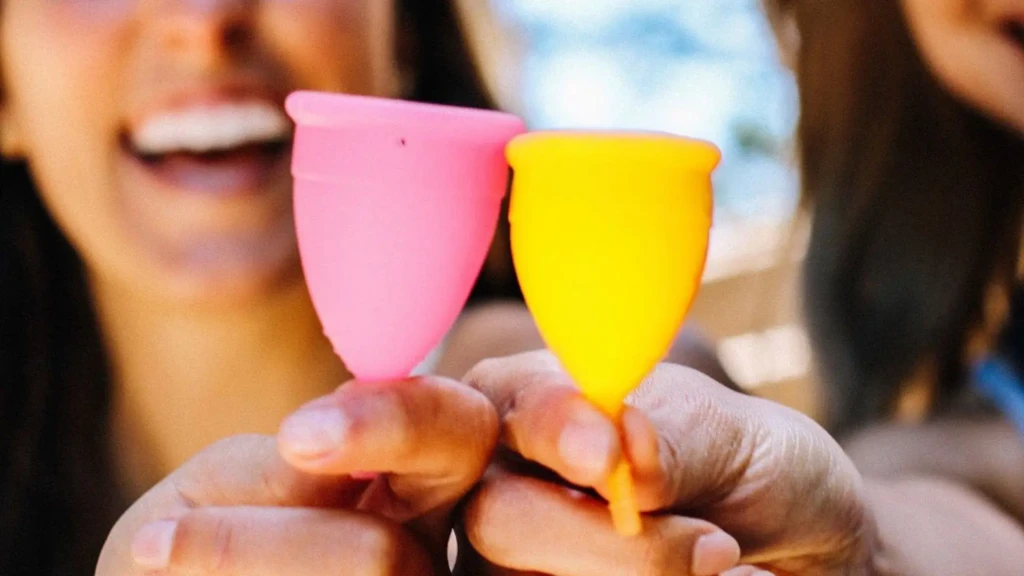
Menstruation cups
Menstruation cups developed by Lunette. Image: Lunette Global
SHARE

Contents
  • Results of the test
  • The path ahead
  • Menstruation in space

Ever since human spaceflight took off in 1961, more than 100 female astronauts have lived and worked in microgravity. Scientists have collected a lot of data on impacts of living in space but documentation of the effects on reproductive health, particularly those of women, has been scarce. Scientists at Cornell University’s Carl Sagan Institute are now trying to change that through the AstroCup project.

A team led by astrobiologist Lígia Coelho, a Postdoctoral Fellow in astronomy in the College of Arts and Sciences, is developing methods to give women a choice to menstruate in space during long duration missions to the Moon and Mars.


View this post on Instagram


A post shared by Lunette Global (@lunettecup)

In 2022, the team sent a payload with two menstrual cups on an uncrewed rocket and tested their resilience and functionality under the stresses of spaceflight conditions. The flight lasted nine minutes and the payload reached an altitude of three kilometres, allowing researchers to determine the durability of the cups manufactured by Finland-based company Lunette.

Results of the test

The results of the test conducted on October 15, 2022 were shared in a study published in the journal NJP Women’s Health on December 2 and they look promising. The authors wrote that the two silicone-based menstrual cups survived elevated levels of vibrational loads and mechanical stresses under varied conditions (air pressure, temperature, humidity and linear accelerations).

Their performance was evaluated using water and glycerol, an analog for human blood, and the cups showed no leaks, liquid contamination or material degradation. There were also no signs of wear or tear and their material integrity was consistent with the cups kept on Earth under standard lab conditions for comparison.
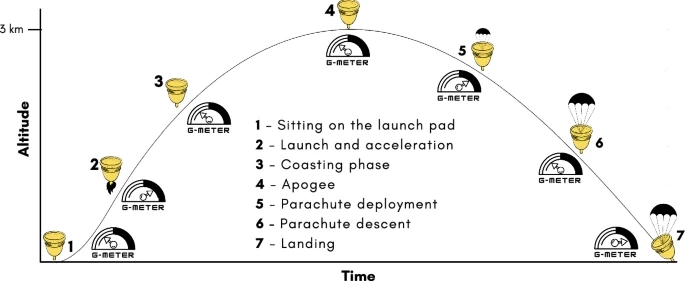
Menstruation Astrocup project.
Diagram of the AstroCup flight. Image: Lígia Coelho et. al, NJP Women’s Health

“This resilience is critical for space missions, where equipment must endure rigorous conditions. Menstrual cups could be a reliable and sustainable option for managing menstruation during missions to the Moon and Mars,” the authors wrote. “Unlike disposable products, they reduce waste, which is a key advantage in the confined, resource-limited environment of space. This could improve astronauts’ quality of life, autonomy, and simplify logistics for long-term missions.”

The path ahead

The test flight was a huge success but researchers have highlighted that the cups are yet to be tested in microgravity. The Moon has about 1/6th of Earth’s gravity whereas Mars has about 1/3rd. Testing them in similar environments is crucial because reduced gravity might affect how menstrual fluids flow, and gravitational and pressure differences could influence the performance of the cups.


View this post on Instagram


A post shared by AstroCup – Fly your menstrual cup! 🚀 (@astro_cup_)

“The success of AstroCup in Earth’s gravity is a positive starting point, but further testing is needed to confirm how the cups perform in reduced gravity,” the authors wrote. “For example, lower gravity might alter fluid dynamics, potentially requiring adjustments to the cups’ design or usage. Simulations in microgravity would help verify their effectiveness for the Moon and Mars.” They’re now planning to expose the cups to space radiation by sending them to the International Space Station (ISS). 

The researchers also need to figure out a way to clean such devices effectively because blood could serve as a medium for pathogenic bacteria and impact crew health. Besides, the sanitation process must require minimal use of water.

Menstruation in space

The 2022 test flight was a giant leap toward ensuring women have autonomy in space. Currently, female astronauts prefer supressing their periods using hormonal contraception on 6-months or longer missions to the space station. However, missions to the Moon under NASA’s Artemis Program could last up to a year or even over a decade eventually, and there’s not enough research on impact of chronic hormonal contraception use on astronauts’ health.

According to the authors, a solution is much-needed because female astronauts delay parenthood, on average, by 5.6 years compared to their male colleagues. Letting them choose whether to use contraception or not could allow reproduction in space or colonies on the Moon and even Mars. 

“I get passionate about the reasons why menstrual devices are still not in space,” Coelho said in a statement by Cornell University. “We need to have a serious conversation about what it means to have autonomy for health in space.”

Reusable devices like menstrual cups could be game-changer because they would solve the logistical and financial burden of shipping common menstrual products such as pads or tampons to space. NASA reportedly estimates that the cost per pound to launch these single-use products is $10,000. Menstrual underwear could be another alternative for current and future missions but tests are required to determine if they can be repurposed or need adaptations, the authors wrote.

ALSO READ: Artemis 2 Explained: NASA’s First Crewed Moon Mission Since 1972

ALSO READ: Artemis Vs Apollo: Why New Prada Spacesuits Are Better For NASA Astronauts
TAGGED:ArtemisastrocupInternational Space Stationmenstrual cupsmenstruationNASA
Share This Article
Facebook Pinterest Whatsapp Whatsapp LinkedIn Copy Link Print

Latest News

Artist's impression of NASA's Psyche spacecraft.
NASA’s Psyche Spacecraft Will Zoom Past Mars Today On Its Way To Metal-Rich Asteroid
Astronomy
SpaceX Starship
SpaceX Starship’s 12th Test Flight Targeted On May 20; No Booster Catch This Time
Spaceflight
SpaceX's Starship during launch rehearsal.
SpaceX Completes Starship’s Launch Rehearsal For Flight 12 This Week; What To Expect?
Spaceflight
China US rivalry reach new heights.
‘Rival’ China Is Unintentionally The Biggest Motivator For NASA’s Moon Ambitions
Spaceflight

You Might Also Like

Elon Musk SpaceX
Spaceflight

Elon Musk Says Tesla’s Optimus Will Be A Von Neumann Probe. What Does It Mean?

November 30, 2025
NASA ESCAPADE Mars spacecraft.
Spaceflight

NASA’s ESCAPADE Mission Is Off To Mars. What Happens Next?

December 4, 2025
NASA's Crew-12 astronauts
Spaceflight

NASA-SpaceX Delay Crew-12 Mission Again Due To High Winds; Launch Now Targeted For Feb. 13

February 13, 2026
SpaceX Dragon spacecraft.
Spaceflight

SpaceX Dragon Spacecraft Splashes Down With NASA’s Crew-11 Astronauts

January 17, 2026
© 2026, Blue Terra Journal
  • About
  • Privacy Policy
  • Terms
  • Contact
Welcome Back!

Sign in to your account

Username or Email Address
Password

Lost your password?