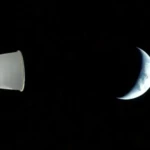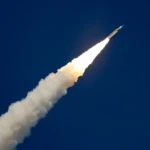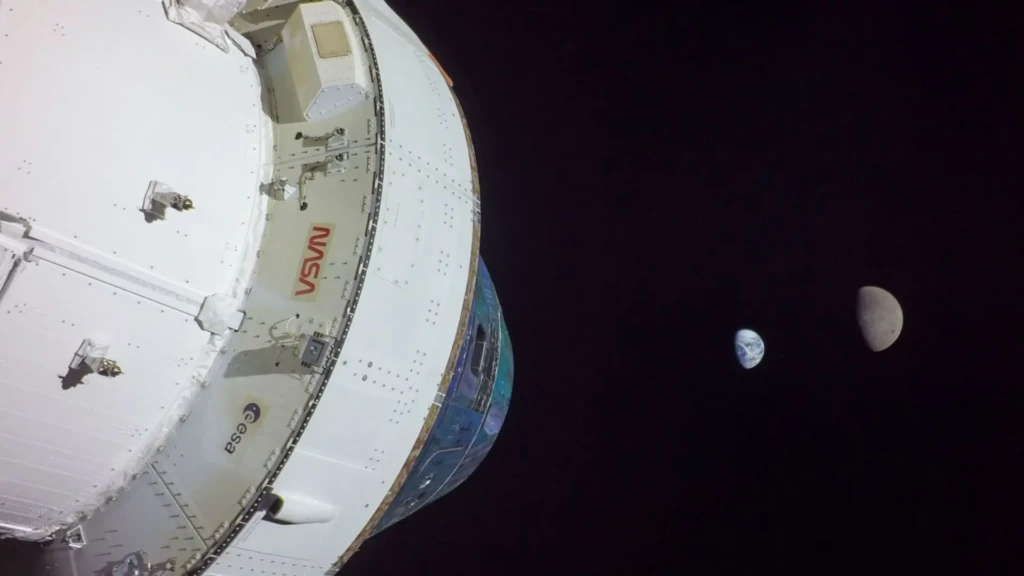
It has been three years since NASA launched the first integrated Moon mission of the Artemis Program. Artemis 1 lifted off on November 16, 2022, from NASA’s Kennedy Space Center notching up several historic feats along the way. Apart from being the first rocket launch by NASA since 2011, Artemis 1 marked the debut flight of the Space Launch System (SLS) rocket and it sent a human-rated spacecraft to the farthest distance ever. As we mark the third anniversary of this historic mission, here’s a quick look at its highlights.
The liftoff
The liftoff of the SLS rocket was a long-time coming as it ended a six-year wait for its launch. The launch vehicle roared into the night sky generating 8.8 million pounds of thrust and becoming the world’s most powerful operational rocket at the time.
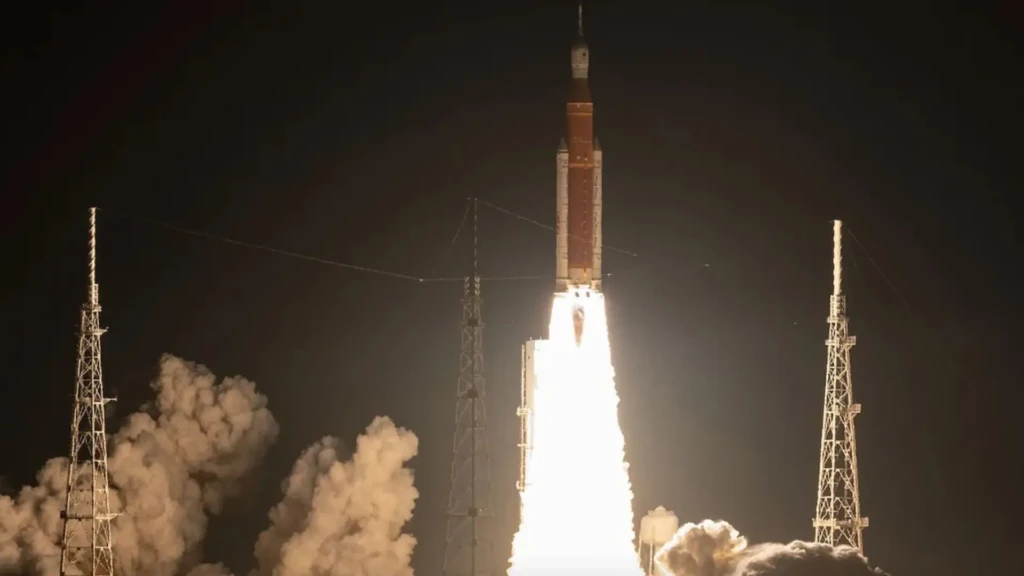
According to NASA, Artemis 1 lasted 25 hours, 10 days and 53 minutes. The specific aim of this mission was to test the integrated flight systems – the rocket, the Orion spacecraft, its navigation systems and re-entry performance in a real world environment.
The liftoff was also the official beginning of the Artemis program, built on Apollo‘s legacy, entailing the objective of not only creating sustainable bases on the Moon but also using them as launchpad for crew missions to Mars. The Artemis program is anchored by NASA, however, several other global space agencies have contributed to it. European Space Agency (ESA) provides the Orion spacecraft’s European Service Module (ESM), Japan contributes life support systems and payload, and UAE contributes space robotics and experiments. Private corporations are also a part of the program.
Artemis 1 successes and setbacks
During the mission, NASA successfully tested Orion’s European Service Module, solar arrays, navigation systems, radiation shielding, and Deep Space Network communications – all essential for future crewed flights.
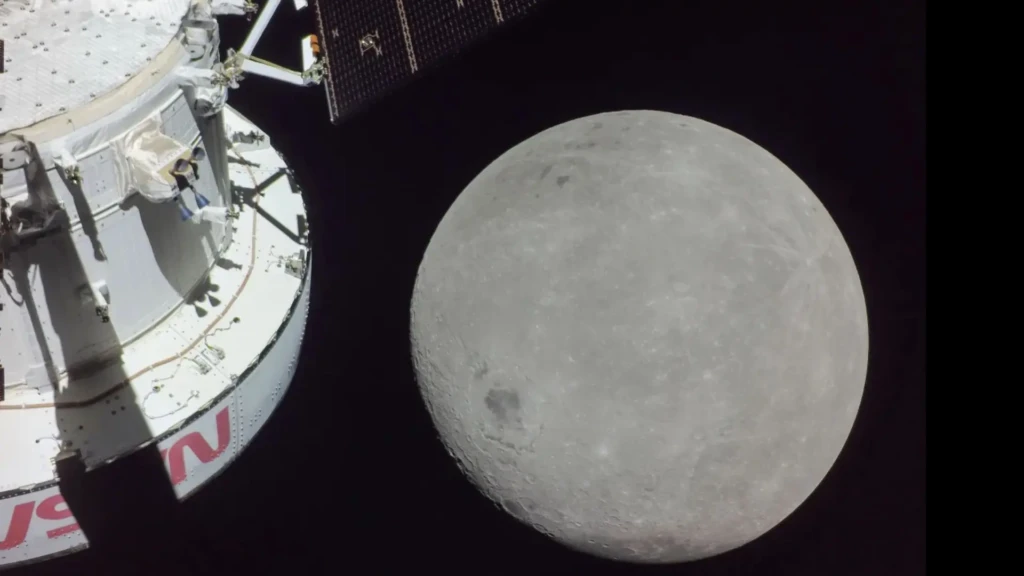
Orion also set the record of travelling 4,34,523 km, breaking the record of distance travelled by a human-rated spacecraft during Apollo 13.
There were a few scary moments during the mission as Orion experienced multiple intermittent communication losses with the Deep Space Network, and some outages were longer than predicted. Besides, its heatshield eroded more than expected during atmospheric re-entry. Orion is said to have entered Earth’s atmosphere at 39,590 km per hour.
Artemis 2: The sequel
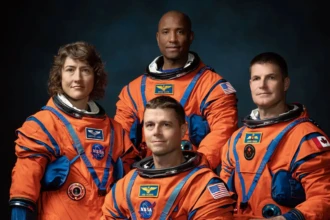
Building on the success of Artemis 1, NASA is now preparing for Artemis 2. The next lunar mission will have four astronauts aboard the Orion spacecraft and it may launch as soon as February 2026.
Notably, Artemis 2 does not involve landing as the crew will return after orbiting the Moon in 10 days. The objective is to test the Orion’s life support systems along with other critical technology and make necessary changes for Artemis 3 – the Moon landing mission targeted for 2027.
ALSO READ: Neil deGrasse Tyson Shares The Only Reasons Humans May Reach Mars
ALSO READ: Artemis 2 Explained: NASA’s First Crewed Moon Mission Since 1972