Blue Terra Journal

  • Home
  • Spaceflight
    SpaceflightShow More
    Menstruation cups
    Menstruation Cups May Be The Giant Leap Needed For Women’s Health In Space
    December 7, 2025
    Blue Origin NS-37 mission
    Blue Origin Will Launch First Wheelchair User To Space On New Shepard Mission
    December 4, 2025
    Jared Isaacman SpaceX
    Jared Isaacman Defends Ties With Elon Musk And SpaceX: ‘No Different Than NASA’
    December 4, 2025
    China Zhuque-3
    China’s Private Rocket Fails To Land After Successful Liftoff; Crash Video Surfaces
    December 3, 2025
    NASA Roscosmos
    NASA Drops Russian Cosmonaut From Crew-12 Amid Reports of ‘Leaked’ SpaceX Secrets
    December 3, 2025
  • Astronomy
    AstronomyShow More
    Alaknanda galaxy gravitational lensing
    What is ‘Gravitational Lensing’ That Made Alaknanda Galaxy’s Discovery Possible?
    December 6, 2025
    NASA telescope
    NASA’s Incredible Nancy Grace Roman Telescope Is Assembled – Here’s What It Will Do
    December 6, 2025
    Bennu asteroid
    Asteroid Bennu Has More Than Just Ingredients Of Life – What NASA Found
    December 6, 2025
    ESA comet 3I/ATLAS
    ESA Drops Surprise Preview Of Comet 3I/ATLAS Images From JUICE Spacecraft
    December 5, 2025
    Alaknanda galaxy
    Alaknanda: Why This Ancient Spiral Galaxy’s Discovery By Indian Scientists Matters
    December 6, 2025
  • India
    IndiaShow More
    ISRO NISAR satellite
    ISRO Releases Image Of Godavari Delta Captured By $1.5 Billion NISAR Satellite
    December 2, 2025
    Skyroot Aerospace Vikram-I rocket.
    Skyroot Aerospace’s First Commercial Rocket Vikram-I Unveiled; Launch Soon
    November 27, 2025
    ISRO LVM3.
    ISRO Gears Up To Launch SpaceX Rival’s Broadband Satellite On Dec 15
    November 24, 2025
    ISRO
    ISRO’s Bahubali Milestone: Cryogenic Edge To Power Multiple Satellite Injections
    November 17, 2025
    ISRO Gaganyaan drop test.
    ISRO Completes Parachute Air Drop Test Of Gaganyaan Crew Module | Video
    November 21, 2025
  • Artemis
    ArtemisShow More
    NASA Artemis IV
    NASA Picks $50 Million Tools To Unlock The Moon’s Secrets On Artemis IV Mission
    December 7, 2025
    Jared Isaacman NASA
    NASA Chief Nominee Jared Isaacman Reiterates Pledge To Beat China In Moon Race
    December 3, 2025
    NASA Artemis 2 Orion spacecraft.
    Artemis 2: Unraveling NASA Orion Capsule – Humanity’s Ride To The Moon
    November 26, 2025
    NASA Artemis 2
    NASA Stacks Artemis 2 Spacecraft On Moon Rocket; Here’s What’s Next
    December 4, 2025
    Artemis vs apollo suit
    Artemis Vs Apollo: Why New Prada Spacesuits Are Better For NASA Astronauts
    November 27, 2025
  • More
    • About
    • Privacy Policy
    • Terms
    • Contact

Blue Terra Journal

  • Home
  • Spaceflight
  • Astronomy
  • India
  • Artemis
Search
  • Pages
    • About
    • Contact
    • Privacy Policy
    • Terms

Home - Artemis - NASA Picks $50 Million Tools To Unlock The Moon’s Secrets On Artemis IV Mission

Artemis

NASA Picks $50 Million Tools To Unlock The Moon’s Secrets On Artemis IV Mission

These tools will help ensure safety of Artemis astronauts on the Moon.

Harsh Vardhan
Last updated: December 7, 2025 1:49 PM
Harsh Vardhan
Share
4 Min Read
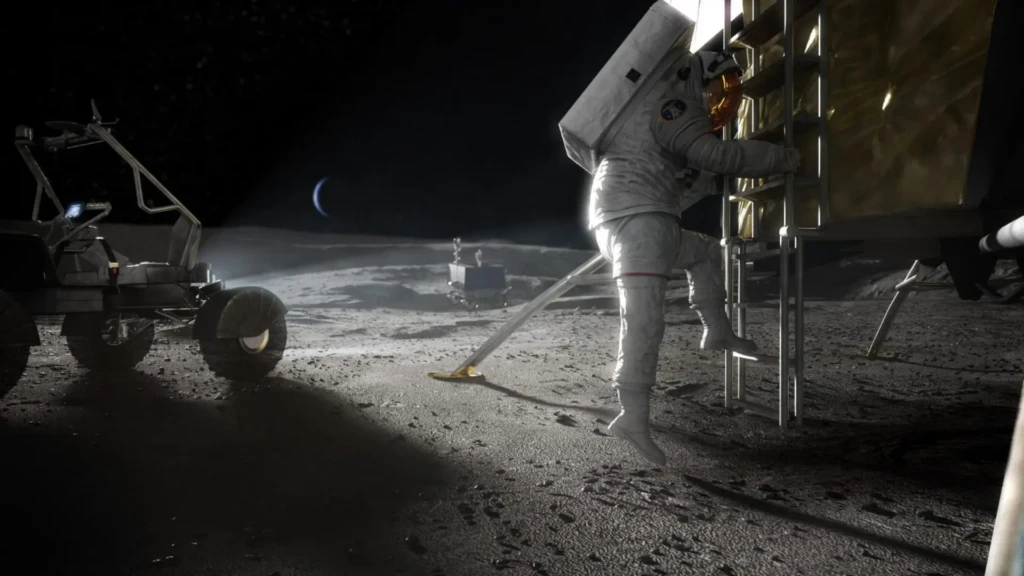
NASA Artemis IV
Artist's impression of an Artemis astronaut landing on the Moon. Image: NASA
SHARE

NASA announced on Friday that it has selected two new instruments to explore the lunar south pole on the Artemis IV mission. In a statement, Nicky Fox, associate administrator of NASA‘s Science Mission Directorate said that these two instruments will help “ensure the health and safety of our spacecraft and human explorers” and boost the agency’s efforts to conquer the Moon.

Artemis IV will be the fourth mission of NASA’s Artemis Program and the second to land astronauts on the lunar surface. The first landing mission is Artemis III that is likely to launch no earlier than 2027. Artemis II is also a crew mission scheduled to launch in February 2026 but the astronauts will return after orbiting the Moon.

BREAKING: @NASA has selected two science instruments, designed for #Artemis IV astronauts to set up on the lunar surface, that will advance space exploration. ⬇️

🔗: https://t.co/erYQtyFTxO pic.twitter.com/V92lATTtYC

— NASA Science (@NASAScience_) December 4, 2025

Instruments NASA selected for Artemis IV

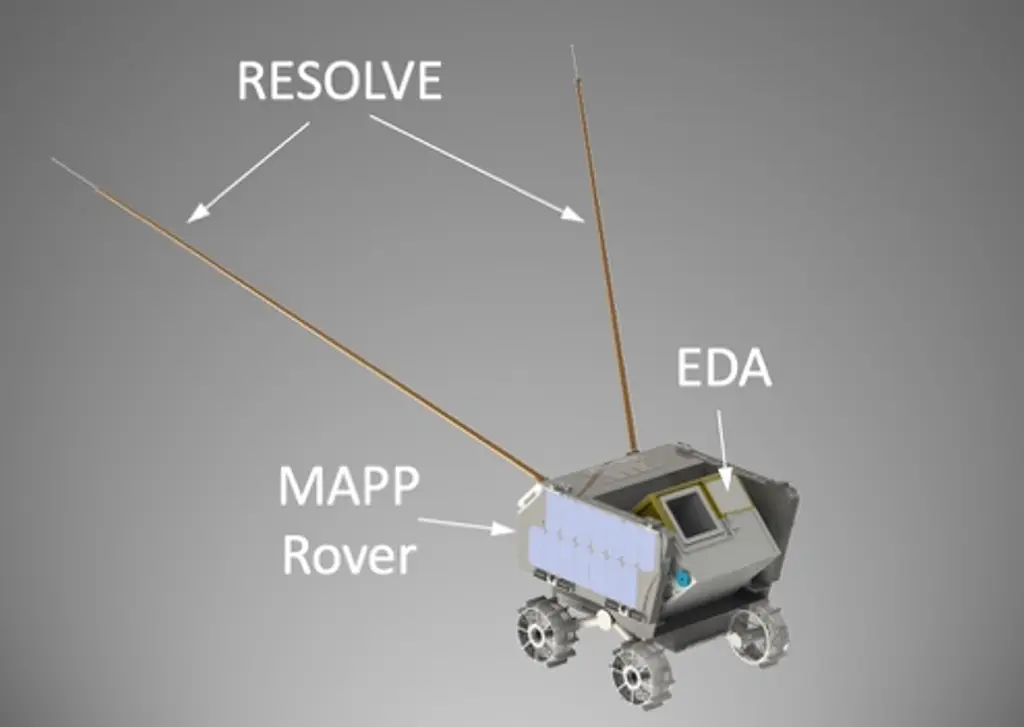
The first of the two instruments to be deployed on the Moon’s surface is called the DUst and plaSma environmenT surveyor or DUSTER, which as the name suggests, will investigate lunar dust and the Moon’s plasma (charged particles) environment.

Led by Xu Wang of the University of Colorado Boulder, the DUSTER instrument suite will be mounted on a small rover named Mobile Autonomous Prospecting Platform (MAPP). The suite contains the Electrostatic Dust Analyzer that will measure the charge, velocity, size, and flux of dust particles lofted from the lunar surface. Another tool in this suite is the Relaxation SOunder and differentiaL VoltagE (RESOLVE) to characterise the average electron density above the lunar surface.
NASA Artemis IV
The MAPP rover’s DUSTER instrument suite. Image: NASA

The main objective is to study how the lunar dust, which is very sticky and abrasive, behave and respond to human presence.

NASA says its findings will help mitigate hazards to human health and spacecraft because lunar dust can cling to spacesuits and equipment, damage electronics and even pose health risks if inhaled. Wang’s team has received $24.8 million in funding from NASA for designing, building and operating DUSTER.
NASA Artemis IV
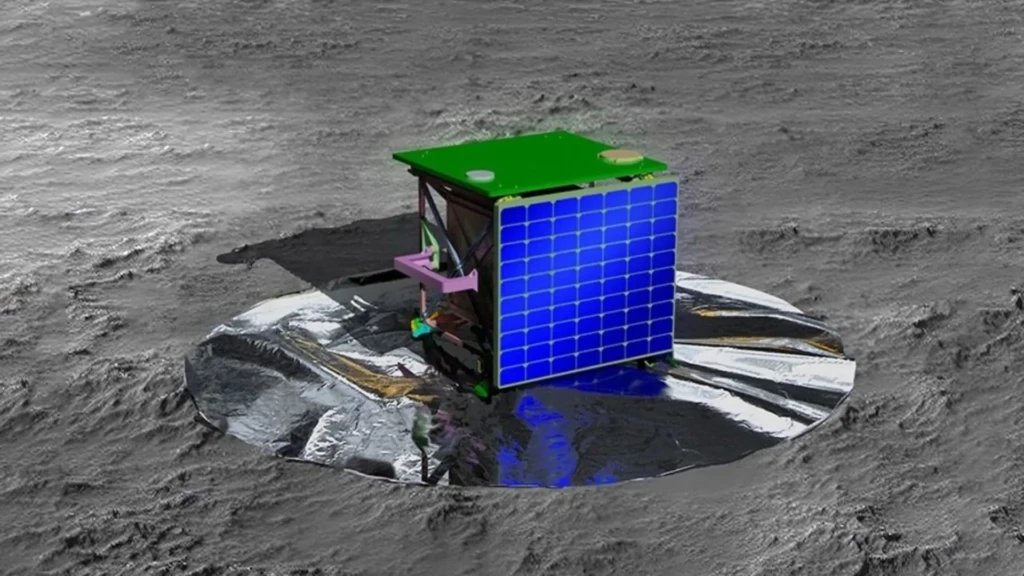
The South Pole Seismic Station instrument. Image: NASA

The second instrument is called the South Pole Seismic Station (SPSS) which is a seismometer to study the Moon’s interior structure. It will monitor real-time seismic environment and determine the rate at which the lunar surface is being struck by meteorites and how it will affect lunar operations. The Artemis IV crew will also conduct an additional experiment using a “thumper” that will generate seismic energy to survey the shallow structure around the landing site. A team from NASA’s Jet Propulsion Laboratory has been awarded $25 million for the job.

NASA has selected nine candidate landing regions for the Artemis III mission in the lunar south pole. These regions were chosen based on scientific value like availability of water ice, terrain safety, abundant lighting, communication links and launch window compatibility. For missions after Artemis IV, NASA could look for more suitable locations beyond the polar region for broader exploration.

ALSO READ: Artemis 2: Unraveling NASA Orion Capsule – Humanity’s Ride To The Moon

ALSO READ: Artemis 3 Delayed To 2028? Report Says SpaceX’s Starship May Hurt NASA Again

TAGGED:Artemis IIIArtemis IVmoonNASA
Share This Article
Facebook Pinterest Whatsapp Whatsapp LinkedIn Copy Link Print

Latest News

Menstruation cups
Menstruation Cups May Be The Giant Leap Needed For Women’s Health In Space
Spaceflight
Alaknanda galaxy gravitational lensing
What is ‘Gravitational Lensing’ That Made Alaknanda Galaxy’s Discovery Possible?
Astronomy
NASA telescope
NASA’s Incredible Nancy Grace Roman Telescope Is Assembled – Here’s What It Will Do
Astronomy
Bennu asteroid
Asteroid Bennu Has More Than Just Ingredients Of Life – What NASA Found
Astronomy

You Might Also Like

Blue Origin's New Glenn rocket.
Spaceflight

Blue Origin Targets Nov 13 To Launch New Glenn For NASA’s ESCAPADE Mission

November 12, 2025
NASA Artemis 2
Artemis

Artemis 2 Explained: NASA’s First Crewed Moon Mission Since 1972

November 17, 2025
NASA comet 3I/ATLAS.
Astronomy

Harvard Physicist Avi Loeb Criticises NASA’s Comet 3I/ATLAS Photo Release

November 21, 2025
NASA ESCAPADE mission
Spaceflight

NASA’s Mars-Bound ESCAPADE Spacecraft Prepare For First Engine Burns

December 2, 2025
© 2025, Blue Terra Journal
  • About
  • Privacy Policy
  • Terms
  • Contact
Welcome Back!

Sign in to your account

Username or Email Address
Password

Lost your password?