Note: This story has been updated to include the change in tentative launch date from February 6 to February 8 due to weather, as per NASA.
Mark your calendars, for NASA has announced when its crewed Moon mission Artemis II may launch this year. Bethany Stevens of NASA’s communications team revealed on Saturday that the launch window for Artemis II opens as soon as February 6 and runs through April.
🚨Mission Update: Rollout for Artemis II is less than two weeks away.
This milestone begins final, system-wide testing as NASA prepares to send astronauts around the Moon for the first time in more than 50 years, with a launch window opening as soon as February 6. pic.twitter.com/gKRqUXIfMg
— Bethany Stevens (@NASASpox) January 2, 2026
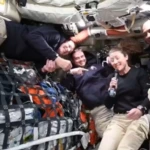
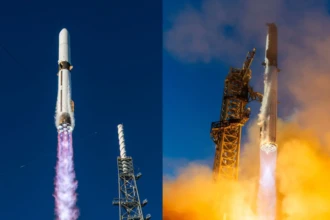
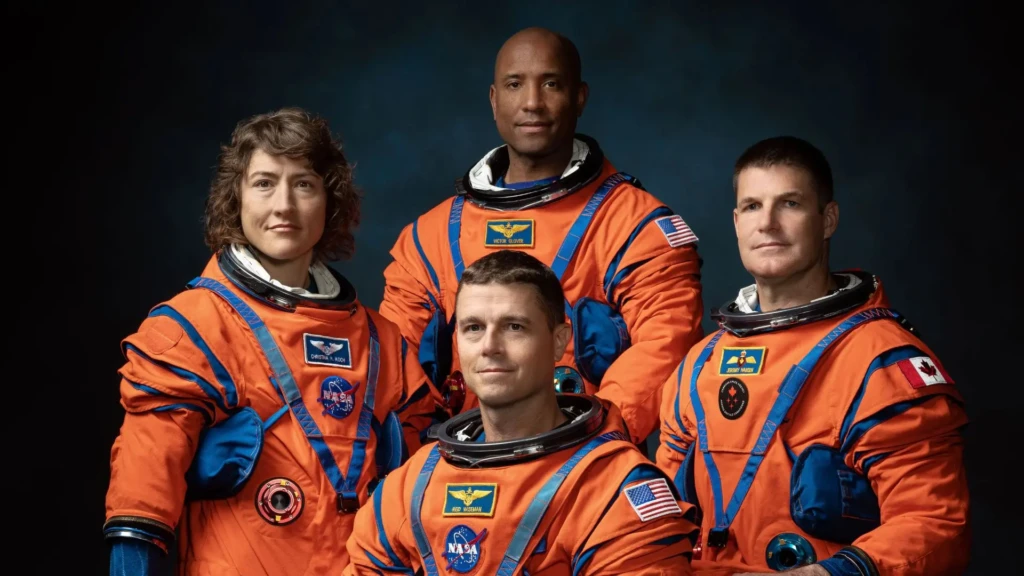
The Artemis II crew has four astronauts – Reid Wiseman (mission commander), Victor Glover (pilot), Jeremy Hansen (mission specialist) and Christina Koch (mission specialist) – who will travel around the Moon over ten days. The astronauts will board the Orion spacecraft mounted atop the Space Launch System (SLS rocket) that will fly for the second time ever from the Kennedy Space Center.
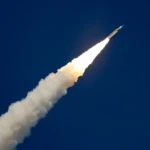
SLS made its debut on November 16, 2022 during Artemis I – NASA’s first lunar mission under the Artemis Program.
Records NASA’s Artemis II will set
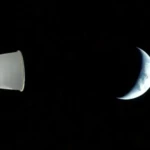
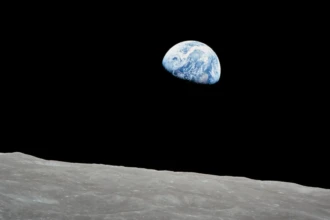
The Artemis II astronauts will not land on the Moon but they will surely set many records. The Orion spacecraft will follow a single looping trajectory around the far side of the Moon during its journey in a figure eight pattern.
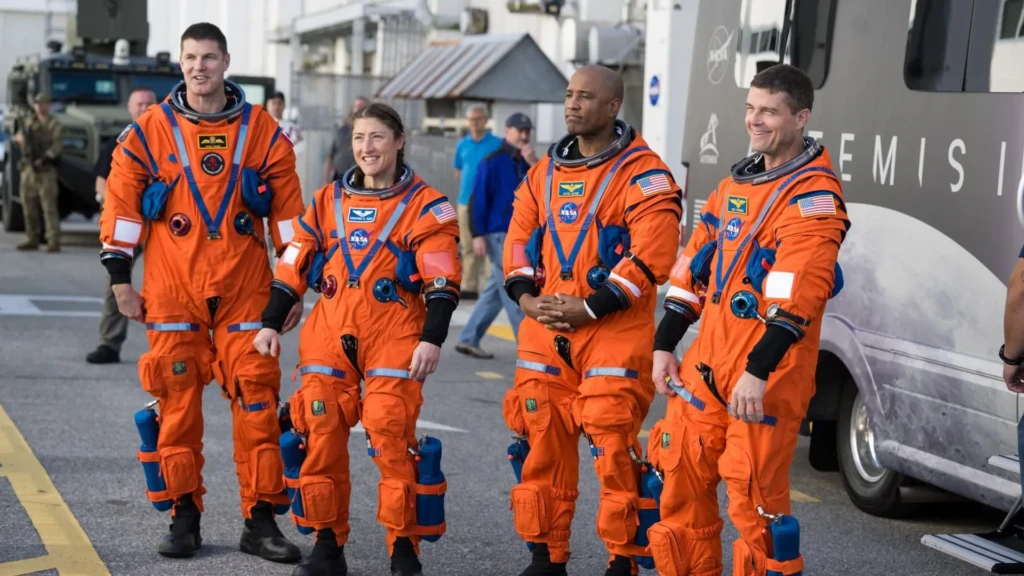
Artemis II will be the first crewed lunar mission since Apollo 17 (December 1972) – taking humans to the vicinity of the Moon after over 50 years. While Hansen will become the first Canadian to fly to the Moon, Koch will be the first woman part of a lunar mission. Glover, meanwhile, will be the first person of colour launching to the Moon. It’s also the first international crewed lunar mission comprising of Canadian and American nationals.
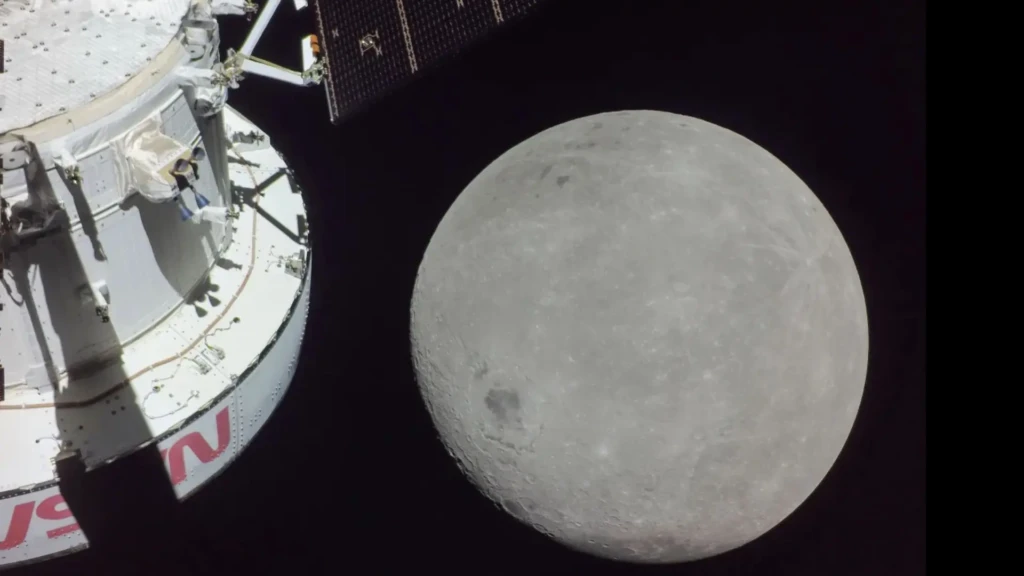
The Orion spacecraft, flying for the first time with humans, will fly travel 3,70,149 km from Earth and 7,403 km beyond the Moon’s far side, falling just short of breaking Apollo 13‘s record of reaching the farthest distance (4,00,171 km) in 1970.
The objective of this mission is to test the Orion spacecraft systems in deep space with humans onboard. During the course of the mission, the crew will also conduct several experiments on space radiation, human health and behavior, and space communications.
What’s next?
In less than two weeks, NASA will roll out of the SLS rocket from the Kennedy Space Center’s Vehicle Assembly Building (VAB) to the pad at Launch Complex 39A. At the launch pad, mission teams will test and verify performance of the integrated rocket and Orion spacecraft components and conduct fuelling tests before attempting a launch. In an X post, Stevens said that the launch window through the spring provides “flexibility to ensure the rocket, spacecraft, ground systems, and crew are fully ready before moving forward.”
ALSO READ: Artemis 2 Explained: NASA’s First Crewed Moon Mission Since 1972
ALSO READ: Decoding NASA’s SLS Moon Rocket: A Powerful Launcher With A High Price Tag