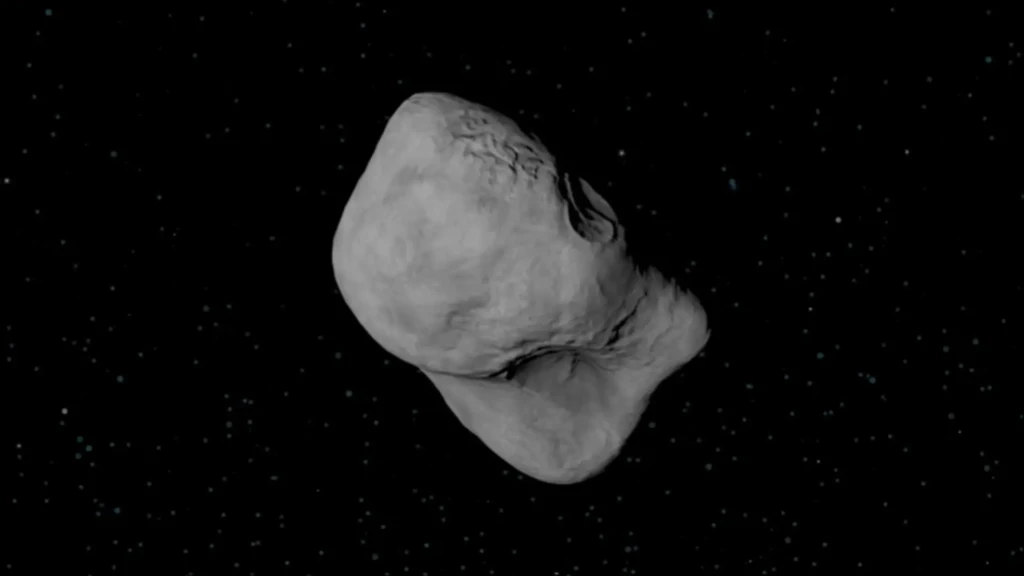
There’s great news for the Moon. Turns out the once-hazardous asteroid 2024 YR4 is not going to strike our celestial neighbour next decade. According to the data collected by NASA’s James Webb Space Telescope, the space rock will fly over the Moon from a close but safe distance in 2032, eliminating any chances of collision.
The asteroid 2024 YR4 was discovered on December 27, 2024 by the NASA-funded Asteroid Terrestrial-impact Last Alert System (ATLAS) – the one which discovered interstellar comet 3I/ATLAS – and scientists initially predicted it had a slight chance of hitting Earth on December 22, 2032. As the asteroid’s trajectory became clearer in the following days, scientists confirmed that the chance had reduced significantly, eventually lowering to zero per cent.
JUST IN: Asteroid 2024 YR4 will not impact the Moon in 2032!
New observations from the NASA/ESA/CSA James Webb Space Telescope have confirmed that the object will pass safely at a distance of more than 20 000 km.
This result was made possible by a close collaboration between… pic.twitter.com/gHPEQqPRd9
— European Space Agency (@esa) March 5, 2026
However, the Moon still wasn’t out of danger as estimates suggested there’s a 4.3% chance of collision on the same day in 2032.
There’s a lot of uncertainty around impact probability of comets and asteroids because data collectors don’t know much about their orbit around the Sun. This is the reason why there have been several space rocks with high impact probability with Earth but they eventually turn out to be false alarms.
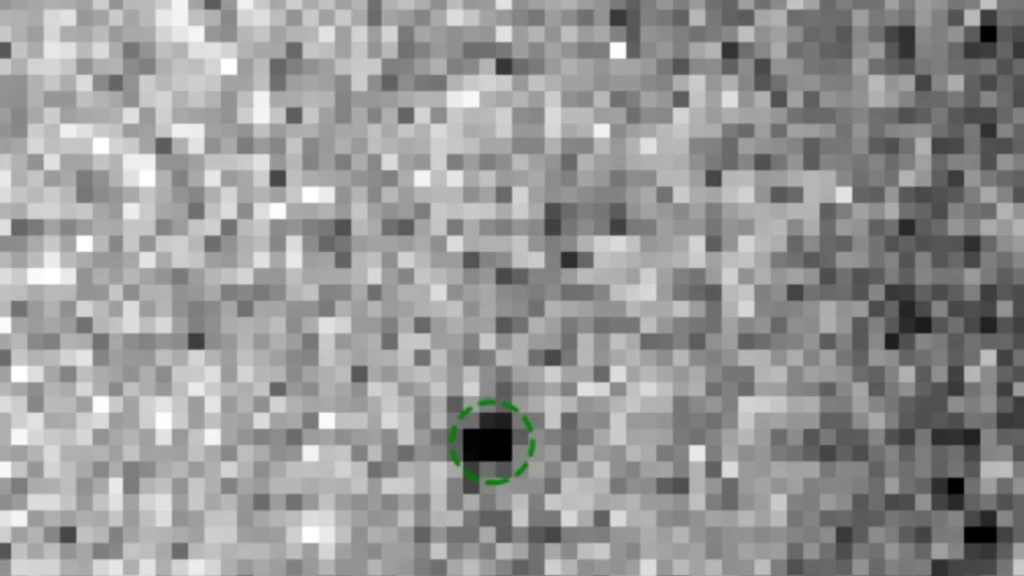
Same was the case with YR4. Researchers at the Johns Hopkins University Applied Physics Laboratory (JHUAPL), who observed the asteroid between February 18 and February 26 using the Webb telescope, have confirmed that it will pass more than 20,000 km above the Moon’s surface. There were fears that impact on the Moon would yeet out immense amount of debris into space, with a lot of it falling toward Earth and harming satellites and other assets in Earth orbit.
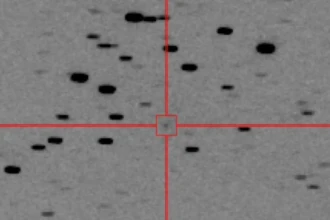
The precise prediction was made by Webb by studying the asteroid’s movement against a backdrop of stars whose positions were already determined by the European Space Agency’s (ESA) Gaia telescope.
The confirmation wasn’t easy as Webb, which is designed to study galaxies billions of light-years away, had to lock in on one of the faintest asteroids ever targeted by it. The scientists from JHUAPL collaborated with teams of ESA’s Near-Earth Object Coordination Centre and NASA’s Center for Near-Earth Object Studies to determine the possibility of impact.
“Despite the challenges, the observations were a success. By comparing 2024 YR4’s position relative to the background stars, the team was able to measure its orbit accurately enough to rule out a lunar impact in 2032,” ESA said in a statement.
ALSO READ: Ramses Mission Explained: Why Apophis Asteroid’s 2029 Rare Earth Flyby Matters
ALSO READ: Donald Trump Has Ordered Release Of Files On Aliens And UFOs; What Should We Expect?