- Blue Origin’s New Glenn debut flight
- ISRO achieves first in-orbit docking
- SpaceX launches two Moon landers
- Sunita Williams returns from ISS
- SpaceX’s Fram2 mission
- Blue Origin’s all-female crew flies to space
- Axiom Space’s ISS mission
- China‘s asteroid explorer
- NASA-ISRO launch most expensive satellite
- SpaceX aces Starship flight 11
- New Glenn launches NASA’s ESCAPADE mission
- Blue Origin launches first wheelchair user to space
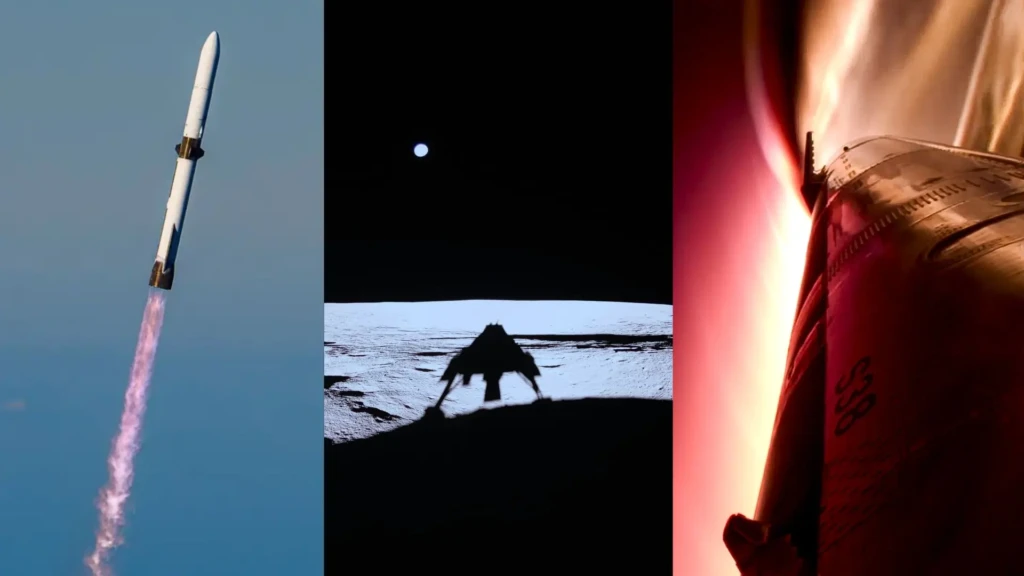
The year 2025 is coming to an end and it saw many bold missions launch into space. From Mars explorers to first crew mission over the Earth’s poles, these endeavours shattered records and pushed the limits of space exploration. Here’s a quick look at the biggest spaceflight moments of the year and missions that pushed humanity deeper into the cosmos.
Blue Origin’s New Glenn debut flight
Jeff Bezos-owned Blue Origin debuted its heaviest rocket New Glenn on January 5. The 320 feet (98 m) tall rocket lifted off from Cape Canaveral Space Force Station in Florida and successfully reached orbit on the first attempt.
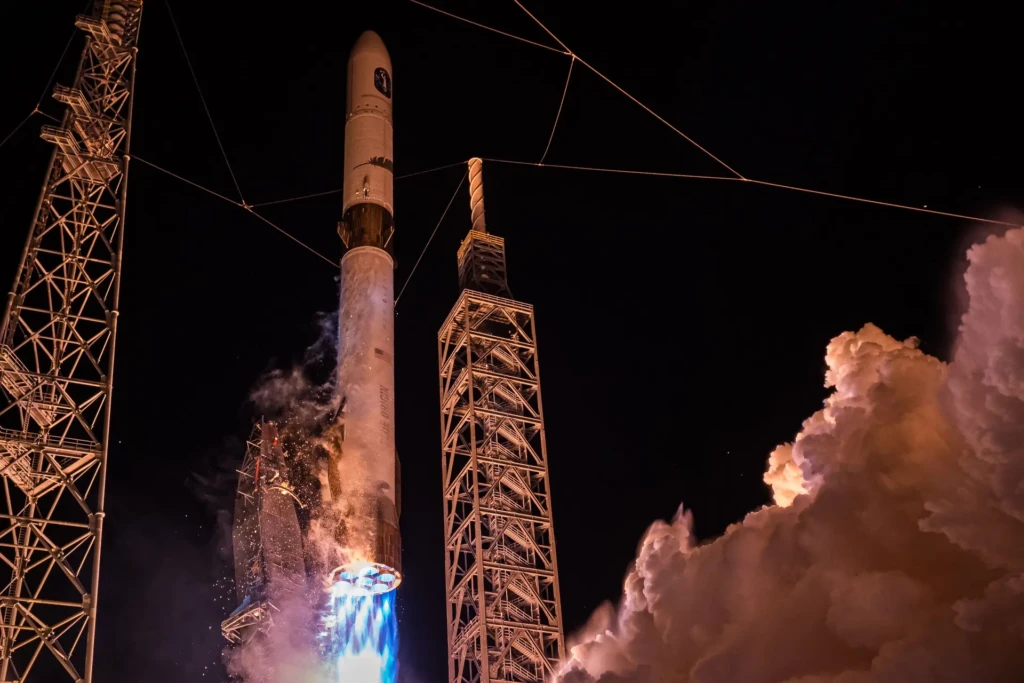
While the booster recovery failed at first, Blue Origin aced it on the second try in November.
ISRO achieves first in-orbit docking
On January 16, India became the fourth country to achieve in-orbit docking with the SPADEX satellites. Launched by ISRO on December 30, 2024, the chaser and target were deployed in a 470 km circular orbit for the mission separated by a 20 km which was gradually reduced for a rendezvous.
SpaDeX Docking Update:
SpaDeX satellites holding position at 15m, capturing stunning photos and videos of each other! 🛰️🛰️
#SPADEX #ISRO pic.twitter.com/RICiEVP6qB
— ISRO (@isro) January 12, 2025
Weeks later, ISRO undocked the spacecraft and completed a second docking procedure in April, solidifying itself among countries like China, US and Russia that have achieved its feat. This achievement has paved the way for assembly of the Indian space station and Chandrayaan-4 components in space.
SpaceX launches two Moon landers
SpaceX launched two landers – Blue Ghost and Resilience – to the Moon on January 15. Blue Ghost, built by Firefly Aerospace, went on to become the first private lander to fully succeeded in landing on the Moon on March 2.
Watch Firefly land on the Moon! After identifying surface hazards and selecting a safe landing site, #BlueGhost landed directly over the target in Mare Crisium. A historic moment on March 2 we’ll never forget. We have Moon dust on our boots! #BGM1 pic.twitter.com/02DQJzn0hL
— Firefly Aerospace (@FireflySpace) March 4, 2025
Unfortunately, things didn’t turn out well for Japanese company ispace’s Resilience. The lander, which was carrying a tiny rover, crashed in June due to a fault in the laser rangefinder which measures the distance to the lunar surface. Resilience ended up making a hard landing. With the crash ended ispace’s second attempt to land on the Moon.
Sunita Williams returns from ISS
The highly talked about Boeing Crew Flight Test mission ended with the return of NASA astronauts Sunita Williams and Barry Wilmore from the International Space Station (ISS). Launched in June 2024, the mission was supposed to end in 10 days but issues with Boeing’s Starliner spacecraft extended it to nine months.
Splashdown of Dragon confirmed – welcome back to Earth, Nick, Suni, Butch, and Aleks! pic.twitter.com/M4RZ6UYsQ2
— SpaceX (@SpaceX) March 18, 2025
The spacecraft was so problematic that Williams and Wilmore had to wait for SpaceX to send a Dragon spacecraft for their return. In September 2024, the Dragon spacecraft reached the ISS with two Crew-9 mission astronauts instead of four, leaving two seats for Williams and Wilmore. Months later on March 19 this year, the spacecraft splashed down in the Gulf of Mexico, concluding the controversial Boeing mission.
SpaceX’s Fram2 mission
Fram2 was SpaceX’s first ever private crew mission launched to Earth’s poles. The four member crew included cryptocurrency billionaire Chun Wang, Norwegian cinematographer Jannicke Mikkelsen, robotics researcher Rabea Rogge and polar explorer Eric Philips.

It launched on April 1 and ended on April 4. The objective of this mission was to conduct 22 experiments and tech demonstrations ranging from documenting polar auroras to studying human health.
Blue Origin’s all-female crew flies to space
On April 14, Blue Origin launched its NS-31 mission with an all-female crew. It consisted of pop star Katy Perry, billionaire and Blue Origin founder Jeff Bezos’s wife Lauren Sanchez, journalist Gayle King, filmmaker Kerianne Flynn, former NASA rocket scientist Aisha Bowe and bioastronautics research scientist Amanda Nguyen.
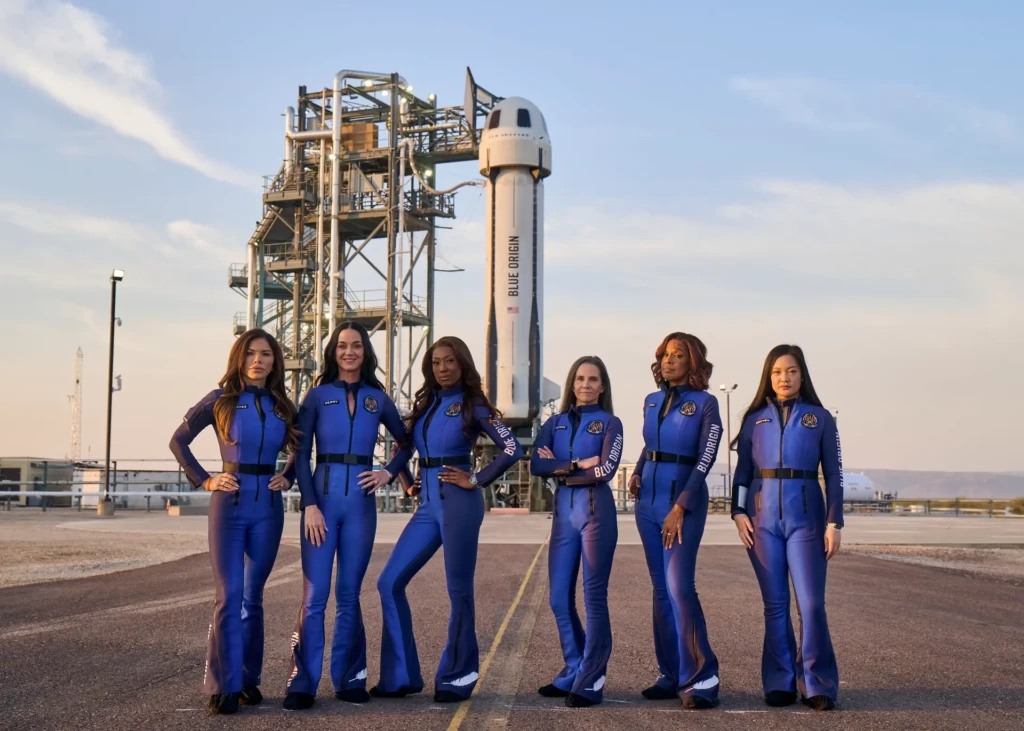
While it was a subject of criticism by many, NS-31 was historic for being the first all-female crew since 1963, when Soviet Union’s Valentina Tereshkova flew on a solo flight.
Axiom Space’s ISS mission
Axiom Space’s fourth private mission (Ax-4) to the International Space Station (ISS) was launched by SpaceX on June 25. It was historic because the four-person crew included India’s Shubhanshu Shukla, the first Indian astronaut to visit space after Rakesh Sharma in 41 years.
Liftoff of Ax-4! pic.twitter.com/RHiVFVdnz3
— SpaceX (@SpaceX) June 25, 2025
Ax-4 also included Poland’s Sławosz Uznański-Wiśniewski and Hungary’s Tibor Kapu, who also represented their countries in space after four decades. Alongside former NASA astronaut Peggy Whitson, they spent 18 days aboard the station and returned on July 15.
China‘s asteroid explorer
On May 28, China launched the Tianwen-2 mission to explore asteroid Kamo’oalewa, one of Earth’s seven known quasi-moons. The spacecraft will reach Kamo’oalewa in July 2026 and is tasked with examining its nature and composition.
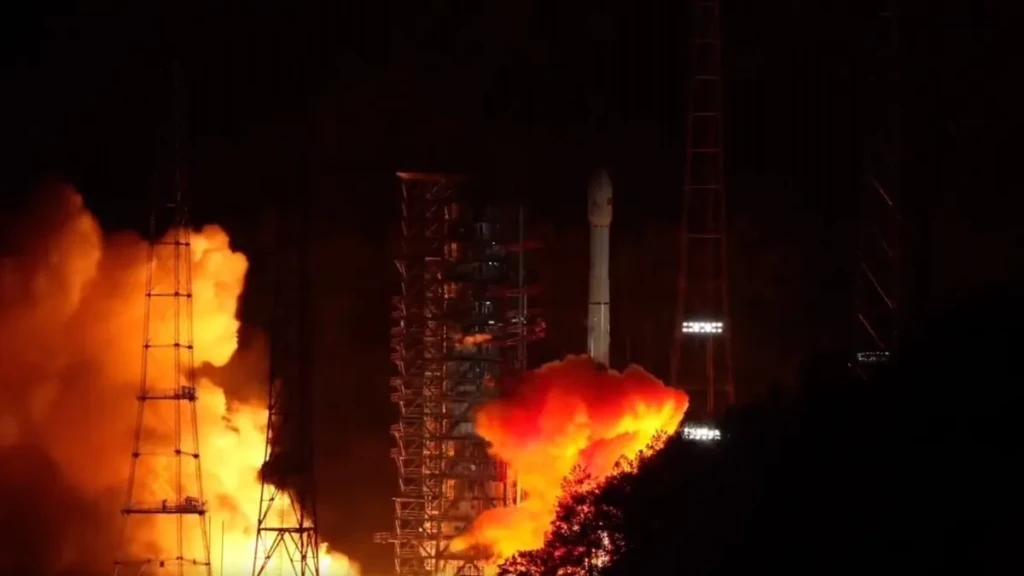
The spacecraft will also collect samples of the asteroid and send them back to Earth in a capsule in late 2027. It will then slingshot itself to the comet 311P/PANSTARRS, and rendezvous with it around 2035.
NASA-ISRO launch most expensive satellite
On July 30, ISRO launched the world’s most expensive satellite meant for Earth observation. The NASA-ISRO Synthetic Aperture Radar or NISAR satellite, built at a cost of $1.5 billion, lifted off atop ISRO’s GSLV rocket from Sriharikota. NISAR is designed to track motion of ice sheets and glaciers, the deformation of land due to floods, earthquakes, volcanoes, wildfires, oil spills and landslides, along with changes in forest and wetland ecosystems down to a centimeter
SpaceX aces Starship flight 11
SpaceX completed one of its most successful Starship missions ever on October 14. The mega-rocket achieved every major objective from liftoff to the upper stage’s splashdown in the Indian Ocean. SpaceX said in a statement that the Starship booster successfully executed a unique landing burn planned for use on the next generation booster.
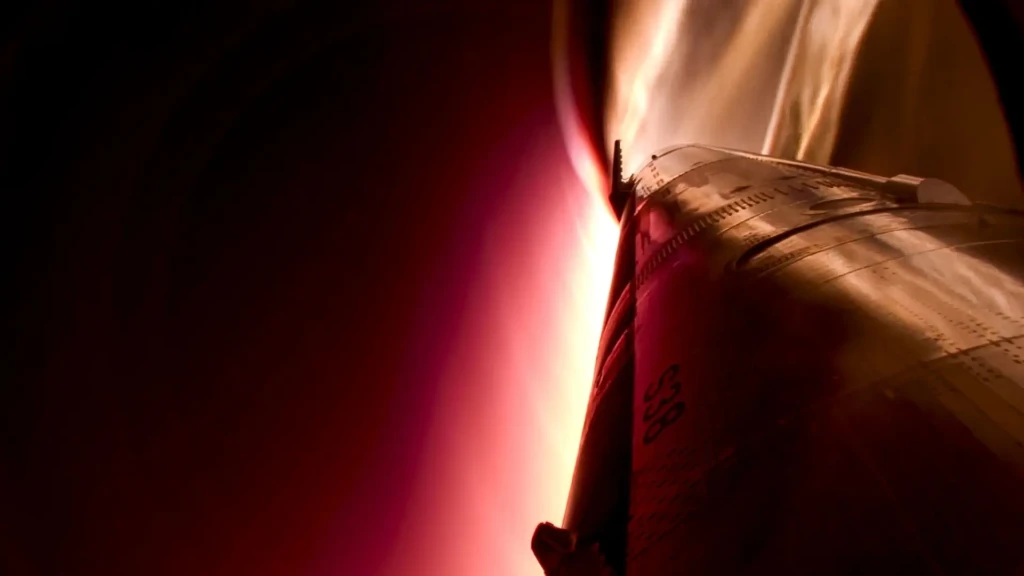
It even hovered over the ocean for a few seconds as planned before shutting down its engines and splashing down. The upper stage too executed a “dynamic banking maneuver to mimic the trajectory that future missions returning to Starbase will fly,” before its splashdown. Flight 11 was a big win for SpaceX as it’s the only fully successful Starship mission of 2025. All previous launches this year have been partly successful.
New Glenn launches NASA’s ESCAPADE mission
On November 14, New Glenn flew for the second time to launch NASA’s ESCAPADE mission to Mars. It is the world’s first twin spacecraft mission designed to study the Martian magnetosphere and its interaction with solar wind.
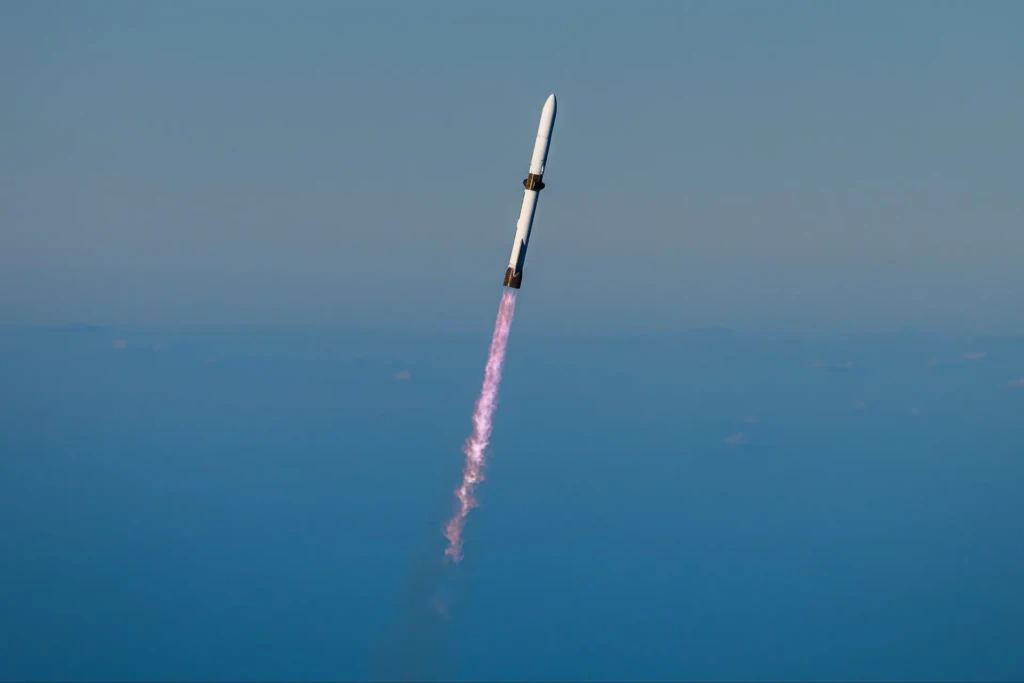
What’s more, the New Glenn first stage booster aced its landing on a barge stationed in the Atlantic Ocean in the second attempt. Blue Origin is now the second company after SpaceX to achieve booster reusability.
Blue Origin launches first wheelchair user to space
Blue Origin scripted history again on December 19 by launching the first wheelchair user – Michaela Benthaus – to space. She flew on the NS-37 mission with five others aboard the New Shepard spacecraft.

Benthaus is an aerospace engineer who lost her ability to walk after a mountain biking accident in 2018.
NS-37 mission was Blue Origin’s last astronaut mission of 2025 and 16th overall crew flight. It also marked the company’s 37th New Shepard mission to date.
ALSO READ: NASA’s Artemis 2 Crew Completes Countdown Rehearsal Ahead Of 2026 Moon Mission
ALSO READ: ISRO Targets Launch Of LVM3 Mission With US Broadband Satellite On December 24