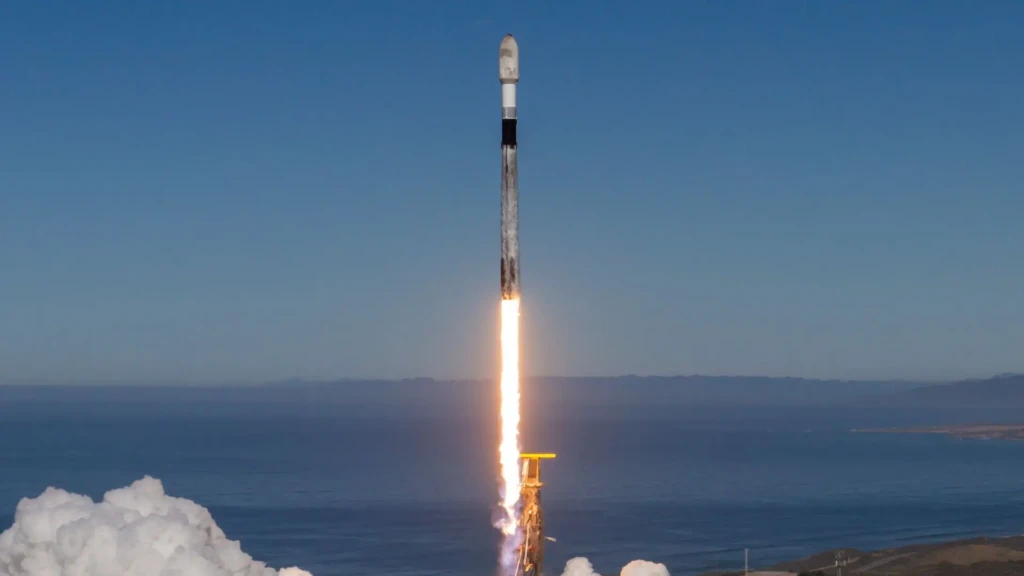
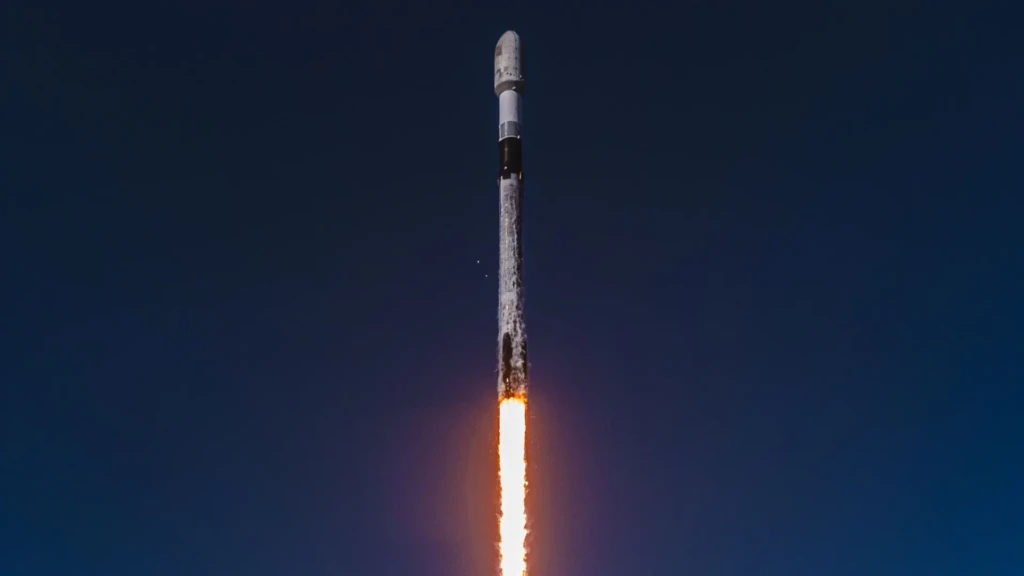
SpaceX’s Falcon 9 booster completed its 30th flight on November 29 with the launch of Transporter-15 mission. The rocket lifted off at 12:15 am IST from the Vandenberg Space Force Base in California and successfully deployed all 140 satellites over two hours and 43 minutes.
Liftoff of Transporter-15! pic.twitter.com/LJurU40GNP
— SpaceX (@SpaceX) November 28, 2025
SpaceX CEO Elon Musk reposted a video of the Falcon 9 booster’s landing on a droneship in the Pacific Ocean celebrating its 30th successful flight. The booster has previously supported 18 Starlink missions besides NROL-87, NROL-85, SARah-1, SWOT, Transporter-8, Transporter-9, NROL-146, Bandwagon-2, NROL-153, NROL-192 and Transporter-14.
30 flights of the same rocket! https://t.co/F7hds21MLR
— Elon Musk (@elonmusk) November 28, 2025
“On board this mission were 140 payloads, including cubesats, microsats, hosted payloads, and orbital transfer vehicles carrying 13 of those payloads to be deployed at a later time,” SpaceX said in a statement. The company says that Falcon has launched over 30 overall missions with rideshare payloads on board, sending more than 1,400 payloads to orbit across dedicated rideshare and shared launch opportunities.
Transporter-15 was supposed to launch on November 19 but was delayed multiple times, most recently on Wednesday.
Falcon 9 deploys 140 satellites
The latest mission saw SpaceX launch its second biggest payload after Transporter-1 in 2021 which had 143 satellites. Transporter-1 broke ISRO’s 2017 record of launching the most number of satellites (104) on a single mission.
The Transporter-15 payloads included satellites from NASA, European Space Agency (ESA), the Taiwan Space Agency (TASA) along with institutions and private companies like Planet Labs, SEOPS and Leaf Space. Through its Launch Services Program, NASA had funded the development of four cubesats – R5-S7, 3UCubed-A, TRYAD-1 and TRYAD-2. ESA also flew its HydroGNSS-1 and HydroGNSS-2 satellites that will study Earth’s water cycle as part of the Scout mission.
Taiwan contributed the FORMOSAT-8A Earth-imaging satellite along with Bellbird-1, Black Kite-1 and TORO-8U-1 cubesats to test high-speed data transferal communications, Internet of Things (IoT) technologies and conduct remote sensing to monitor algae, plankton and ocean health, Space.com reported.
Apart from American payloads, the mission also included satellites from Hungary, which built HUNITY – a “pocketqube” platform. This platform hosted pocketqubes (mini-cubesats) SARI-1 and SARI-2 from the Saudi space agency that will together perform telemetry, IoT experiments and other research. Another foreign payload was the ANISCSAT mission from Azerbaijan built to study environmental conditions in low-Earth orbit.
ALSO READ: SpaceX Starship’s V3 Booster Damaged During Pressure Testing; Picture Surfaces
ALSO READ: Artemis 3 Delayed To 2028? Report Says SpaceX’s Starship May Hurt NASA Again