As the International Space Station (ISS) is heading towards retirement in 2030, many private companies are rushing to replace it with commercial habitats. One such company is California-based Vast that recently tested a key technology and is hard at work to launch the first module in 2026.
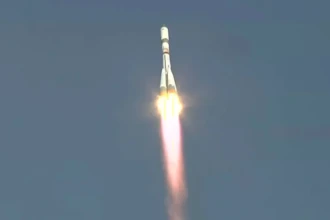
Vast’s first module named Haven-1 is targeted for launch next May and is being touted as “an innovation lab” for both private and government missions. On November 2, Vast, with help from SpaceX, launched a demonstration satellite for space station technologies, taking a giant leap towards launching the world’s first commercial space station.
Haven Demo achieved mission success after deploying from SpaceX’s Bandwagon-4 flight on Nov 2, 2025. Following nominal separation and stable sun-pointing, the spacecraft captured 4K video of its solar array deployment and is power-positive. 🇺🇸 pic.twitter.com/rlGBjZVi4S
— Vast (@vast) November 3, 2025
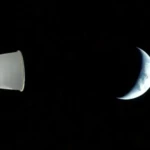
Using the onboard 4K camera, the satellite captured a beauty shot of its solar array deployment and of the Moon, Los Angeles, the Himalayas, and the Alps from low-Earth orbit.
What to expect from Haven-1?
In a recent blog, Vast COO Kris Young boasted about his firm being the first commercial space station company to have flown and operated its own spacecraft in orbit. The Haven-1 is being designed to support two-week missions with four astronauts who will launch on SpaceX’s Dragon spacecraft.

According to Vast, Haven-1 will be in orbit for three years and enable four separate missions with four astronauts each. Every mission will last approximately ten days and Vast will test artificial gravity technology during these missions.
The first crew will launch 45 days after Haven-1’s commissioning is complete and each crewed mission will be followed by six to nine months of uncrewed operations.
What’s so special about Haven-1?
Haven-1 will be equipped with many advanced features including remote command and monitoring via SpaceX’s Starlink internet. The habitat has a 45 cubic metres of habitable volume – roughly the size of a small studio room – with private crew quarters. These quarters will have zero gravity sleep system to secure astronauts during sleep, preventing them from free floating.
Haven-1 also has a corridor where the crew will store equipment and items such as food, water, tools, cleaning and personal hygiene supplies and exercise equipment. At the hatch, Haven-1 has a micro-meteoroid and orbital debris shielding to protect the station in space.
Weighing 14,600 kg, Haven-1 measures 10.1 metres and 4.4 metres in diameter with 13,200 watts of power generation capacity. It will be installed at an altitude similar to the ISS – around 425 km.
ALSO READ: Artemis Vs Apollo: Why New Prada Spacesuits Are Better For NASA Astronauts
Replacing the ISS
While Vast is forging ahead with manufacturing and on-orbit tests, the Haven-1 doesn’t have a NASA Commercial LEO Destination (CLD) contract like its competitors Axiom Space Station, Orbital Reef and Starlab habitats.

As of today, Vast has manufactured Haven-1’s primary structure – a single module comprising the hatch and domed window – and is yet to complete installation of key features like environmental control and life support elements, thermal control systems, thrusters, fuel tanks, and crew accommodations among others, Ars Technica reported.
Haven-1 will be followed by Haven-2, a four-module station that will replace the ISS by 2030. It is expected to be fully constructed by 2032 and support a crew of 12 astronauts.
The recent Haven demo mission showed that the habitat’s design can withstand spaceflight conditions, a major step toward Haven-1’s completion. “It has given us invaluable learnings and the pressure of near-term deadlines to help us mature across every aspect of our business: hardware, software, operations, manufacturing, procurement, facilities – directly improving Haven-1,” Young wrote.
ALSO READ: Artemis 3 Delayed To 2028? Report Says SpaceX’s Starship May Hurt NASA Again