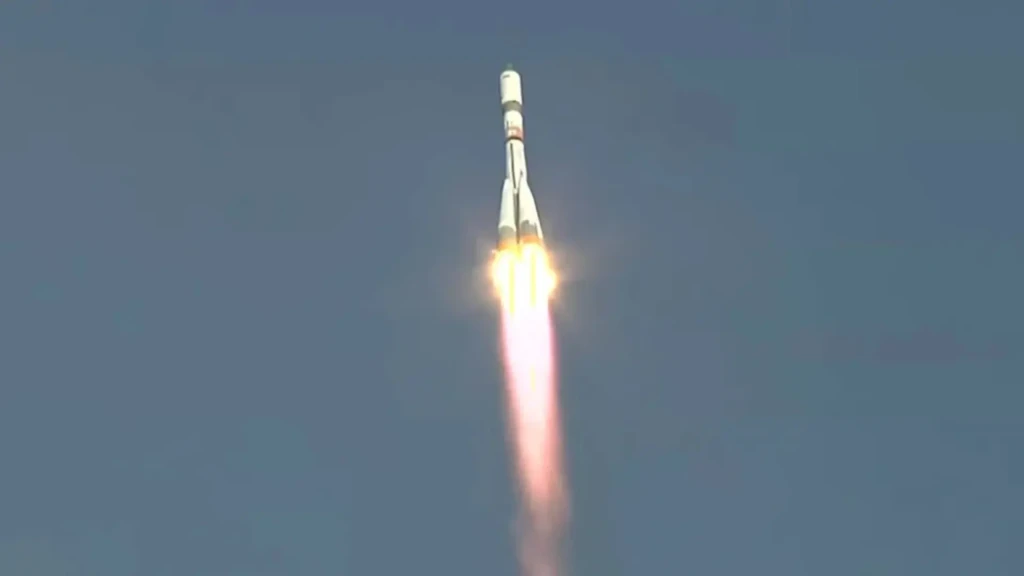
Russia successfully launched the Soyuz rocket with tons of supplies for International Space Station (ISS) astronauts, but it ran into trouble just hours after reaching space. According to NASA, the Progress spacecraft’s antennas used for automatic docking with the station suffered a mystery glitch, and the rendezvous had to be delayed as a result.
The Progress 94 cargo spacecraft, carrying about three tons of food, fuel, and supplies, launched from the Baikonur Cosmodrome in Kazakhstan at 7:59am ET. Docking is set for 9:34am Tuesday, March 24. More… https://t.co/gxwxacbI0w pic.twitter.com/7tUIev8Uy8
— International Space Station (@Space_Station) March 22, 2026
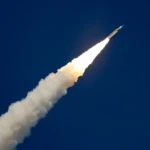
The rocket lifted off at 5:29 pm IST on March 22 [7:59 am EDT, March 22] from the Baikonur Cosmodrome in Kazakhstan with the Progress 94 spacecraft atop it. The spacecraft is carrying about three tons of food, fuel, and supplies to the orbiting laboratory and will replace Progress 93, which undocked from the station a couple of days ago.
What happened to Russia’s Progress spacecraft?
Hours after the issue was identified, NASA said it resulted because the spacecraft couldn’t deploy its antenna required to dock with the station.
“Following launch, one of the Progress spacecraft’s two KURS automated rendezvous antennas did not deploy as planned,” NASA said in an update.
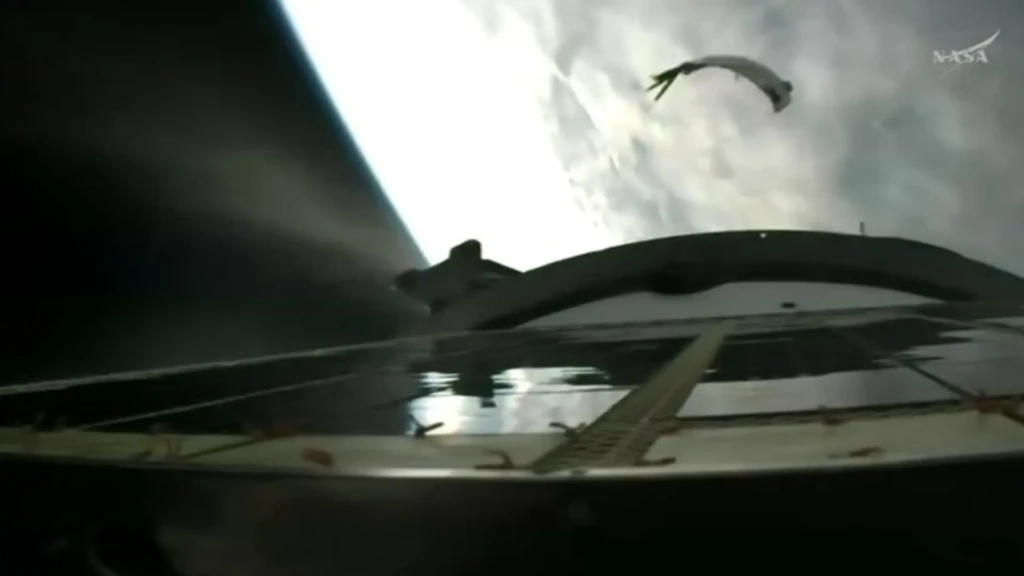
Russian space agency Roscosmos is continuing to troubleshoot the issue to deploy the antenna, and if it isn’t resolved, Russian cosmonaut Sergey Kud-Sverchkov will manually pilot the spacecraft for rendezvous and docking using the TORU (Telerobotically Operated Rendezvous System). This system is a control panel located in the Zvezda Service Module that can be used as a backup to the KURS automated system.
The docking has been delayed from 7:04 pm IST on March 22 [9:34 am EDT, March 22] to the same time on March 24.
The Soyuz rocket launched from the same launch pad which was severely damaged in November 25, after three astronauts took off on Thanksgiving. The damage was caused after a 20-metric ton platform underneath the stationary rocket which gives engineers access to the launch vehicle’s aft end slid back out, and the rocket’s thrust blasted it.
This was Russia’s only active launch pad and the quick repair is being considered an epic feat.
ALSO READ: Watch Out China! US Proposes Extending International Space Station Lifespan To 2032
ALSO READ: Comet C/2026 A1 MAPS: What Are ‘Sun-Grazer’ Comets And Why Are They Special?