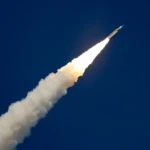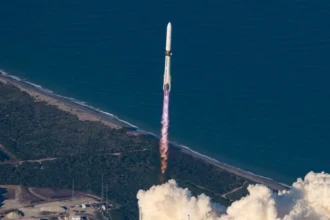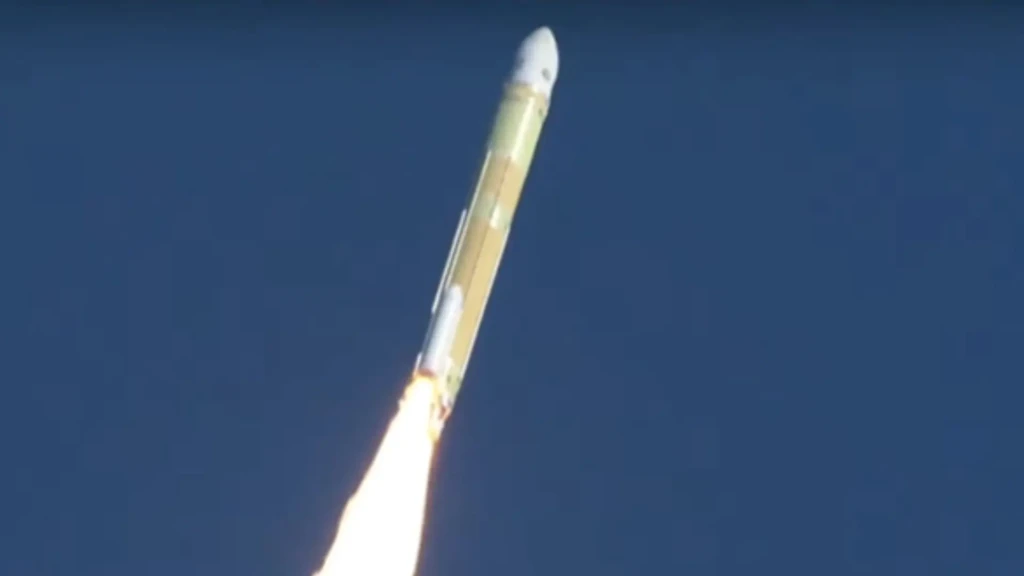
Japan’s H3 rocket faced another failure during a satellite launch on December 22. The launch vehicle successfully lifted off at 7:21 am IST (10:51 am Japan time) from Tanegashima Space Centre on December 22 with the QZS-5 satellite for the Quasi-Zenith Satellite System (QZSS) or Michibiki navigation network. In a statement, the Japan Aerospace Exploration Agency (JAXA) revealed that the rocket’s second stage, however, ran into an anomaly which caused a premature engine shutdown.
JAXA’s H3 rocket has suffered a failure during today’s launch. https://t.co/jMOCS5TiWC pic.twitter.com/qtGkS5AGTN
— China ‘N Asia Spaceflight 🚀𝕏 🛰️ (@CNSpaceflight) December 22, 2025
“The second stage engine’s second ignition failed to start normally and shut down prematurely. As a result, QZS-5 could not be put into the planned orbit, and the launch failed,” JAXA’s statement read.
“We would like to express our deepest apology to many people and entities, particularly those related to the QZS-5, local organizations and the public, who had high expectations for this project,” it further said adding that a special task force has been established to investigate the cause of failure.
Weighing 4,800 kilograms, the QZS-5 would have been the fifth satellite of the QZSS constellation. According to JAXA, this navigation system has been operational since 2018 with an objective “to develop a satellite positioning service that can be used stably in all locations at all times.” The QZSS is said to be compatible with GPS satellites and can be utilised with them in an integrated fashion. As for the H3 rocket, it has suffered its second failure to date after the debut flight in March 2023.
NASA lends support to JAXA
Jared Isaacman, the new NASA administrator, offered his words of encouragement to JAXA after the mission failure. In a post on X Tuesday, he wrote – “Sending support to JAXA today. We deeply value your partnership and look forward to continued collaboration.”
Sending support to JAXA today. We deeply value your partnership and look forward to continued collaboration. https://t.co/mDk1NfEEd8
— NASA Administrator Jared Isaacman (@NASAAdmin) December 23, 2025
The US and Japan have been partners for decades in space and their space agencies are currently working on the Artemis Program to return humans to the lunar surface. In April 2024, NASA and JAXA signed an agreement under which the latter will design, develop, and operate a pressurised rover for crewed and uncrewed missions. In return, NASA will deliver these rovers to the Moon and offer two opportunities for Japanese astronauts to land on the lunar surface.
Besides, JAXA is also lending its expertise in developing life support and other systems for the Lunar Gateway – a space station planned around the Moon.
ALSO READ: From Moon & Mars Missions To Starship Flights, A Recap Of 2025’s Biggest Spaceflight Moments
ALSO READ: Blue Origin Launches First Wheelchair User Michaela Benthaus To Space On NS-37 Mission