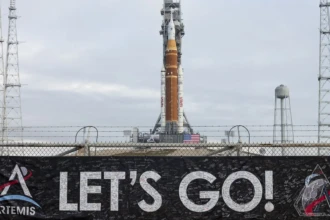
NASA’s Space Launch System (SLS) rocket rolled out to the launch pad on January 17, marking a major milestone towards launch of the Artemis II Moon mission. After a 12-hour journey from the Vehicle Assembly Building to Launch Pad 39B of the Kennedy Space Center, Florida, the rocket is finally standing tall – waiting for the next key procedures prior to liftoff.
Made it.
At 6:42pm ET on Jan. 17, the stacked Artemis II rocket and spacecraft reached Launch Pad 39B after a nearly 12-hour journey from the Vehicle Assembly Building at @NASAKennedy in Florida. pic.twitter.com/lpayqG5wNF
— NASA Artemis (@NASAArtemis) January 18, 2026
Artemis II is NASA‘s first crewed lunar mission since Apollo 17 (1972) and it could launch as soon as February 6. Here’s what’s next before the SLS rocket lifts off for the second time.
What’s next for NASA’s SLS rocket?
In the coming weeks, mission teams will assess critical systems of the 322-feet-tall rocket and the Orion spacecraft – stacked atop SLS – while conducting a wet dress rehearsal. During the rehearsal targeted for February 2, the rocket stages will be fuelled with cryogenic propellant similar to launch day and engineers will safely unload it later.

“In the coming days, engineers and technicians will prepare the Artemis II rocket for the wet dress rehearsal, a test of fueling operations and countdown procedures,” NASA said in a statement. “Targeted for no later than Feb. 2, the team will load the rocket with cryogenic, or super-cold, propellants, run through the countdown, and practice safely draining the propellants from the rocket – all essential steps before the first crewed Artemis mission.”
The teams may also conduct additional wet dress rehearsals if needed and rollback the rocket to the VAB for additional work if required.
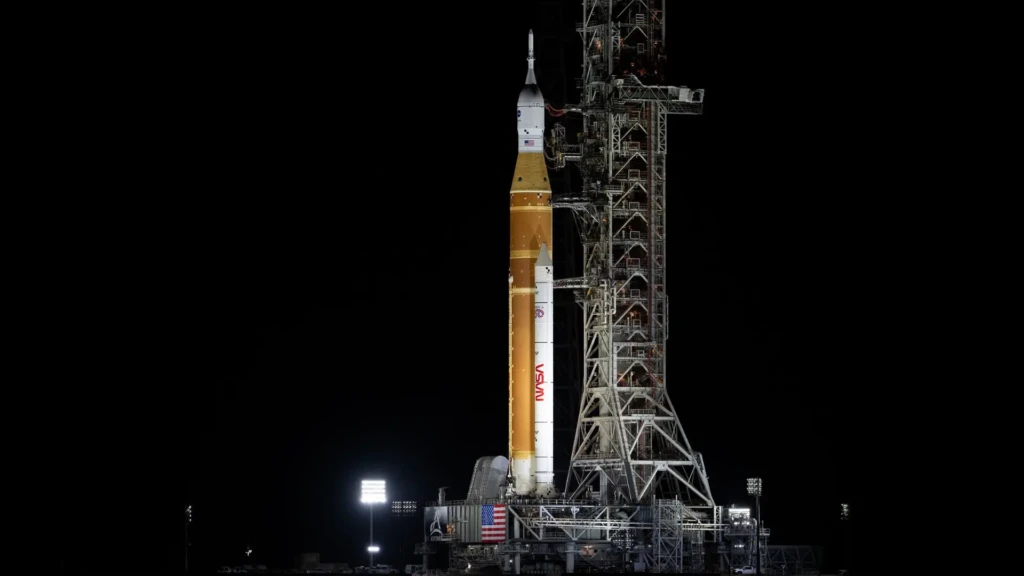
The last time SLS rolled out to the pad was in 2022 for the Artemis I mission which launched on November 16. NASA had to roll it back to the VAB three times due to propellant leakage during wet dress rehearsal and unfavorable weather conditions in Florida.
Talking about the rollout, NASA administrator Jared Isaacman posted on X – “There is still a lot work ahead before launch, and we’ll take all the time necessary until we are ready. But the rollout today was a real step towards America’s return to the Moon…and this time, we go to stay.”
For the first time in more than half a century, a rocket and spaceship that will carry astronauts around the Moon is rolling out to 39B.
Today’s rollout is a critical step toward that mission and achieving President Trump’s vision when he first established the Artemis Program.… pic.twitter.com/EX2PkxFsEd
— NASA Administrator Jared Isaacman (@NASAAdmin) January 17, 2026
More on NASA’s Artemis II mission
The Artemis II crew comprises of mission commander Reid Wiseman (USA), mission pilot Victor Glover (USA), mission specialist Christina Koch (USA) and mission specialist Jeremy Hansen (Canada).

While Glover will become the first person of colour to launch on a lunar mission, Koch will be the first woman flying to the Moon. Hansen will also script history as the first Canadian on a lunar mission.
The astronauts will fly around the Moon in the Orion spacecraft and return in approximately 10 days without a lunar landing. The objective is to test Orion’s life support system and other components necessary to survive in deep space. Artemis II is the second lunar mission of the Artemis Program aimed at establishing permanent US presence on the Moon. It will be followed by Artemis III that will see humans walk on the lunar surface for the first time since 1972. While NASA planned to launch Artemis III in 2027, it is reportedly launching no earlier than 2028 due to delays in development of SpaceX’s Starship – tasked with taking humans to the lunar surface.
ALSO READ: NASA’s Artemis II Crewed Moon Mission May Launch On Feb 6 – All The Records It Will Set
ALSO READ: Decoding NASA’s SLS Moon Rocket: A Powerful Launcher With A High Price Tag