NASA is set to add another telescope to its list of powerful observatories. Named Pandora, this space telescope is designed to observe at least 20 exoplanets (worlds outside our solar system) and find atmospheres dominated by hydrogen or water. Pandora will also study light from stars these exoplanets are orbiting to determine the properties of stellar surfaces.
Pandora is targeted for launch in January 2026 and it will carry out the observations in visible and infrared light from an altitude of 600 km in low-Earth orbit. Visible light is what the human eye can see and infrared is what it can’t – infrared can only be felt as heat.
Pandora’s objectives
The objective of the telescope is to find hydrogen and water dominated atmospheres on 20 exoplanets in one year of its planned lifespan. According to NASA, Pandora will study every planet 10 times with each observation lasting 24 hours.
Spectroscopy is the primary technique scientists will use to identify gases in the planetary atmospheres. It is the process of studying light by splitting it into different colours.
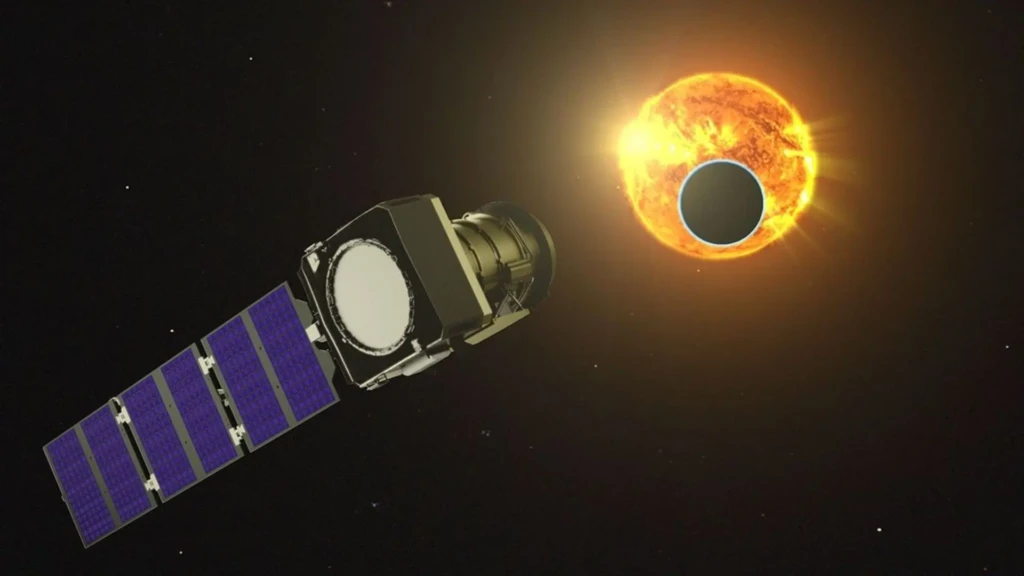
When a planet passes in front of its star, the light emerging from the star travels through the atmosphere. Now this light changes as it interacts with the atmospheric gases before reaching a telescope; and this change is determined by the nature of the gases. If there’s hydrogen or water in the atmosphere, light will change a certain way and if there’s nitrogen, the change will be different.
Using its infrared detector, Pandora will collect starlight and break it down using a spectroscope to find traces of gases and determine their nature in an exoplanet.
“We see the presence of water as a critical aspect of habitability because water is essential to life as we know it,” Ben Hord, NASA’s postdoctoral program fellow said in a statement. “The problem with confirming its presence in exoplanet atmospheres is that variations in light from the host star can mask or mimic the signal of water. Separating these sources is where Pandora will shine.”
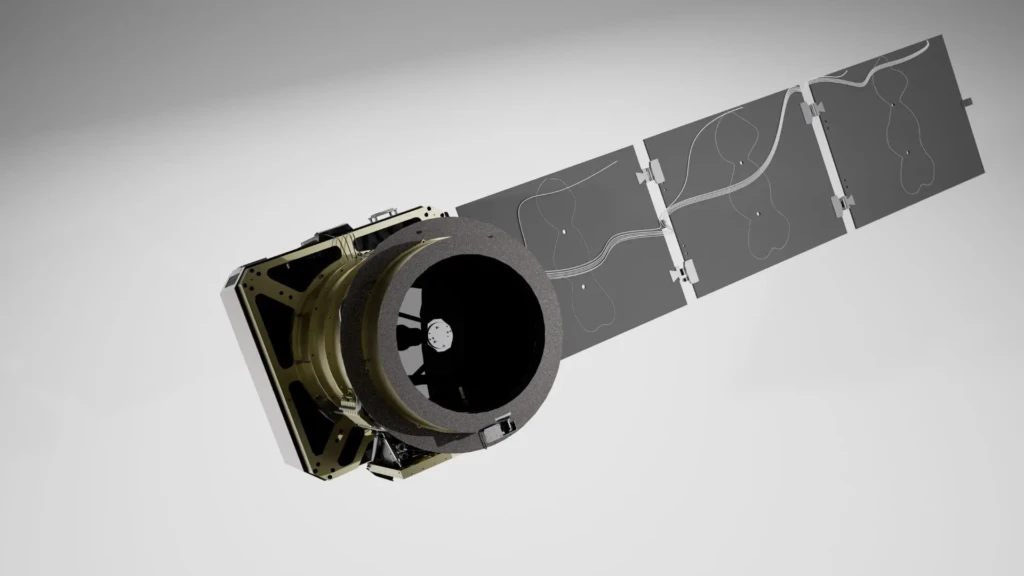
Pandora is the size of a small satellite weighing about 325 kg (716 pounds) and is equipped with a 45 cm (17 inches) wide mirror, and a single-wing solar array. According to Hord, its infrared detector is a spare developed for the James Webb Space Telescope which is the most powerful infrared telescope in existence. Hord says that Pandora’s operation will “improve Webb’s ability to separate the star’s signals from those of the planet’s atmosphere,” allowing it to make more precise atmospheric measurements.
ALSO READ: NASA’s Webb Telescope Discovers 13 Billion Years Old Supernova; Breaks Own Record
ALSO READ: James Webb Space Telescope Finds Strongest Clues Of Atmosphere On A Scorching Super-Earth