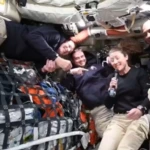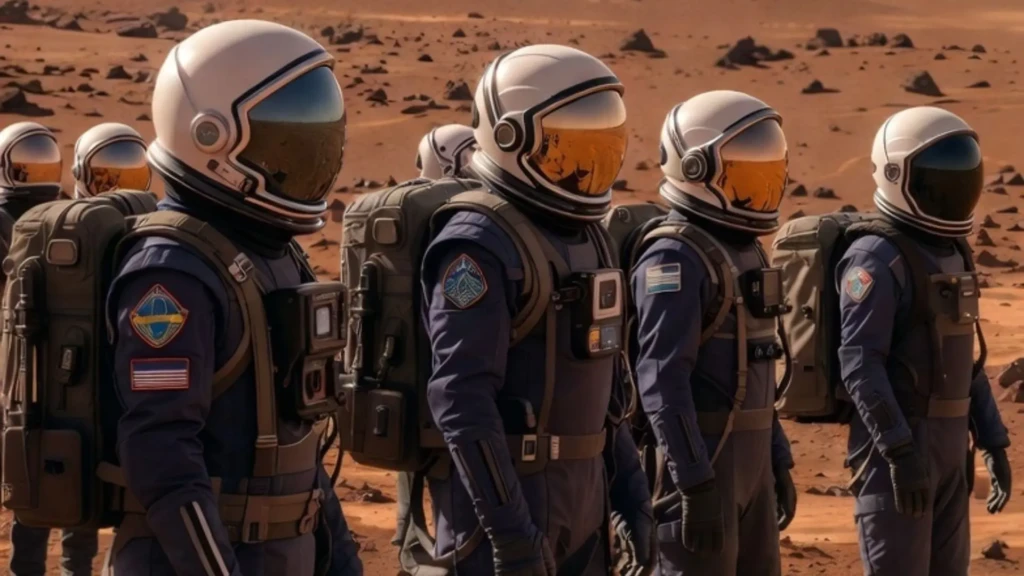
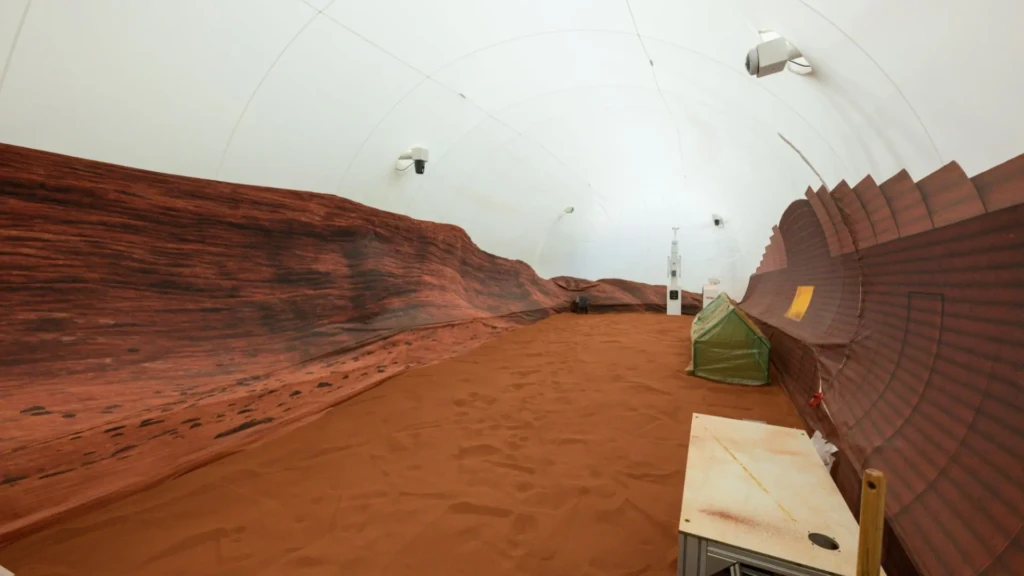
The National Aeronautics And Space Administration (NASA) kickstarted the second Crew Health and Performance Exploration Analog (CHAPEA) mission in Houston, Texas, on October 19. The participants Ross Elder, Ellen Ellis, Matthew Montgomery, and James Spicer, gently smiling and waving, entered into the 1,700-square-foot Mars Dune Alpha habitat centre which will be their de-facto home for a year.
The objective of this exercise is to prepare humans for crewed exploration missions to the Moon, Mars and beyond.
They’re not just simulating Mars, they’re living it.🧑🚀🏠
The CHAPEA Mission 2 crew entered the Mars Dune Alpha habitat on Oct. 19. For 378 days, they’ll live like Martian explorers, simulating life on the Red Planet to help @NASA prepare for future missions to the Moon, Mars,… pic.twitter.com/1XZTeFt81Z
— NASA’s Johnson Space Center (@NASA_Johnson) November 17, 2025
Simulating Mars on Earth
Under CHAPEA, the research volunteers will live in a simulated environment, akin to the red planet. They will operate as astronauts and gather critical data to assess human health and performance in a Mars-like environment. Their mission will conclude on October 31, 2026. Notably, the first CHAPEA exercise was completed at the same 3D printed facility at NASA’s Mars Dune Alpha habitat centre on June 25, 2024.
NASA’s Johnson Space Center recently shared a post on X about CHAPEA 2 volunteers saying – “They’re not just simulating Mars, they’re living it. The CHAPEA Mission 2 crew entered the Mars Dune Alpha habitat on Oct. 19. For 378 days, they’ll live like Martian explorers, simulating life on the Red Planet to help NASA prepare for future missions to the Moon, Mars, and beyond.”
NASA says, to obtain data on the Mars-like conditions, the environment inside the habitat, “will be as Mars-realistic as feasible, which may include environmental stressors such as resource limitations, isolation, equipment failure, and significant workloads. The major crew activities during the analog may consist of simulated spacewalks including virtual reality, communications, crop growth, meal preparation and consumption, exercise, hygiene activities, maintenance work, personal time, science work, and sleep.”
The 3D printed habitat includes private crew quarters for sleeping, kitchen, areas dedicated to fitness, medical, recreation, work, crop growth activities along with technical work area and two bathrooms.
Why 3D printing?
The structure of the 3D printed Mars habitat is designed as how it is likely to be constructed to support future long-term explorations.
Future Mars missions might potentially have 3D printed modules as they are cost effective and light in weight, eliminating the need to have large quantities of building materials on multiple flights.
Handling communication delays
The volunteers will experience planned communication delays inside the habitat. The reason is that communication between facilities on Mars and Earth typically take about 44 minutes – to and fro and one set of communication may lead to another. However, the crew on Mars may not have enough time to wait and thus communication lines are deliberately designed to be slow, in order to prepare the astronauts to make decisions independently.
ALSO READ: Neil deGrasse Tyson Shares The Only Reasons Humans May Reach Mars
Environmental stressors
During the exercise, the volunteers may be suddenly overwhelmed with unforeseen challenges such as resource constraints, which may include an abrupt stoppage of food, water or power failure. They might also be assigned multiple tasks at once. On top of that, a significant system might break down – like the water recycling module. The crew will also undergo isolation and confinement, and other stressors along with extravehicular activities.
“The simulation will allow us to collect cognitive and physical performance data to give us more insight into the potential impacts of the resource restrictions and long-duration missions to Mars on crew health and performance,” Grace Douglas, CHAPEA principal investigator, said in a statement. “Ultimately, this information will help NASA make informed decisions to design and plan for a successful human mission to Mars.”
ALSO READ: Artemis 3 Delayed To 2028? Report Says SpaceX’s Starship May Hurt NASA Again