Blue Terra Journal

  • Home
  • Spaceflight
    SpaceflightShow More
    SpaceX Dragon spacecraft for NASA's Crew-12 mission.
    SpaceX Rolls Out Dragon Spacecraft For NASA’s Crew-12 Mission While Falcon 9 Remains Grounded
    February 4, 2026
    NASA partners with Axiom Space
    NASA And Axiom Space Announce 5th Private Crew Mission To International Space Station In 2027
    February 1, 2026
    Blue Origin Mark 1 lander.
    Blue Origin Halts New Shepard Missions For At Least 2 Years To Land Humans On The Moon
    February 1, 2026
    SpaceX Starship on flight 11.
    SpaceX CEO Elon Musk Reveals When Starship Will Launch On Next Test Flight
    January 29, 2026
    NOAA's SOLAR-1 observatory.
    NOAA’s Sun Spying SOLAR-1 Observatory Reaches Its Destination 1.5 Million Km From Earth
    January 31, 2026
  • Astronomy
    AstronomyShow More
    Voyager 1 illustration
    NASA’s Voyager 1 Will Be One Light-Day Away From Earth In 2026 – What This Means
    January 26, 2026
    Auroras triggered by CMEs.
    Auroras Flood The Night Skies After Largest Solar Radiation Storm In Over 20 Years | Photos
    January 20, 2026
    Hubble discovers Cloud-9.
    Hubble Telescope Uncovers New Object ‘Cloud-9’ – A ‘Failed Galaxy’ With No Stars
    January 13, 2026
    SpaceX launches NASA telescope.
    SpaceX Launches NASA’s Exoplanet Exploring Telescope Pandora On Twilight Mission
    January 19, 2026
    Comet 3I/ATLAS by Hubble telescope
    Comet 3I/ATLAS Is Not An Alien Spacecraft – This Research Likely Confirms It
    January 10, 2026
  • India
    IndiaShow More
    Shubhanshu Shukla aboard the ISS.
    ISRO Astronaut Shubhanshu Shukla Awarded Ashoka Chakra For Heroic Ax-4 Mission
    January 25, 2026
    ISRO's PSLV lifts off to space.
    ISRO’s PSLV Rocket Suffers Third Stage Failure After Successful Liftoff; Payloads Lost
    January 23, 2026
    Dhruva Space team at ISRO facility.
    India’s Dhruva Space To Launch 10 Missions, Including 1st Northeastern Satellite, On ISRO’s PSLV
    January 12, 2026
    ISRO's PSLV rocket
    ISRO To Seek Redemption With PSLV-C62 Mission Launch On January 12
    January 12, 2026
    ISRO SSLV
    ISRO’s SSLV Rocket Just Got Better After Latest Third Stage Test Fire
    December 31, 2025
  • Artemis
    ArtemisShow More
    NASA's Artemis II SLS Rocket
    NASA Delays Artemis II Moon Mission Launch To March – Here’s Why
    February 3, 2026
    NASA's SLS rocket.
    Astronauts In Quarantine, Rocket Powered On – How NASA Is Preparing For Artemis II
    February 3, 2026
    NASA's Artemis II crew
    Inside Artemis II: How NASA Will Study Astronaut Health And Deep Space Radiation
    January 30, 2026
    NASA's SLS rocket at launch pad.
    NASA’s Artemis II To Carry Relic Of Humanity’s First Flight And More To The Moon
    January 27, 2026
    NASA's SLS rocket
    NASA’s SLS Rocket Rolls Out To The Launch Pad For Artemis II – Here’s What’s Next
    January 27, 2026
  • More
    • About
    • Privacy Policy
    • Terms
    • Contact

Blue Terra Journal

  • Home
  • Spaceflight
  • Astronomy
  • India
  • Artemis
Search
  • Pages
    • About
    • Contact
    • Privacy Policy
    • Terms

Home - Astronomy - Comet 3I/ATLAS Live Tracking: How To Keep An Eye On This Interstellar Visitor?

Astronomy

Comet 3I/ATLAS Live Tracking: How To Keep An Eye On This Interstellar Visitor?

The comet is exiting the inner solar system.

Abhishek Raval
Last updated: January 5, 2026 1:34 PM
Abhishek Raval
Share
4 Min Read
Comet 3I/ATLAS
Comet 3I/ATLAS photographed in July, 2025. Image: European Southern Observatory
SHARE


Contents
  • How to track 3I/ATLAS live?
  • NASA’s observation campaign
  • 3I/ATLAS size and speed

The comet 3I/ATLAS is exiting our inner solar system and you can track it live thanks to NASA. Discovered by the NASA-funded Asteroid Terrestrial-impact Last Alert System (ATLAS) telescope network, 3I/ATLAS is the third ever interstellar object to visit the solar system after Oumuamua (2017)  and Borisov (2019). 

As the ATLAS survey network in Río Hurtado, Chile, was scanning through the sky, it identified a hazy small heavenly body travelling at an unusually fast speed on July 1. This wasn’t just any native asteroid or comet because its orbit was too steep and the speed was also too high (about 60 km/second). Besides, it did not follow a closed orbital path about the Sun. That ‘hyperbolic trajectory’ is what gave away its identity.

On December 20, NASA released new pictures of this icy visitor captured by various spacecraft around Mars and beyond. 

How to track 3I/ATLAS live?

Yes! You can follow comet 3I/ATLAS as it speeds through the solar system. Here’s how:

While it’s not visible to the naked eye, you can track its real-time path using @NASA’s interactive tool, Eyes on the Solar System.

🔗: https://t.co/kV5kQEThkF pic.twitter.com/26yAb97k4K

— NASA Science (@NASAScience_) November 19, 2025

The comet reached perihelion (closest point to the Sun) on October 30 and is currently cruising on its hyperbolic trajectory out of the solar system. It is estimated to make its closest approach to Earth on December 19 and you can track its live location using NASA’s interactive tool Eyes on the Solar System that keeps eyes on every major object – asteroids, comets and spacecraft – in our solar neighbourhood.  

NASA’s observation campaign

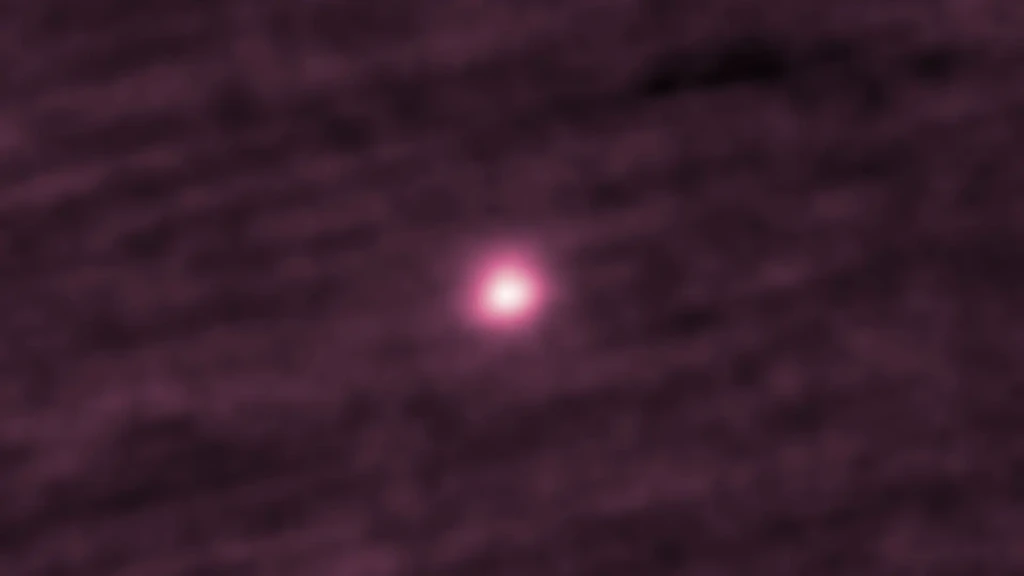
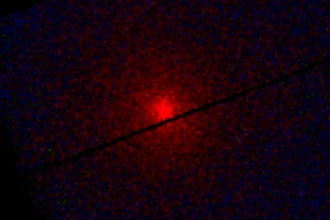
NASA has placed multiple eyes in the sky to observe the interstellar object, perhaps at a scale never seen before. During a live press conference earlier today, the agency shared pictures captured by the Mars Reconnaissance Orbiter, SPHEREx telescope, the Solar and Heliospheric Observatory (SOHO), the Psyche spacecraft, exoplanet-hunter TESS, the STEREO-A telescope, Lucy spacecraft and Mars Perseverance rover. 
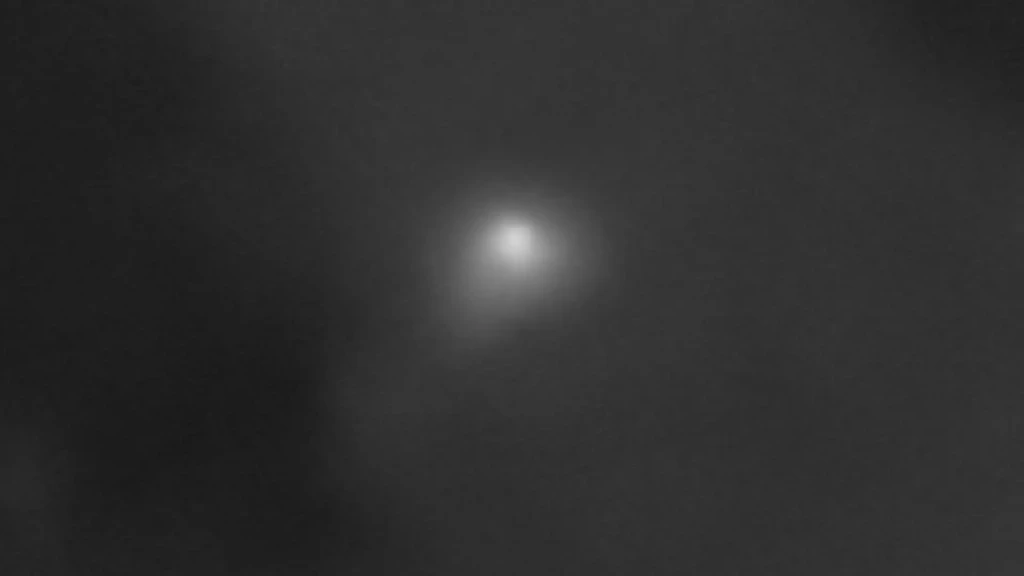
NASA Comet 3I/ATLAS
Comet 3I/ATLAS captured by the Mars Reconnaissance Orbiter. Image: NASA
Comet 3I/ATLAS
Comet 3I/ATLAS photographed by STEREO-A telescope. Image: NASA

Explaning the need for attention and investment into studying it, NASA said, “By observing the comet from so many locations, NASA has an opportunity to learn about the ways that 3I/ATLAS differs from our solar system’s home-grown comets and give scientists a new window into how the compositions of other systems may differ from.”

ALSO READ: ISRO Shares Picture Of Comet 3I/ATLAS Captured By Indian Telescope

3I/ATLAS size and speed

This comet has some very interesting characteristics. When it was first spotted, 3I/ATLAS was travelling at a speed of 137,000 miles per hour (221,000 km per hour). As the Sun pulled the comet inward, it changed gear and its speed increased to about 153,000 miles per hour (246,000 km per hour) during perihelion. When 3I/ATLAS leaves our solar system, NASA says, it will travel at the same speed as it came in.

NASA’s Hubble Space Telescope observed the interstellar comet on August 20 and astronomers have based its size on the findings from the telescope. The estimated diameter of 3I/ATLAS’ nucleus is no less than 1,400 feet (440 meters) and no greater than 3.5 miles (5.6 km). In comparison, 1I/ʻOumuamua’s size was between 100 to 440 m, and 2I/Borisov was almost 1 km wide.

ALSO READ: NASA Finally Releases Comet 3I/ATLAS Images Captured From Mars & Beyond

TAGGED:3I/ATLAScometComet 3I/ATLASNASASpace
Share This Article
Facebook Pinterest Whatsapp Whatsapp LinkedIn Copy Link Print

Latest News

SpaceX Dragon spacecraft for NASA's Crew-12 mission.
SpaceX Rolls Out Dragon Spacecraft For NASA’s Crew-12 Mission While Falcon 9 Remains Grounded
Spaceflight
NASA's Artemis II SLS Rocket
NASA Delays Artemis II Moon Mission Launch To March – Here’s Why
Artemis
NASA's SLS rocket.
Astronauts In Quarantine, Rocket Powered On – How NASA Is Preparing For Artemis II
Artemis
NASA partners with Axiom Space
NASA And Axiom Space Announce 5th Private Crew Mission To International Space Station In 2027
Spaceflight

You Might Also Like

NASA comet 3I/ATLAS.
Astronomy

Harvard Physicist Avi Loeb Criticises NASA’s Comet 3I/ATLAS Photo Release

November 21, 2025
Leonid meteor shower
Astronomy

Leonid Meteor Shower: When And Where To Look In India Tonight?

November 17, 2025
Supermoon
Astronomy

The Final Supermoon Of 2025 Arrives December 4 – Here’s What To Expect

December 5, 2025
3I/ATLAS
Astronomy

So What Happened To Comet 3I/ATLAS After Its Closest Approach To Earth?

January 7, 2026
© 2026, Blue Terra Journal
  • About
  • Privacy Policy
  • Terms
  • Contact
Welcome Back!

Sign in to your account

Username or Email Address
Password

Lost your password?