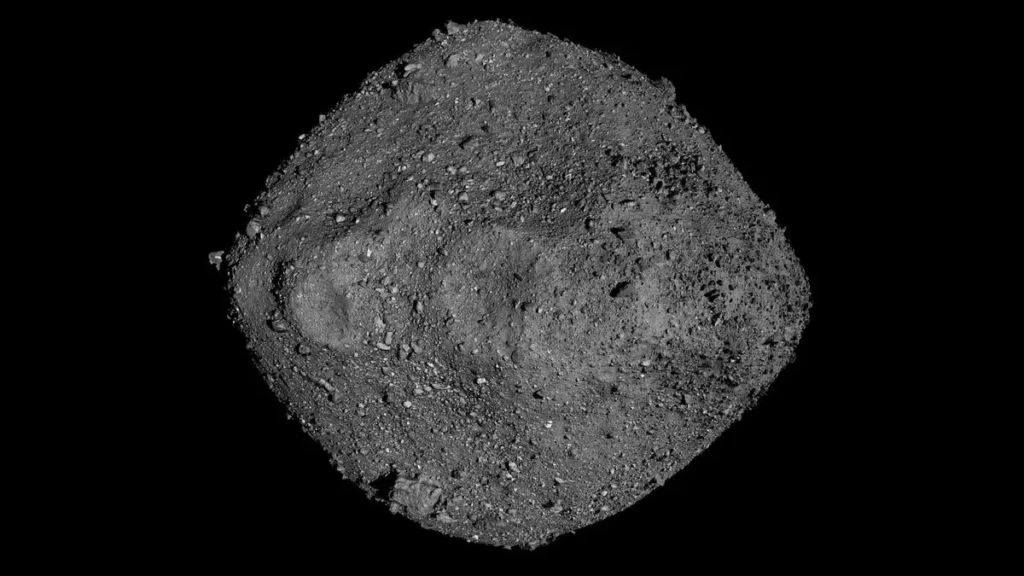
A sample of the asteroid Bennu was delivered to Earth in 2023 and scientists have found many interesting molecules, including building blocks of life in them. But three new studies published recently have revealed that the asteroid is composed of more than just life-forming ingredients.
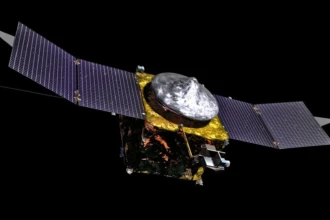
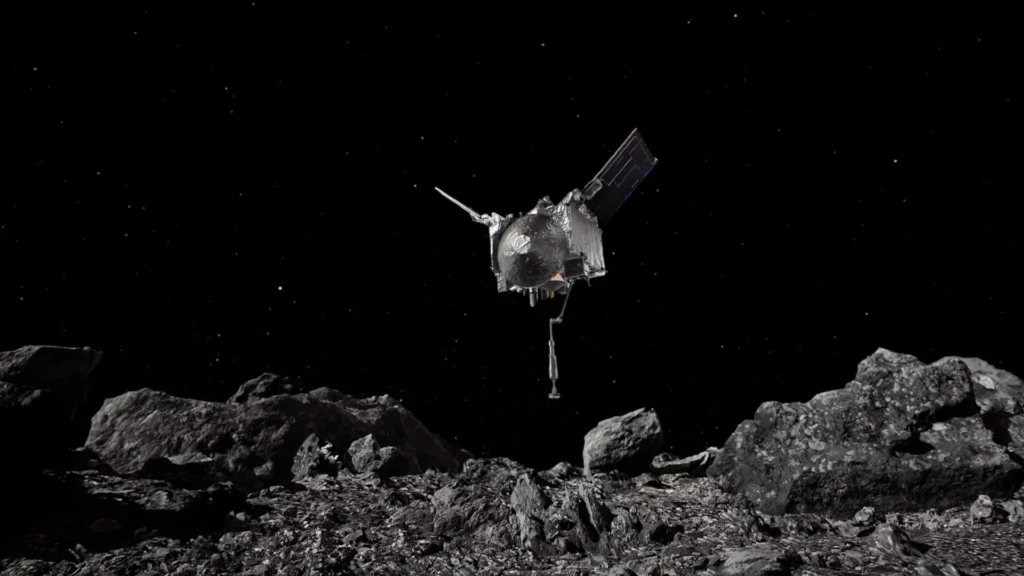
According to NASA, the latest studies have revealed that Bennu’s sample contains essential sugars, a “space gum” like substance, and a high amount of “supernova dust” from exploding stars. The asteroid‘s materials were scooped up by NASA’s OSIRIS-REx spacecraft which dropped them in a sealed capsule in September 2023 and is now on its way to study the asteroid Apophis, under a new name OSIRIS-APEX.
BREAKING: Sugars essential for life have been found in pristine asteroid Bennu samples collected by NASA’s OSIRIS-REx spacecraft. Combined with previous detections of amino acids and nucleobases, we see that life’s ingredients were widespread throughout the solar system:… pic.twitter.com/l4Rz9Tbq5C
— NASA Solar System (@NASASolarSystem) December 2, 2025
Discovery of sugars
In the first study, led by Yoshihiro Furukawa of Japan’s Tohoku University, and published in Nature Geoscience, researchers examining about 600 milligrams of dust found sugars essential for biology on Earth.
The discovered molecules are ribose – the building blocks of RNA – and glucose – the main source of energy in all humans and animals. While these sugars are not signs of life, they hint that biological molecules necessary for origin of life were widespread throughout the solar system. Apart from these molecules, scientists have also previously detected amino acids, nucleobases, and carboxylic acids in Bennu sample.
“All five nucleobases used to construct both DNA and RNA, along with phosphates, have already been found in the Bennu samples brought to Earth by OSIRIS-REx,” Furukawa said in a statement. “The new discovery of ribose means that all of the components to form the molecule RNA are present in Bennu.”
While ribose has been found in two meteorites that crashed on Earth, it was the first discovery of glucose in an extraterrestrial sample. The latest finding also gives boost to the “RNA world” hypothesis which says that the first forms of life relied on RNA, instead of DNA, as the primary molecule to store information and to drive chemical reactions necessary for survival.
Discovery of supernova dust
The discovery of an unusual amount of supernova dust was also surprising. A team led by Ann Nguyen of NASA’s Johnson Space Center noted in Nature Astronomy that Bennu sample has presolar dust (dust from stars predating our solar system) six times more than any other studied astromaterial.
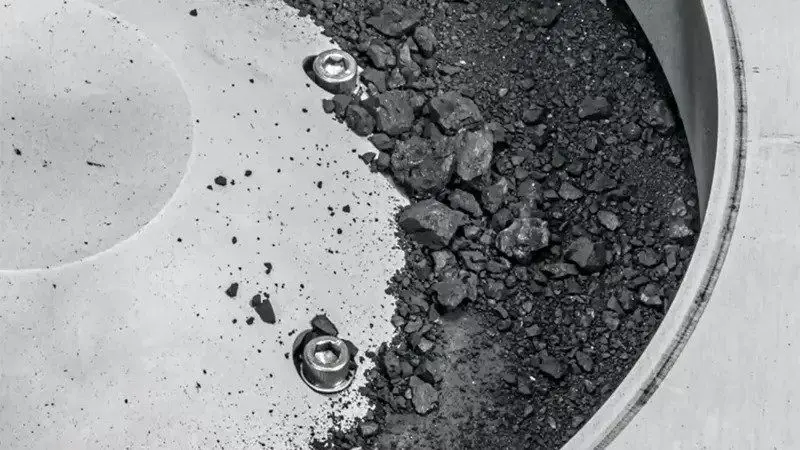
This means that Bennu’s parent asteroid formed in a region of the solar nebula – the rotating cloud of gas and dust that birthed the solar system – which was rich in dust of stars at the end of their lives.
The study also revealed that despite undergoing extensive alteration in its fluids, Bennu has less-altered materials that could offer more clues about its origin.
Discovery of an ancient ‘gum’
Analysis of the sample has also revealed the presence of an ancient ‘gum’ like substance, scientists noted in the third paper, also published in Nature Astronomy. This has never been seen before in space rocks. Scott Sandford at NASA’s Ames Research Center and Zack Gainsforth of the University of California, Berkeley, believe that this substance could have helped set the stage for the origin of life on our planet.
Since Bennu is believed to have emerged from a bigger, 4.5 billion-year-old asteroid, the gum may have formed in the early solar system. The once soft and flexible substance has now hardened and it consists of polymer-like materials extremely rich in nitrogen and oxygen. “With this strange substance, we’re looking at, quite possibly, one of the earliest alterations of materials that occurred in this rock,” Sandford explained. “On this primitive asteroid that formed in the early days of the solar system, we’re looking at events near the beginning of the beginning.”
Microscopic analysis of the substance suggested that the strange substance had been deposited in layers on grains of ice and minerals present in Bennu and it has random connections and composition of elements differing from particle to particle.
ALSO READ: Alaknanda: Why This Ancient Spiral Galaxy’s Discovery By Indian Scientists Matters
ALSO READ: ESA Drops Surprise Preview Of Comet 3I/ATLAS Images From JUICE Spacecraft