Astronomers earlier this year discovered a ‘sun-grazer’ comet which is heading for a close encounter with the Sun and might put on a brilliant show during daytime. It is named comet C/2026 A1 MAPS and it is predicted to fly through the Sun’s photosphere – lowest layer of the Sun’s atmosphere – on April 4. As we move towards that day, the comet will grow significantly brighter for viewers on Earth and if A1 MAPS is not durable enough, it might get ripped apart during the solar encounter.
But what is a Sun-grazer comet?
Sun-grazer comets are those that get very close to the Sun during their nearest approach, with some even diving into the Sun and meeting their end. According to NASA, a comet should be within 13,68,422 km or (8,50,000 miles) from the Sun at perihelion (closest point) to be considered a Sun-grazer.
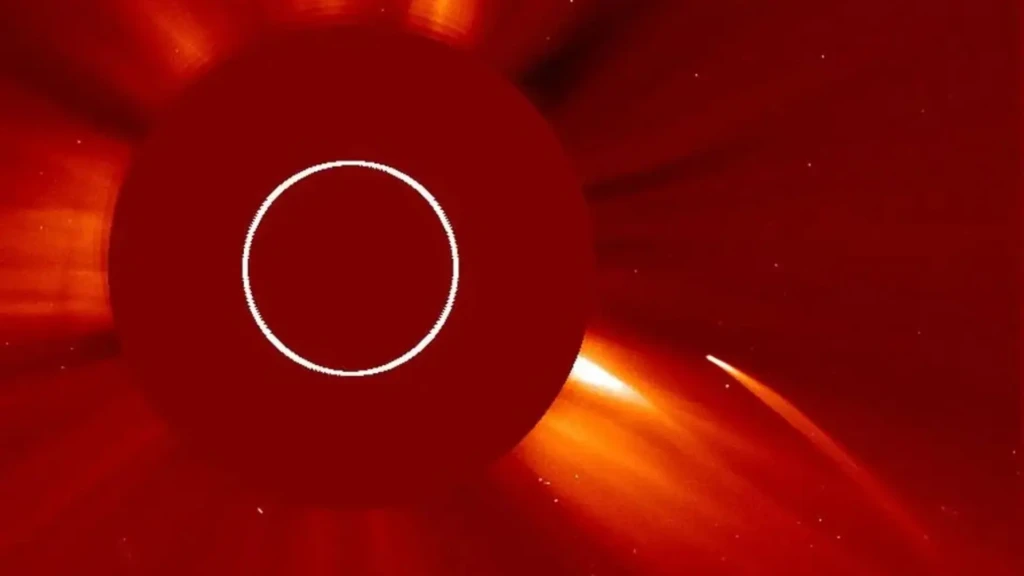
Comet C/2023 A3 (Tsuchinshan-ATLAS) is captured in coronagraph imagery. This animation, courtesy of jhelioviewer, shows the events. Follow comet progression for yourself through October 10th at https://t.co/tvi8ZIJBRw and see the main story at https://t.co/FoVdofdW5m pic.twitter.com/Uj6s9sklUC
— NOAA Space Weather Prediction Center (@NWSSWPC) October 8, 2024
The potentially doomed A1 MAPS comet, for example, will pass about 1,60,000 kilometers (99,000 miles) above the photosphere – less than half the Earth-Moon distance. These kinds of comets belong to several groups such as Kreutz, Marsden, Meyer and Kracht, with Kreutz family being the dominant one. A1 MAPS belongs to the Kreutz group, that consititutes fragments from a larger ‘progenitor’ comet that disintegrated thousands of years ago.
NASA says these comets move on the Kreutz Path and close to 85% of the Sun-grazers have been seen by the Solar and Heliospheric Observatory (SOHO) satellite on this orbital highway.
These comets are special because of their incredible brightness, plus they’re a scientific treasure trove. They can reveal about cometary compositions, dust properties, fragmentation and even the solar corona – Sun’s outermost atmospheric layer.
Where is Comet C/2026 A1 (MAPS) now?
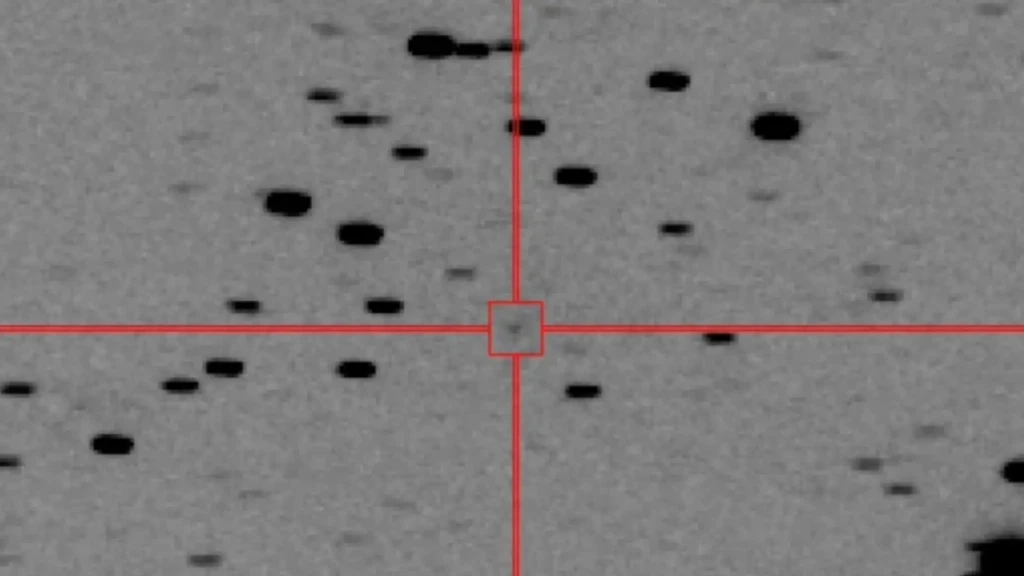
The comet, according to The Sky Live, is around 185 million kilometres from Earth in the constellation Cetus. It was discovered on January 13 by a team of four astronomers at the AMACS1 observatory in San Pedro de Atacama, Chile, and the word MAPS is an acronym of their last names – Alain Maury, Georges Attard, Daniel Parrott, and Florian Signoret.
Since it’s a lot closer now, the comet is bright enough to be visible through amateur telescopes.
Scientists say that if it survives the immense heat and tidal forces of the Sun, the comet could be visible during daytime in April.
Considering A1 MAPS does survive perihelion, it will be visible low in the western sky from mid-northern latitudes shortly after sunset for several days. From northern hemisphere, daytime viewing will be very challenging or unlikely due to the comet’s position near the Sun. If you’re unable to, NASA’s SOHO is likely to capture the rare encounter for everyone’s safe viewing.
ALSO READ: The Moon Is Safe! James Webb Space Telescope Rules Out Asteroid 2024 YR4’s Collision
ALSO READ: NASA Releases New Comet 3I/ATLAS Pictures As It Glows Up On An Outbound Journey