Pictures of auroras have flooded social media after a severe solar radiation storm that hit Earth on January 19. According to NOAA’s Space Weather Prediction Center, this S4-level radiation storm is the largest recorded since 2003 and it could affect space launches, aviation and satellite operations. The storm was at its peak in the early hours of January 20 and it’s weakening gradually.
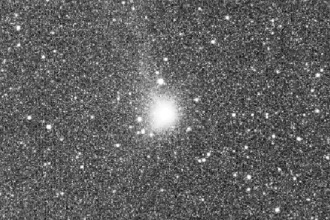
Absolutely spectacular view from Stereo A of the wide & fast CME from the X1.9 flare in AR 4341. My quick back of the envelope calculation of the CME speed (perpendicular to the LOS in Stereo A cor2 images) is ~2000 km/s (or slightly above). It will be most interesting to see… https://t.co/BMY3hv6IGc pic.twitter.com/y7U1oBOvDe
— Jure Atanackov (@JAtanackov) January 18, 2026
During such an event, the Sun releases enormous amounts of light energy (solar flare) and charged particles or plasma (coronal mass ejection or CME). When these particles interact with Earth’s magnetic field, they create a geomagnetic storm on Earth; and when they are accelerated by processes at or near the Sun and arrive Earth in enough quantity, it’s called a radiation storm.
Last night’s storm created a G4 (severe) geomagnetic storm triggering auroras in the polar regions and large parts of Europe, Canada and the US.
Final video update: CME passage continues, but weakening; back down to G1-G3 levels after more G4 overnight; G1 possible again tonight due to residual CME influences and CH HSS effects; & back down to S1-S2 levels. Keep space weather aware at https://t.co/TV7Yw6Lq1Y pic.twitter.com/N4MkBc3NP9
— NOAA Space Weather Prediction Center (@NWSSWPC) January 20, 2026
Shawn Dahl, SWPC Service Coordinator, said in a video update that a G1-level storm is still likely to continue due to residual CME influences.
Solar storm events like flares and CMEs often result from sunspots which are dark, cooler areas on the Sun’s surface. These sunspot regions have very strong magnetic fields and when these field lines get tangled and snap, they release energy and this energy powers the flares and CMEs. The latest storm was caused by sunspot region AR4341 which is currently facing Earth.
Several social media users have posted pictures of the auroras from across Europe and the US.
Wow. Here’s the real-time motion of the aurora tonight filmed with my iPhone. Amazing show just now, and the night is only getting started! pic.twitter.com/bfPiRSBSEX
— Vincent Ledvina (@Vincent_Ledvina) January 20, 2026
What a night!!! 😍😍😍😍
Worth coming out of hibernation 😍#Cornwall #Stithians #Northernlights #Auroraborealis #Lookup pic.twitter.com/6pvarXcSHQ— Jo-Shreeve (@shreeve_jo) January 19, 2026
Holy shit! Massive geomagnetic storm pic.twitter.com/IvX6Fx95Nu
— Jakes in Iceland 🇮🇸 (@jakesonaplane_) January 19, 2026
Auroras over #Groningen, the Netherlands, tonight. Spectacular to witness. ✨💖 pic.twitter.com/hyO2gM5Iyu
— Edd (@gulielmusz) January 20, 2026
In the northeast, right on the Baltic Sea. It was one of the most amazing experiences.#auroras pic.twitter.com/GzyQimNGFg
— Stefan Schwerdt (@antwort42x) January 20, 2026
Auroras right now E of Svendborg, denmark. pic.twitter.com/HFo2CKT7eQ
— Nicimaki (@NicimakiClips) January 19, 2026
In the update, Dahl said that the effects of the radiation storm are not fully known yet due to a holiday in the US. However, the weather prediction center had sent timely warnings to infrastructure operators, aviation and power grids to take action in order to mitigate any possible impacts.
Astrophysicist Dr. Ryan French, in a post on X, wrote – “At these levels, space agency’s responsible for human lives in space will be taking things very seriously. This is particularly relevant this year, as NASA’s Artemis II is soon launching astronauts around the Moon – beyond the protection of Earth’s atmosphere and magnetic field.”
ALSO READ: ISRO’s Aditya-L1 And NASA Missions Uncover Reason Behind 2024 Solar Storm Fury
ALSO READ: Strongest Solar Eruption Of 2025 Lights Up Skies With Auroras, Triggers Blackouts