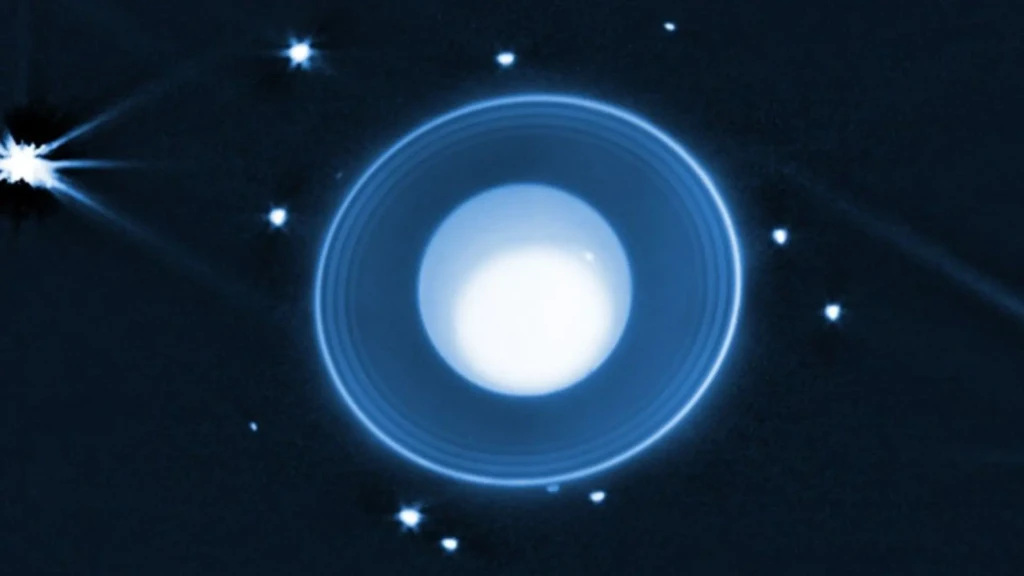
The James Webb Space Telescope has discovered a new moon around Uranus taking the total number to 29. Designated S/2025 U1, this moon was identified in the glare of this ice giant’s rings thanks to Webb’s extraordinary infrared capabilities. Webb has four instruments that are designed to collect infrared light which is invisible to the human eye and can only be felt as heat.
🔵 Astronomers using the NASA/ESA/CSA #Webb Space Telescope have found a new moon orbiting Uranus!
🔗https://t.co/d4pmqpyHnT pic.twitter.com/32mkBVZdF0
— European Space Agency (@esa) January 3, 2026
The credit for finding S/2025 U1 goes to Near-infrared Camera (NIRCam) that was able to capture the moon’s faint glow in the far reaches of the outer solar system.
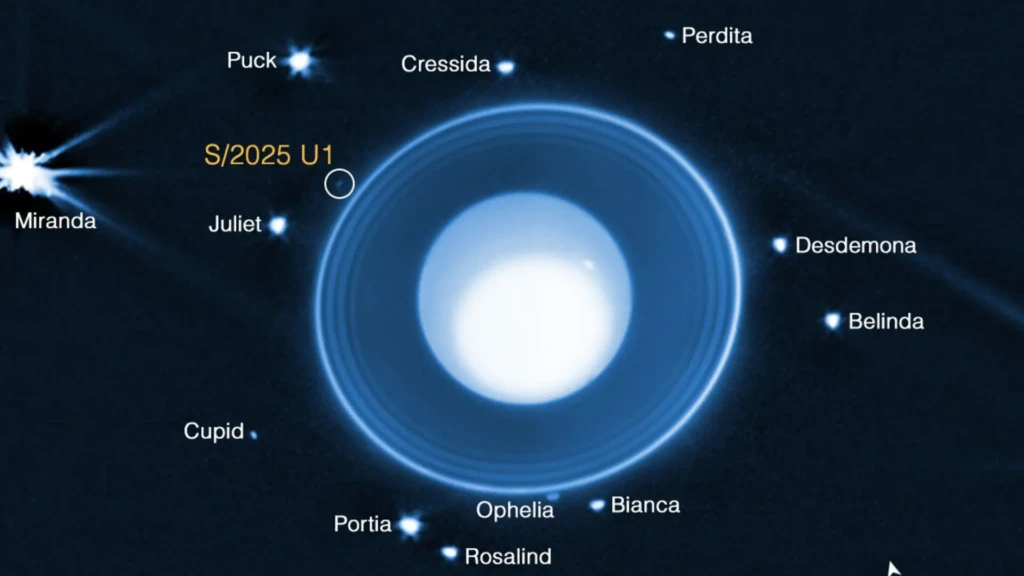
The picture featuring S/2025 U1 shows other known moons of Uranus like Miranda, Bianca and Juliet, which are visibly brighter. In a statement, the European Space Agency, that built the Webb telescope alongside NASA and Canadian Space Agency, said that the picture is a composite of three different data treatments that brought out the details in the planetary atmosphere, the surrounding rings, and the orbiting moons.
Webb’s view of the outer solar system
The Webb telescope first turned its cameras toward the outer solar system in 2023, capturing Jupiter, Uranus and Neptune in great detail. Uranus’s observation was just 12 minutes long and it was just a trailer of what this telescope is capable of.
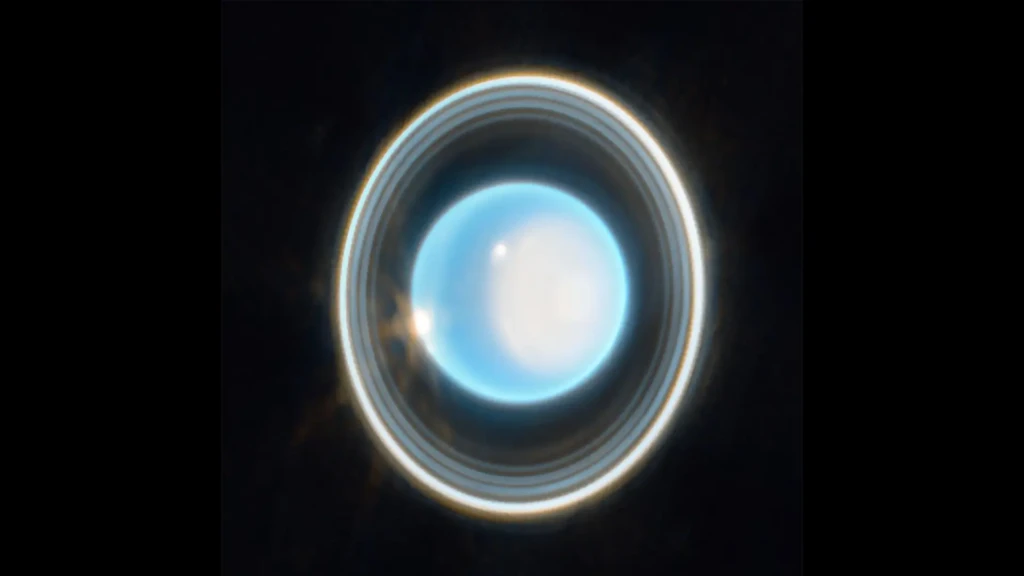
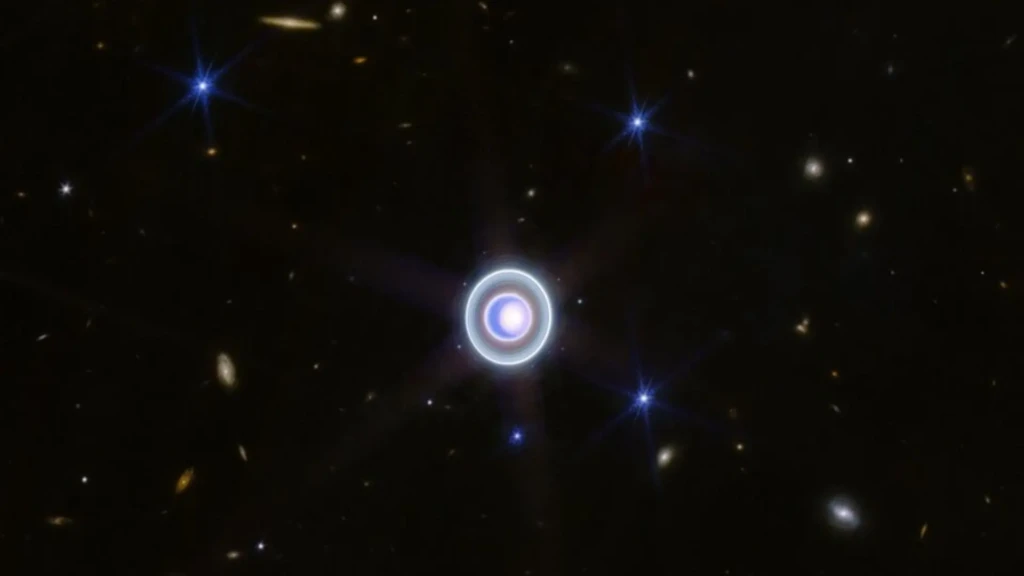
Not only did Webb capture Uranus’s rings (11 of 13) and moons, it showed how dynamic the planet’s atmosphere is. According to NASA, scientists noted a subtle enhanced brightening at the center of the cap – a feature not seen even with powerful telescopes like Hubble and Keck. This brightening they believe results from clouds which are likely connected to storm activity.
As for the dusty elusive rings, they were imaged in such detail only by Voyager 2 and Keck observatory before. Astronomers hope that future observations with Webb might reveal more rings around the planet.
Uranus has extreme seasons because it rotates on its side and takes 84 years to complete one orbit around the Sun. Due to its extended orbital period, Uranus’s poles experience many years of constant sunlight and equally long duration of complete darkness. It is currently spring on the planet’s northern hemisphere and the summer will arrive in 2028.
ALSO READ: NASA’s Webb Telescope Discovers 13 Billion Years Old Supernova; Breaks Own Record
ALSO READ: James Webb Space Telescope Finds Strongest Clues Of Atmosphere On A Scorching Super-Earth