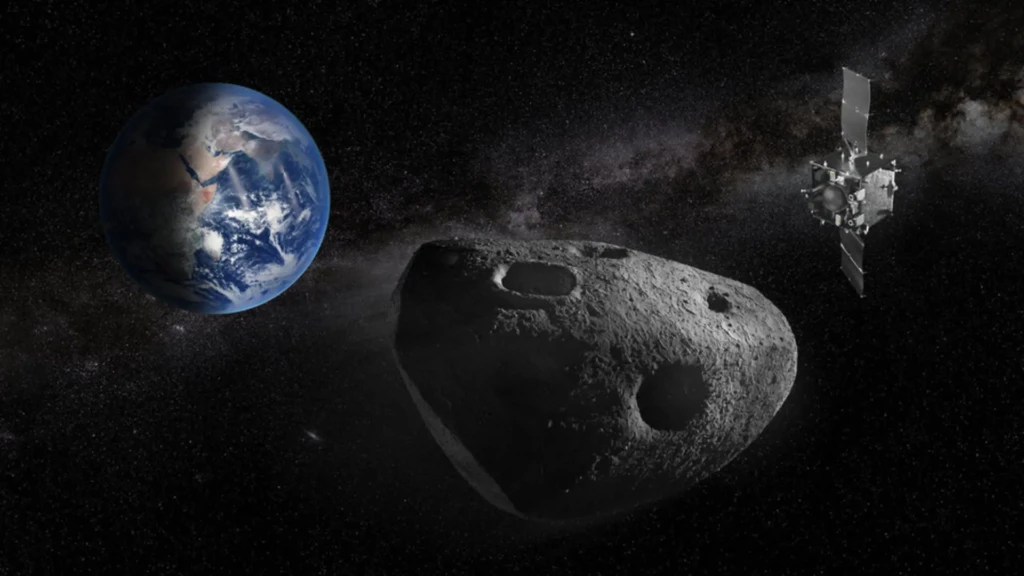
The European Space Agency (ESA), in partnership with the Japanese Aerospace Exploration Agency (JAXA), is hard at work to develop the Ramses mission to investigate the Apophis asteroid. The space rock will make its closest approach to Earth in 2029 and scientists will use this opportunity to study this potentially hazardous asteroid.
According to ESA, Apophis will pass within 32,000 km from Earth’s surface on 13 April, 2029, close enough to be visible from the naked eye at night across parts of Europe, Africa and Asia. The idea is to launch a spacecraft that will rendezvous with Apophis before it reaches nearest point to Earth.
[#CosmosBlog] Friday 13 April 2029 is when an “unlucky” day will become legendary. Asteroid #Apophis will make a rare but safe skim past Earth. ESA & JAXA are launching the #Ramses mission to rendezvous for a journey only seen every few millennia. Read 🔗: https://t.co/93aGAoJe2d pic.twitter.com/9VlPaDetMc
— JAXA Institute of Space and Astronautical Science (@ISAS_JAXA_EN) December 25, 2025
While it is classified as a “potentially hazardous asteroid,” Apophis (approx. 375 meters wide) poses no harm to Earth. It brings a once-in-a-lifetime opportunity for astronomers because asteroids of this size getting this close to our planet is a rare event that occurs every 5,000-10,000 years. Named after the Egyptian god of chaos and destruction, Apophis once had a 3% chance of hitting Earth.
Objectives of the Ramses mission
JAXA and ESA have planned to launch Ramses around April 2028 and it will reach Apophis in February 2029, two months before the closest approach. Once it gets close to Apophis, the spacecraft will use a suite of instruments to conduct a thorough before and after survey of the asteroid’s shape, surface, orbit, rotation and orientation. The data collected would further help measure Apophis’ composition, interior structure, mass and density, providing insights into how to nudge a hazardous asteroid off its course.
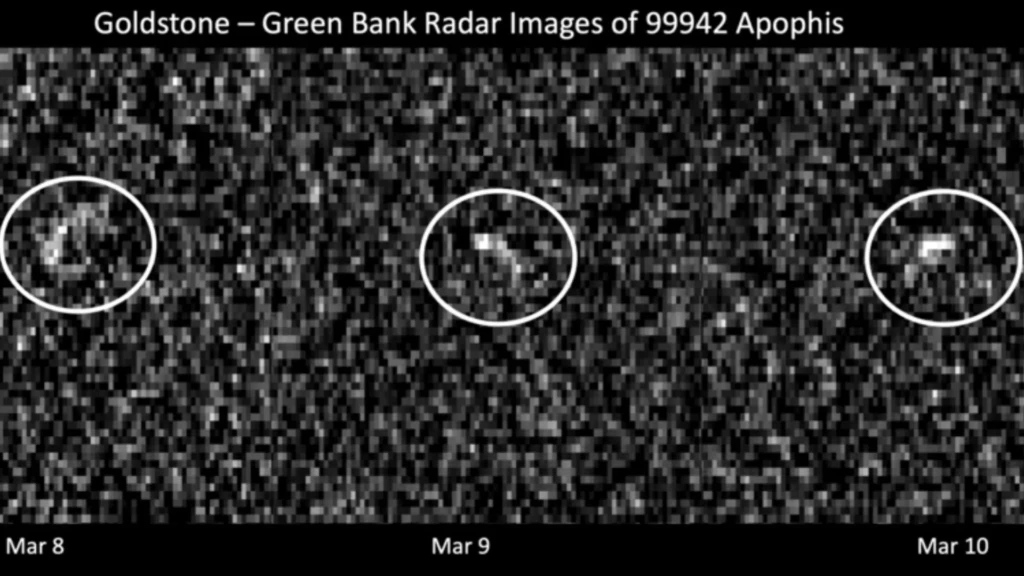
Scientists predict that Earth’s gravitational pull may trigger quakes and landslides on Apophis, and Ramses will provide a front-row seat to all the changes this asteroid will undergo.
“A reconnaissance mission would be launched first to analyse the incoming asteroid’s orbit and structure,” Richard Moissl, head of ESA’s Planetary Defence Office, said in a statement. “The results would be used to determine how best to redirect the asteroid or to rule out non-impacts before an expensive deflector mission is developed.”
Apophis is said to have formed billions of years ago so it could even reveal a lot about the early solar system.
The mission will be launched onboard Japan’s H3 rocket from the Tanegashima Space Center. Apart from offering the launch service, JAXA is also providing a thermal infrared imager and flexible solar panels for the spacecraft.
Ramses has inherited its design from the Hera mission, ESA’s another asteroid investigator launched in 2024 to study the asteroid moonlet Dimorphos that was destroyed by NASA’s DART spacecraft. JAXA contributed the infrared imager for Hera as well.
NASA’s plan to study Apophis
Apart from ESA, NASA is also planning to study Apophis in April 2029. It could reportedly revive the Janus mission, which was shelved in July 2023, to independently survey the asteroid.
Although, NASA had set its eyes on Apophis long ago. In September 2023, it repurposed the OSIRIS-REx mission to OSIRIS-APEX after the spacecraft dropped samples of the asteroid Bennu to Earth.
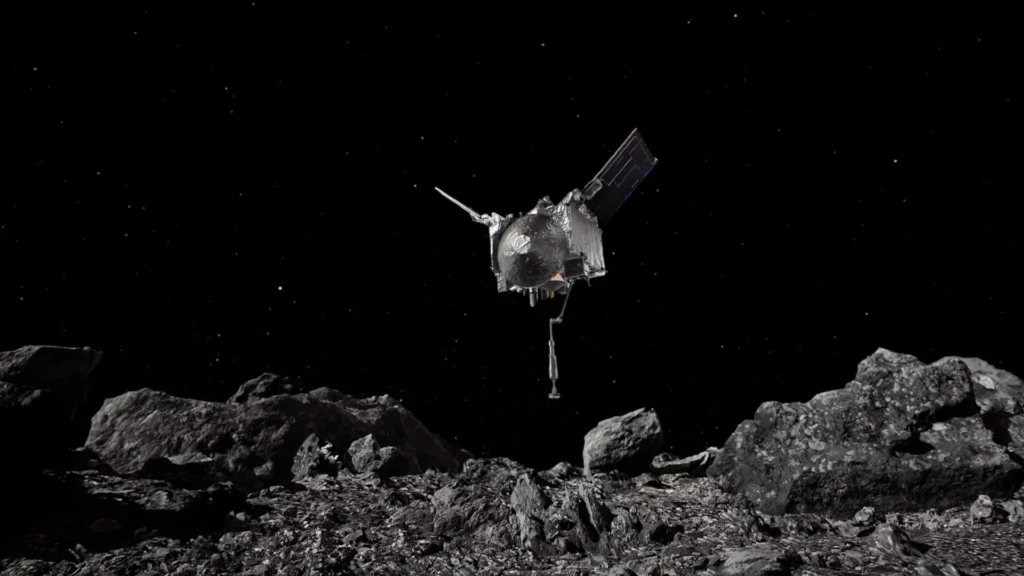
Its trajectory was tweaked after the mission was complete and OSIRIS-APEX is currently on its way to Apophis; it’s scheduled to meet the asteroid in June 2029.
OSIRIS-APEX’s objective, according to NASA, is studying the effects of the Earth flyby on Apophis. The encounter is expected to alter the asteroid’s orbit, change how fast it spins on its axis, and possibly cause quakes or landslides that will alter its surface.
ALSO READ: When NASA’s DART Mission Proved We Could Stop Armageddon
ALSO READ: Interstellar Comet 3I/ATLAS Captured In Ghostly X-ray Image By ESA Telescope