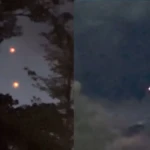
The Taurid meteor shower is peaking on November 5 and the Moon is feeling the impact, literally. Japanese astronomer Daichi Fujii, who is also the curator of the Hiratsuka City Museum, recently captured flashes of impact on the night side of the Moon, concluding that it might be chunks of the Taurid meteor shower crashing on the lunar surface. Taking to X, Fujii shared a video of the impact flashes captured on October 30.
昨夜は、上弦の月の夜側に月面衝突閃光が出現しました!2025年10月30日20時33分13.4秒の閃光です(270fps,0.03倍速再生)。月は大気がないため流星は見られず、クレーターができる瞬間に光ります。衝突領域から考えると、現在ピークを迎えている、おうし座南流星群や北流星群由来の可能性があります。 pic.twitter.com/MM3xleCZSJ
— 藤井大地 (@dfuji1) October 30, 2025
“Last night, a lunar impact flash appeared on the night side of the first quarter moon! It was a flash at 20:33:13.4 on October 30, 2025,” Fujii posted. “Since the moon has no atmosphere, meteors cannot be seen, and it lights up at the moment a crater is formed. Based on the impact area, it may be derived from the Taurus Southern Meteor Shower or Northern Meteor Shower, which are currently at their peak,” he added.
He further detailed that the flash appeared east of the Gassendi Crater from a 0.2 kg meteoroid that crashed at a speed of 27 km per second. This tiny space rock, Fujii calculated, created a crater about three metres in diameter.
He later told Space.com that another flash occurred on November 1, west of Oceanus Procellarum region of the Moon.
ALSO READ: Meteor Explodes In The Sky Over Portugal, ESA Releases Fiery Video
今夜は今年一番大きな満月(通称:スーパームーン)が見られます。1年間の大きさの変化を30秒にまとめました。近地点で満月になると一番大きく見えます。うんうん、イヤイヤと首振り運動(秤動)をするので、見える面も少し変化するんです。(NASA Scientific Visualization Studioのデータ使用) pic.twitter.com/OgQaQ1VL0u
— 藤井大地 (@dfuji1) November 4, 2025
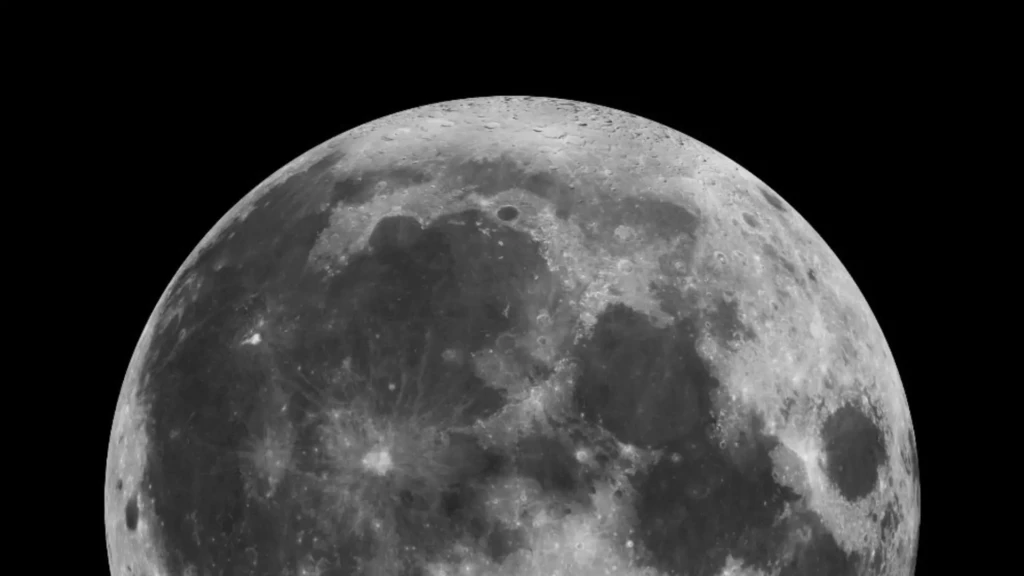
The meteor impacts may be linked to our celestial neighbour being at its closest point to Earth. The November 5 full Moon is the biggest and brightest of the year and is also called a ‘supermoon.’ Since it is at perigee (closest point to Earth), a supermoon appears 14 per cent larger and 30 per cent brighter than a full Moon at apogee (farthest point).
As for the Taurid meteors, they result from the debris cloud of Comet 2P/Encke. According to NASA, this comet was discovered on January 17, 1786 by French astronomer Pierre F. A. Mechain. It measures 4.8 kilometers wide and takes 3.3 years to orbit the Sun once. It is known to have the shortest orbital period of any known comet within our solar system.
ALSO READ: Japan’s Akatsuki Orbiter Goes Silent Forever Ending Our Venus Presence