Blue Terra Journal

  • Home
  • Spaceflight
    SpaceflightShow More
    SpaceX Dragon spacecraft for NASA's Crew-12 mission.
    SpaceX Rolls Out Dragon Spacecraft For NASA’s Crew-12 Mission While Falcon 9 Remains Grounded
    February 4, 2026
    NASA partners with Axiom Space
    NASA And Axiom Space Announce 5th Private Crew Mission To International Space Station In 2027
    February 1, 2026
    Blue Origin Mark 1 lander.
    Blue Origin Halts New Shepard Missions For At Least 2 Years To Land Humans On The Moon
    February 1, 2026
    SpaceX Starship on flight 11.
    SpaceX CEO Elon Musk Reveals When Starship Will Launch On Next Test Flight
    January 29, 2026
    NOAA's SOLAR-1 observatory.
    NOAA’s Sun Spying SOLAR-1 Observatory Reaches Its Destination 1.5 Million Km From Earth
    January 31, 2026
  • Astronomy
    AstronomyShow More
    Voyager 1 illustration
    NASA’s Voyager 1 Will Be One Light-Day Away From Earth In 2026 – What This Means
    January 26, 2026
    Auroras triggered by CMEs.
    Auroras Flood The Night Skies After Largest Solar Radiation Storm In Over 20 Years | Photos
    January 20, 2026
    Hubble discovers Cloud-9.
    Hubble Telescope Uncovers New Object ‘Cloud-9’ – A ‘Failed Galaxy’ With No Stars
    January 13, 2026
    SpaceX launches NASA telescope.
    SpaceX Launches NASA’s Exoplanet Exploring Telescope Pandora On Twilight Mission
    January 19, 2026
    Comet 3I/ATLAS by Hubble telescope
    Comet 3I/ATLAS Is Not An Alien Spacecraft – This Research Likely Confirms It
    January 10, 2026
  • India
    IndiaShow More
    Shubhanshu Shukla aboard the ISS.
    ISRO Astronaut Shubhanshu Shukla Awarded Ashoka Chakra For Heroic Ax-4 Mission
    January 25, 2026
    ISRO's PSLV lifts off to space.
    ISRO’s PSLV Rocket Suffers Third Stage Failure After Successful Liftoff; Payloads Lost
    January 23, 2026
    Dhruva Space team at ISRO facility.
    India’s Dhruva Space To Launch 10 Missions, Including 1st Northeastern Satellite, On ISRO’s PSLV
    January 12, 2026
    ISRO's PSLV rocket
    ISRO To Seek Redemption With PSLV-C62 Mission Launch On January 12
    January 12, 2026
    ISRO SSLV
    ISRO’s SSLV Rocket Just Got Better After Latest Third Stage Test Fire
    December 31, 2025
  • Artemis
    ArtemisShow More
    NASA's Artemis II SLS Rocket
    NASA Delays Artemis II Moon Mission Launch To March – Here’s Why
    February 3, 2026
    NASA's SLS rocket.
    Astronauts In Quarantine, Rocket Powered On – How NASA Is Preparing For Artemis II
    February 3, 2026
    NASA's Artemis II crew
    Inside Artemis II: How NASA Will Study Astronaut Health And Deep Space Radiation
    January 30, 2026
    NASA's SLS rocket at launch pad.
    NASA’s Artemis II To Carry Relic Of Humanity’s First Flight And More To The Moon
    January 27, 2026
    NASA's SLS rocket
    NASA’s SLS Rocket Rolls Out To The Launch Pad For Artemis II – Here’s What’s Next
    January 27, 2026
  • More
    • About
    • Privacy Policy
    • Terms
    • Contact

Blue Terra Journal

  • Home
  • Spaceflight
  • Astronomy
  • India
  • Artemis
Search
  • Pages
    • About
    • Contact
    • Privacy Policy
    • Terms

Home - Spaceflight - Russia Scraps Plan To Build New Space Station From Scratch, Will Use ISS Remains

Spaceflight

Russia Scraps Plan To Build New Space Station From Scratch, Will Use ISS Remains

Russia will move out of the ISS in 2028.

Harsh Vardhan
Last updated: December 24, 2025 7:28 PM
Harsh Vardhan
Share
4 Min Read
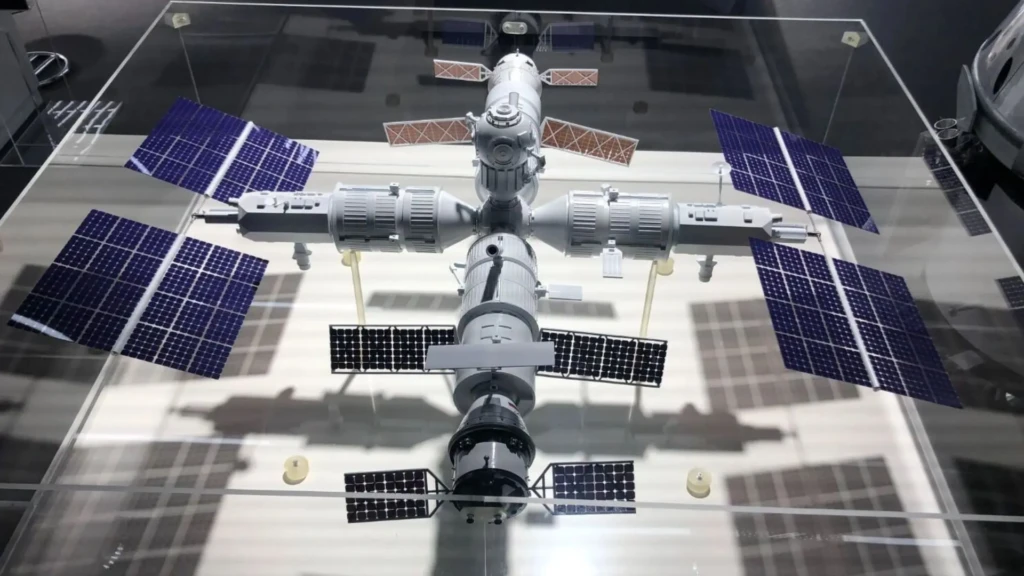
Russia orbital station
A model of the Russian Orbital Station. Image: Roscosmos
SHARE

Russia is no longer planning to build a space station with entirely new modules. The Russian Orbital Station (ROS), according to a report, will instead have a Russian module currently attached to the International Space Station (ISS) as the main element.

The first module of the ROS was supposed to launch in 2027 and host humans starting 2028 – the year Russia will end its participation with the US, Canada, Japan and Europe in maintaining the ISS. NASA has plans to deorbit the station in 2030 and crash it into the Pacific Ocean, and Russia wants to separate its Nauka module to repurpose it for the ROS.
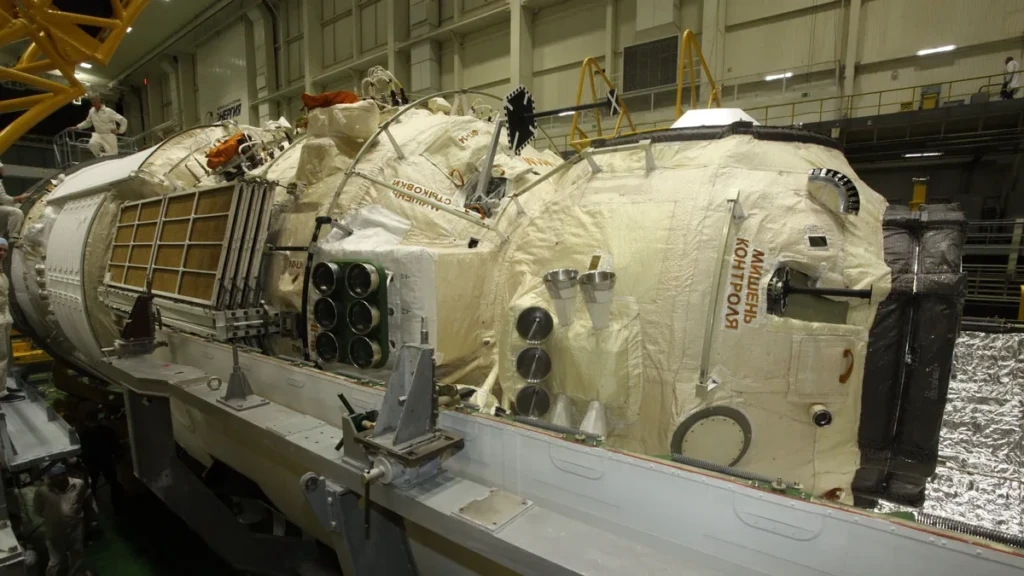
Russia space station
The Nauka module prior to its launch. Image: Roscosmos

This was confirmed by Oleg Orlov, director of the Institute of Biomedical Problems of the Russian Academy of Sciences, last week. “The Scientific and Technical Council of Roscosmos supported this proposal and approved the deployment of a Russian orbital station as part of the Russian segment of the ISS,” Orlov stated per Russian newspaper New Izvestia.

Russia’s tweaked space station plan

Russia wanted to install the ROS in a polar orbit 400 km above Earth which would have enabled observations of the entire country, and allowed radiation studies and experiments in the Arctic zone. The station would also have given Russia a reason to invest heavily in the Vostochny Cosmodrome as a replacement of the leased site in Baikonur, Kazakhstan. The original ROS was supposed to be semi-automated eliminating the requirement of year-long human presence. 

The idea originally was to install the ROS at a 96-degree inclination angle but that has now been changed to 51.6-degrees. The revised angle will make the station more easily accessible from Baikonur and enable interaction with the Indian Space Station at a similar inclination. India wants to launch the first Bharatiya Antariksha Station’s (BAS) module in 2028 and complete the construction with more modules by 2035.
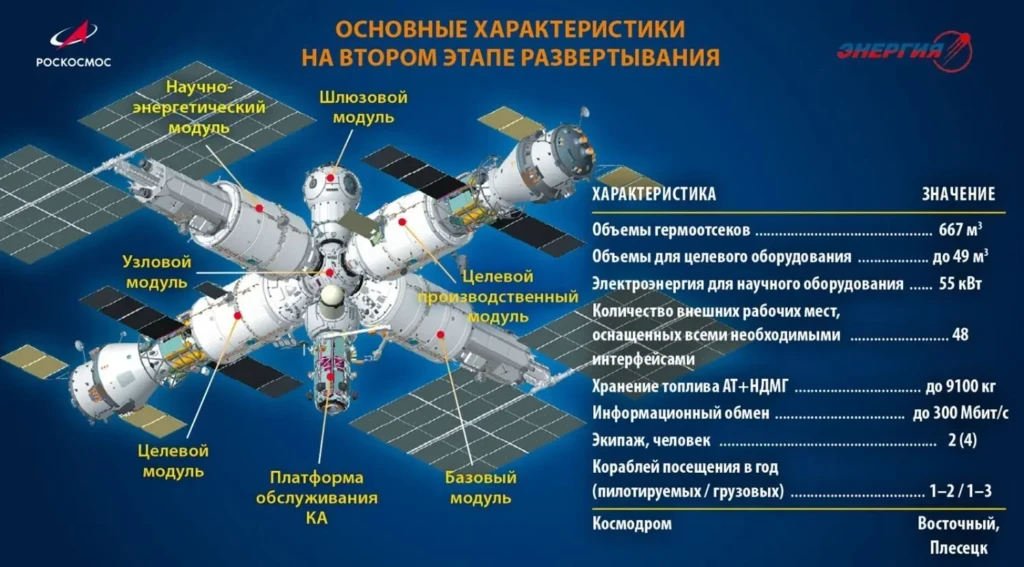
Russia space station
Concept of the original ROS. Image: Roscosmos

According to the new plan, the Nauka module launched in 2021 will serve as the core of the ROS. It measures over 42 feet (13 meters) long and 14 feet (4.3 meters) in diameter, and is the biggest science lab Russia currently owns. The ISS also has other Russian modules like Zvezda [original core], Zarya, Poisk, Rassvest and Prichal which serve as living quarters, cargo storage, and docking ports etc. 

While it may be a cost-cutting measure, the idea has met with criticism because the entire ISS has been contaminated with microorganisms in excessive quantities. Some microbes are said to be capable of causing allergic reactions and respiratory tract diseases. Besides, the ISS has components that are three decades old and astronauts spend a lot of their time carrying out repair and restoration work. 

New Izvestia reported that Russian cosmonauts spent up to 50% of their time on station repairs in 2023.

Russia has been trying to cut back on space activities owing to its war with Ukraine, which will enter its fifth year in February 2026. Its space agency Roscosmos as already reduced the number of crew launches to ISS every two years from four to three.

ALSO READ: Russia’s Baikonur Pad Collapses After Soyuz Launch To International Space Station

ALSO READ: Vast’s Haven-1 Takes The Lead In Replacing International Space Station
TAGGED:International Space StationNASARussiaRussian Orbital Station
Share This Article
Facebook Pinterest Whatsapp Whatsapp LinkedIn Copy Link Print

Latest News

SpaceX Dragon spacecraft for NASA's Crew-12 mission.
SpaceX Rolls Out Dragon Spacecraft For NASA’s Crew-12 Mission While Falcon 9 Remains Grounded
Spaceflight
NASA's Artemis II SLS Rocket
NASA Delays Artemis II Moon Mission Launch To March – Here’s Why
Artemis
NASA's SLS rocket.
Astronauts In Quarantine, Rocket Powered On – How NASA Is Preparing For Artemis II
Artemis
NASA partners with Axiom Space
NASA And Axiom Space Announce 5th Private Crew Mission To International Space Station In 2027
Spaceflight

You Might Also Like

image 8
Astronomy

China’s Mars Orbiter Snapped Comet 3I/ATLAS. What Did It See?

November 30, 2025
Blue Origin NS-37 mission
Spaceflight

Blue Origin Scrubs NS-37 Crew Mission A Minute Before Launch Due To Anomaly

December 19, 2025
Image 11
Spaceflight

China’s Tiangong Space Station Will Host Pakistani Astronaut In 2026

November 11, 2025
Blue Origin's New Glenn rocket.
Spaceflight

NASA’s ESCAPADE Mission Now Set For Launch On Nov 14, Says Blue Origin

November 14, 2025
© 2026, Blue Terra Journal
  • About
  • Privacy Policy
  • Terms
  • Contact
Welcome Back!

Sign in to your account

Username or Email Address
Password

Lost your password?