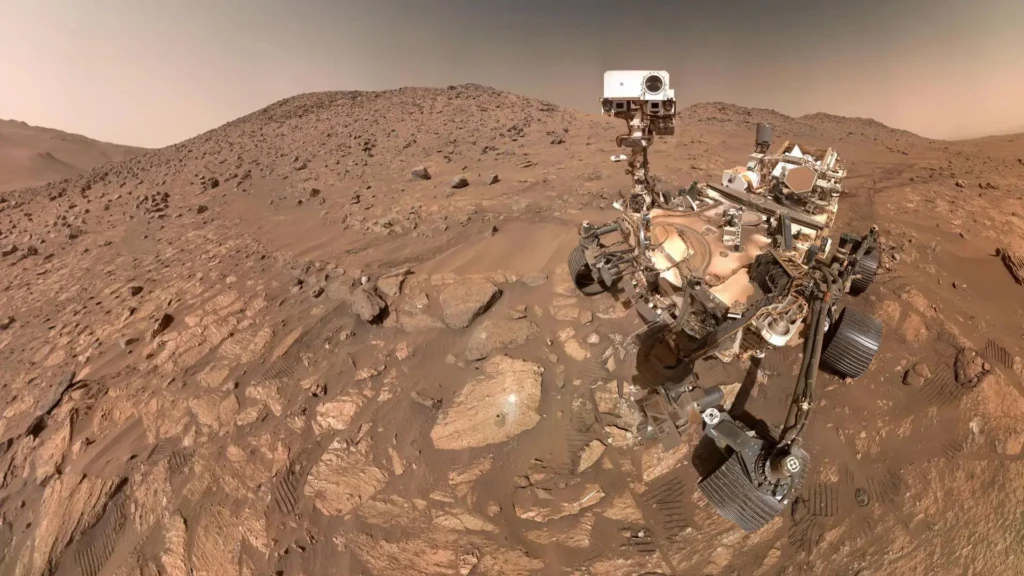
The Perseverance rover landed on Mars nearly five years ago and it seems like it will survive considerably longer. Packed with a suite of instruments, this SUV-sized robot has been exploring the Jezero crater since it arrived on Mars in February 2021, and it has significantly advanced our understanding of the red planet. Most recently, it found a potential evidence of ancient microbial life on the desolate world and NASA is hopeful for more.
The results are in—Percy’s still got it 💪
Our Perseverance rover has spent nearly five years exploring Mars, and @NASAJPL engineers have determined it’s in excellent shape and can operate until at least 2031. More about the rover and what it studies: https://t.co/HvndZSwMn4 pic.twitter.com/E2Ax3DpKj6
— NASA (@NASA) December 29, 2025
The mission team at NASA’s Jet Propulsion Laboratory (JPL), which operates the rover, has extensively evaluated all of Perseverance’s components over the last two years to determine its lifespan. Now that the evaluation is complete, engineers are confident that it will last five more years until 2031. It’s possible that Perseverance will exceed expectations like Curiosity rover, NASA’s second Mars explorer active since August 2012.
“These tests show the rover is in excellent shape,” Steve Lee, Perseverance’s deputy project manager at JPL, said in a statement. “All the systems are fully capable of supporting a very long-term mission to extensively explore this fascinating region of Mars.”

Perseverance carries several instruments like spectrometers, lasers, cameras, and a drill among others and relies on its six wheels for movement. These wheels have proven their durability over the years and the evaluation revealed that the rotary actuators that turn the rover’s wheels can perform optimally for at least another 60 kilometers. On December 18, NASA announced that Perseverance travelled 411 metres, setting the record for the longest distance travelled in one Martian day.
The Enhanced Autonomous Navigation or ENav plays a major role in Perseverance’s transits. The rover drives autonomously after JPL feeds in the plans for the day and the ENav tells Perseverance where to go and what obstacles to avoid.
“More than 90% of Perseverance’s journey has relied on autonomous driving, making it possible to quickly collect a diverse range of samples,” said JPL autonomy researcher Hiro Ono. “As humans go to the Moon and even Mars in the future, long-range autonomous driving will become more critical to exploring these worlds.”
Perseverance rover’s Mars adventures
In September, NASA announced that Perseverance has found what could be evidence of ancient microbial life on Mars. This ‘biosignature’ was found in a rock nicknamed ‘Cheyava Falls’ in the Bright Angel rock formation within the Neretva Vallis.
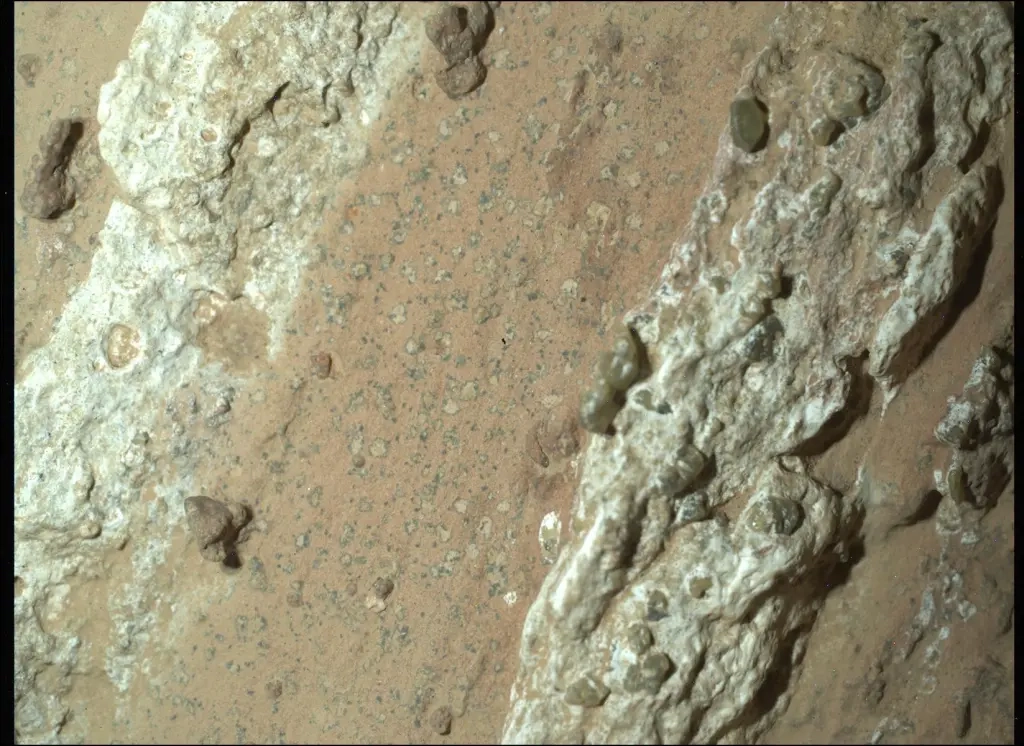
The biggest giveaway were leopard spots like features on the rock. In a study published in the journal Nature, scientists explained that these spots carry signatures of iron-rich minerals vivianite and greigite. On Earth, vivianite is found around decaying organic matter and greigite is produced by certain forms of microbial life. Although, more research is required to confirm they were produced by microbes.
A more recent study was published on December 17 in the journal Science on Perseverance’s discovery in the ‘Margin Unit,’ a geologic area at the Jezero crater’s inner edge. According to the authors, the three rock samples collected there could reveal how ancient rocks from Mars’ deep interior interacted with water and the atmosphere, helping create conditions supportive for life.
ALSO READ: NASA Rover Has Recorded Electric Sparks In Dust Devils On Mars; Here’s The Audio
ALSO READ: NASA Has 11 Reasons To Send Astronauts To Mars – Including Finding Life, Says Report