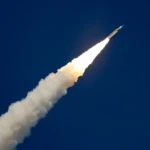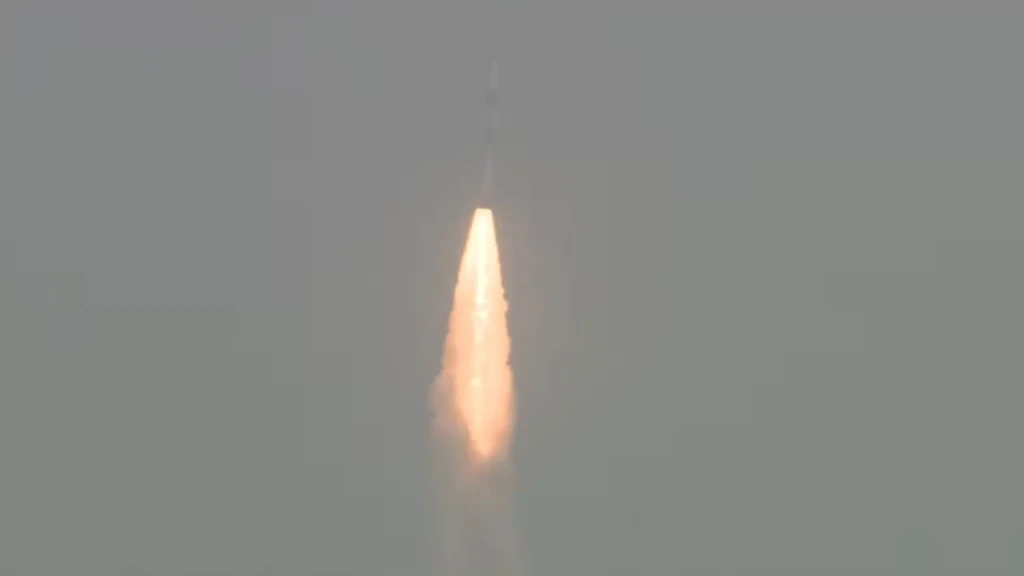
ISRO has suffered a major setback as its first mission of 2026 ended in failure. The PSLV-C62 rocket successfully lifted off at 10:18 am IST on January 12 from the Satish Dhawan Space Centre in Sriharikota with EOS-N1 (Anvesha) satellite as the primary payload and 14 co-passenger satellites and spacecraft.
While everything went well until second stage ignition, the mission control stopped receiving telemetry data close to the end of third stage flight.
LAUNCH! ISRO’s PSLV-C62 launches EOS-N1 mission from the First Launch Pad at Satish Dhawan Space Centre, Sriharikota. pic.twitter.com/Zq4Qs7KVGQ
— NSF – NASASpaceflight.com (@NASASpaceflight) January 12, 2026
ISRO Chairman Dr. V Narayanan confirmed the failure of the third stage saying there was a “disturbance in the vehicle roll rates and deviation in the flight path.”
“We are analysing the data and we shall come back at the earliest.” ISRO confirmed the same on X – “The PSLV-C62 mission encountered an anomaly during end of the PS3 stage. A detailed analysis has been initiated.”
Third Stage failure confirmed. pic.twitter.com/SMjrshHUgC
— NSF – NASASpaceflight.com (@NASASpaceflight) January 12, 2026
The third stage was seen spinning out of control on the controller’s screen at an altitude of over 300 kilometres.
This marks the second failure in a row for the launcher which suffered issues with its third stage during the EOS-09 satellite mission in May 2025. The PSLV is a four-stage rocket which uses solid fuel in its first and third stages and liquid fuel in second and fourth stages.
According to ISRO, this was PSLV’s 64th flight and the 5th mission for the DL variant. It was also the ninth commercial mission undertaken by ISRO’s commercial arm NewSpace India Limited (NSIL). The PSLV has previously supported several big ticket missions such as Chandrayaan-1, Mars Orbiter Mission, Aditya-L1 and the record-setting mission with 104 satellites.
PSLV-C62 was a quick turnaround, just 19 days after the last mission on December 24, when ISRO launched AST SpaceMobile’s Blue Bird 6 satellite – heaviest from the Indian soil.
More on ISRO’s PSLV mission payloads
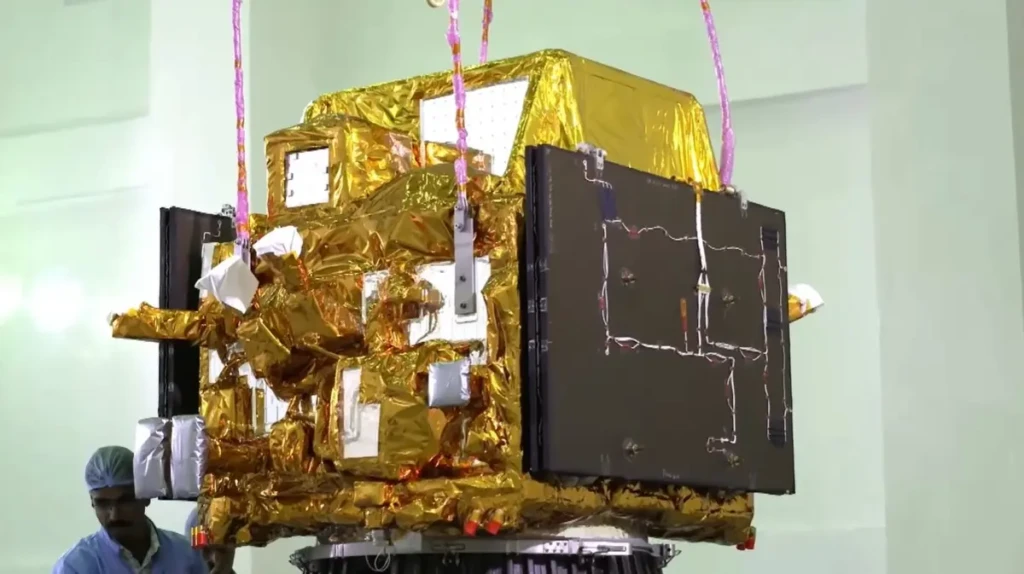
The 407-kg Anvesha was an Earth observation satellite built by Defense Research and Development Organisation (DRDO) that will be installed in a 511-km orbit for strategic surveillance.
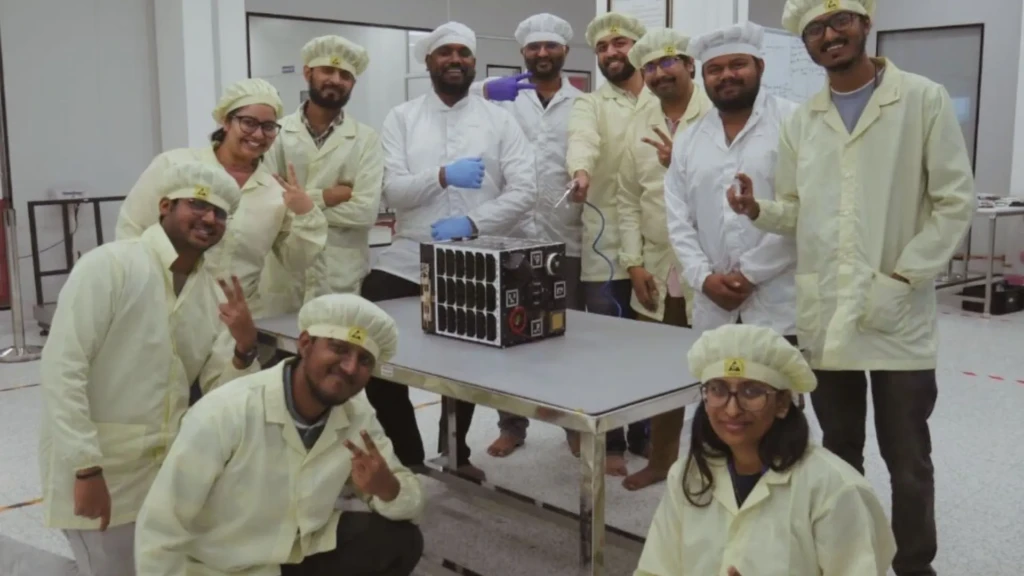
Among the co-passengers were 10 missions from six states and two foreign countries supported by Dhruva Space. These missions included four satellites, including the first from India’s northeast region (LACHIT-1), five separation systems to release the satellites in orbit and multiple operational ground stations.

According to Dhruva Space, the 10 missions were part of its Polar Access-1 initiative to support disaster communication, environmental monitoring, education, and commercial Earth Observation from a Sun-Synchronous Orbit. Dhruva Space also flew its THYBOLT-3 satellite to test a disaster communication network using amateur radio architecture.
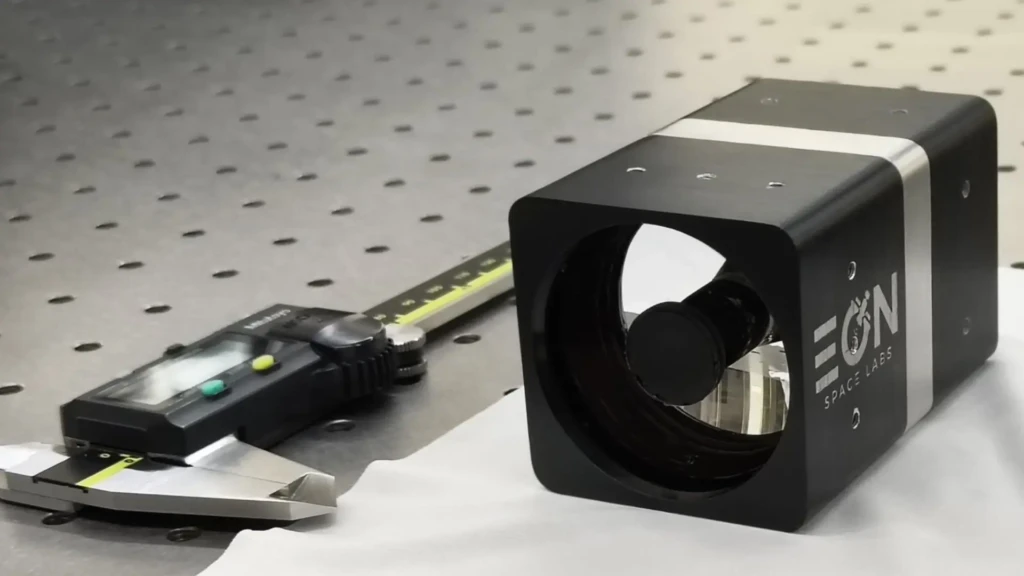
Other contributions included TakeMe2Space’s AI-powered satellite MOI-1 and EON Space Labs’ compact space telescope MIRA.
Chennai-based OrbitAID Aerospace had contributed the Standard Interface for Docking and Refuelling Port (SIDRP) or AayulSAT for on-orbit refuelling operations in what was India’s first refuelling mission. The objective was to advance rendezvous, docking, and in-space refuelling.
There were also two international payloads. First was a satellite developed by the Nepal Academy of Science and Technology and Antarikchya Pratishan Nepal focusing on vegetation density mapping for environmental monitoring, and another was the Kestrel Initial Technology Demonstrator (KID) developed by a Spanish startup Orbital Paradigm. KID was small-scale prototype of a re-entry vehicle that was supposed to fall back into the south Pacific Ocean.
ALSO READ: India’s Dhruva Space To Launch 10 Missions, Including 1st Northeastern Satellite, On ISRO’s PSLV
ALSO READ: It’s Happening! NASA To Roll Out SLS Rocket For Artemis II Moon Mission On Jan 17