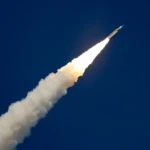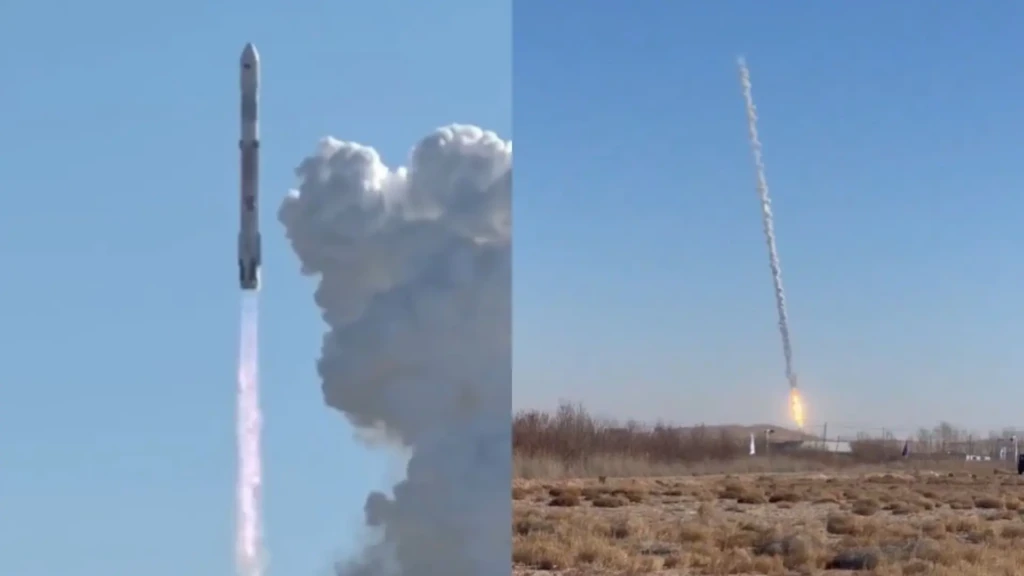
The Zhuque-3 rocket built by China‘s LandSpace Technology launched for the first time on December 3 but its booster recovery attempt ended in a failure. The 66-meters-tall rocket lifted off from the Jiuquan Satellite Launch Center and its second stage successfully deployed a dummy payload in orbit.
LandSpace reportedly said all objectives of the mission, except for the booster recovery, were completed.
Mission partially successful
The mission has been ruled partially successful due to the booster’s crash, which resulted from an anomaly. According to South China Morning Post, the first stage booster appeared to catch fire before crashing near the target recovery site.
🚀 Zhuque-3 liftoff https://t.co/qc7QlDRsKJ pic.twitter.com/zV5dZ5dvI8
— China ‘N Asia Spaceflight 🚀𝕏 🛰️ (@CNSpaceflight) December 3, 2025
“The debris landed on the edge of the recovery pad, resulting in a failed recovery test. The specific cause is under further investigation,” LandSpace said per the Morning Post.
“Although this mission did not achieve the predetermined goal of recovering the first stage of the rocket, it verified the correctness and rationality of the entire process plan for testing, launching and flying the Zhuque-3 rocket,” reported Chinese state news agency Xinhua.
Zhuque-3’s first stage didn’t make it https://t.co/pxHhNF4nrx pic.twitter.com/akAAyt9RYo
— China ‘N Asia Spaceflight 🚀𝕏 🛰️ (@CNSpaceflight) December 3, 2025
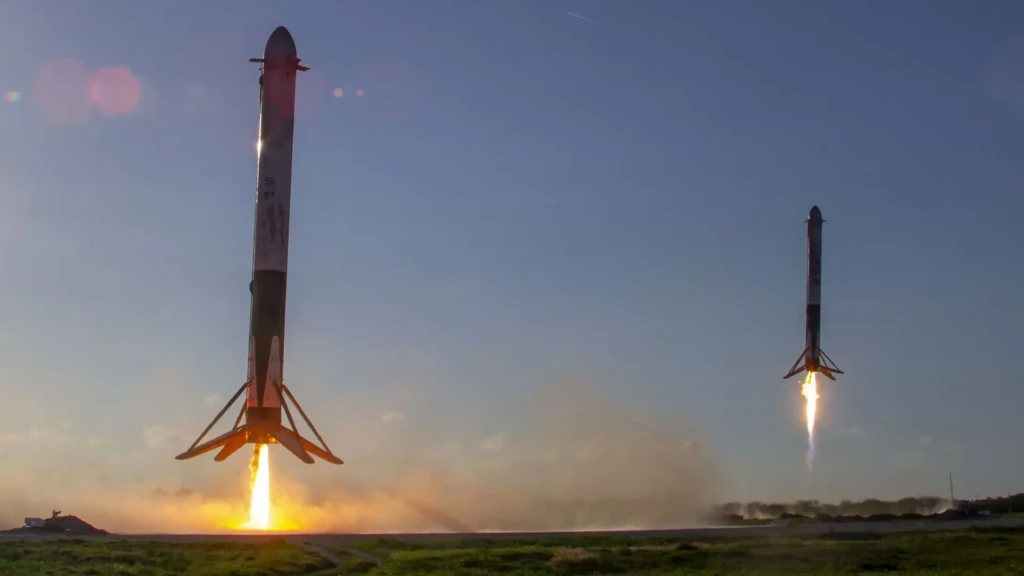
The Zhuque-3 rocket has the same build as SpaceX‘s Falcon 9 which was the first to achieve a booster landing in 2015. SpaceX CEO Elon Musk has reportedly acknowledged the Chinese launch vehicle surpassing Falcon 9 on multiple key metrics.
Zhuque-3 is four metres shorter than Falcon 9 but has the same number of engines (nine) on its first stage booster. The stainless steel rocket uses liquid methane and liquid oxygen for propellant and one booster is designed to be used at least 20 times. According to the Morning Post, it has a payload capacity of 18 tonnes to low-Earth orbit that will be essential to build internet satellite constellations.
Apart from private companies, state-owned China National Space Agency (CNSA) is also chasing reusability. It is planning to launch the Long March 12A rocket, a reusable version of the Long March 12, in December.
Rocket reusability
Several rocket companies are in the race to achieve full rocket reusability for lower launch costs and faster turnaround time. So far, only two private American companies – SpaceX and Blue Origin – have achieved this monumental feat.
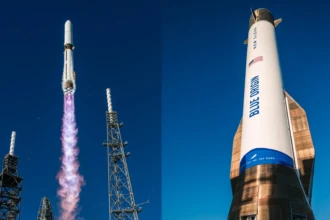
While SpaceX has been ahead with recovery of the first stage boosters of its Falcon 9, Falcon Heavy and Starship rockets, Blue Origin notched its first successful recovery in November. After launching NASA’s ESCAPADE mission, the New Glenn rocket’s booster landed on a barge in the Atlantic Ocean, presenting itself as a true rival of SpaceX.
ALSO READ: China’s Shenzhou-22 ‘Rescue’ Spacecraft Docks At Tiangong Space Station
ALSO READ: China’s Mars Orbiter Snapped Comet 3I/ATLAS. What Did It See?