Blue Terra Journal

  • Home
  • Spaceflight
    SpaceflightShow More
    NASA's MAVEN orbiter
    NASA’s MAVEN Orbiter Confirmed Dead On Mars; What Did It Achieve In 11 Years?
    June 5, 2026
    Blue Origin's New Glenn rocket.
    What Blue Origin’s New Glenn Explosion Means For NASA And Its Moon Ambitions
    June 10, 2026
    Elon Musk SpaceX Starship
    Elon Musk’s SpaceX launches new Starship V3 on 12th mission, but it wasn’t flawless
    June 5, 2026
    SpaceX Starship
    SpaceX Starship’s 12th Test Flight Targeted On May 20; No Booster Catch This Time
    May 31, 2026
    SpaceX's Starship during launch rehearsal.
    SpaceX Completes Starship’s Launch Rehearsal For Flight 12 This Week; What To Expect?
    May 13, 2026
  • Astronomy
    AstronomyShow More
    The galactic bulge by Euclid telescope. Credit: European Space Agency
    This Euclid Telescope Image Of Milky Way’s Centre With 60 Million Stars May Break Your Brain
    June 27, 2026
    UFO videos shared by US government
    UFO Alert! US Government Releases New Videos Of Glowing Orbs Floating In The Sky
    June 13, 2026
    Meteor over Mayon volcano
    Watch: Flashy Green Meteor Streaks Over Erupting Volcano In The Philippines
    May 27, 2026
    Artist's impression of NASA's Psyche spacecraft.
    NASA’s Psyche Spacecraft Will Zoom Past Mars Today On Its Way To Metal-Rich Asteroid
    May 15, 2026
    Comet MAPS image
    Video: Comet MAPS destroyed after plunging into the Sun; event caught by NASA missions
    April 18, 2026
  • India
    IndiaShow More
    Shubhanshu Shukla aboard the ISS.
    ISRO Astronaut Shubhanshu Shukla Awarded Ashoka Chakra For Heroic Ax-4 Mission
    February 9, 2026
    ISRO's PSLV lifts off to space.
    ISRO’s PSLV Rocket Suffers Third Stage Failure After Successful Liftoff; Payloads Lost
    January 23, 2026
    Dhruva Space team at ISRO facility.
    India’s Dhruva Space To Launch 10 Missions, Including 1st Northeastern Satellite, On ISRO’s PSLV
    January 12, 2026
    ISRO's PSLV rocket
    ISRO To Seek Redemption With PSLV-C62 Mission Launch On January 12
    January 12, 2026
    ISRO SSLV
    ISRO’s SSLV Rocket Just Got Better After Latest Third Stage Test Fire
    December 31, 2025
  • Artemis
    ArtemisShow More
    NASA Artemis III crew
    NASA Artemis III: Meet The Astronauts Who Will Set The Stage For 2028 Moon Landing
    June 10, 2026
    Blue Origin's New Glenn rocket.
    What Blue Origin’s New Glenn Explosion Means For NASA And Its Moon Ambitions
    June 10, 2026
    NASA Artemis II mission
    Welcome Home! NASA’s Artemis II Astronauts Are Back After Historic Moon Voyage
    April 22, 2026
    NASA Artemis II iPhone image
    iPhones Reigned Supreme On NASA’s Artemis II Moon Mission
    April 10, 2026
    Artemis II NASA
    All Eyes On Scary Artemis II Reentry As NASA Moon Mission Nears Completion
    April 9, 2026
  • More
    • About
    • Privacy Policy
    • Terms
    • Contact

Blue Terra Journal

  • Home
  • Spaceflight
  • Astronomy
  • India
  • Artemis
Search
  • Pages
    • About
    • Contact
    • Privacy Policy
    • Terms

Home - Astronomy - Biggest Skywatching Events Of 2026: Solar Eclipses, Meteor Showers, Supermoons And More

Astronomy

Biggest Skywatching Events Of 2026: Solar Eclipses, Meteor Showers, Supermoons And More

2026 brings not one but two solar eclipses.

Harsh Vardhan
Last updated: January 17, 2026 1:46 PM
Harsh Vardhan
Share
5 Min Read
eclipse supermoon
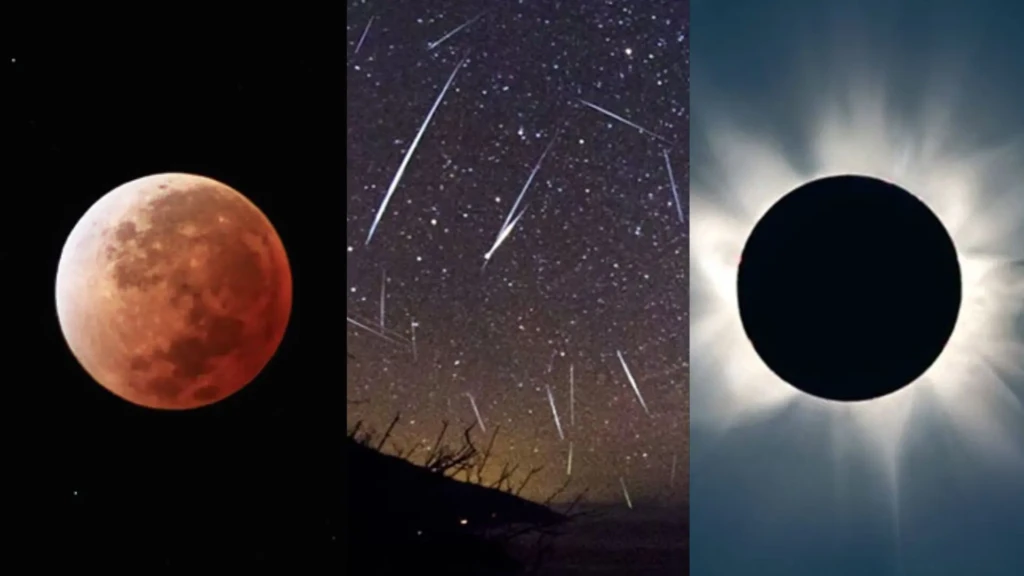
Solar and lunar eclipses, planetary alignments and supermoons are lined up starting as early as January. Image: ESO/ESA/NASA
SHARE

Contents
  • Quadrantids meteor shower 
  • The Wolf Supermoon 
  • Jupiter reaches opposition 
  • Saturn-Moon conjunction
  • Annular solar eclipse 
  • Total lunar eclipse 
  • Total solar eclipse
  • December supermoon

If you’re looking forward to witness unforgettable cosmic events, 2026 will not disappoint. From solar and lunar eclipses to rare planetary alignments and supermoons, several such events are lined up starting as early as first week of January. Here are the biggest ones that will be the highlight of the year.

What’s up in the night sky for January?

Jupiter is at its biggest and brightest all year, Saturn and the Moon get close for a conjunction, and the Beehive Cluster buzzes into view! pic.twitter.com/bDNACdfQ1N

— NASA JPL (@NASAJPL) January 1, 2026

Quadrantids meteor shower 

The Quadrantids meteor shower, which peaks on January 3-4, is considered one of the best of the year. According to NASA, one can see between 60 to as many as 200 meteors every hour under perfect conditions. The Quadrantids are visible in the northern hemisphere and appear to emerge from the Quadrans Muralis region located between the Bootes and Draco constellations near the end of the handle of the “Big Dipper.”

The Wolf Supermoon 

The first supermoon of 2026 will rise on January 3 appearing visibly brighter and larger. The supermoon, also called the Wolf Moon, will be around 3,62,312 km from Earth and about 14% larger and 30% brighter.

eclipse Supermoon
An airplane transiting a supermoon. Image: NASA

Supermoons occur when the Moon reaches within 90% of its closest point to Earth. Because the Moon circles our planet in an elliptical orbit, its size and brightness change as it moves along its path.

Jupiter reaches opposition 

On January 10, Jupiter will reach opposition, meaning Earth will be directly between this gas giant and the Sun. This planetary alignment will make Jupiter very easy to spot in the night sky. NASA says the planet will be brighter and bigger this month than it will all year.

To spot Jupiter, look towards east in the constellation Gemini. It will be the second brightest object post sunset after the Moon and Venus.

Saturn-Moon conjunction

On January 23, the Moon and Saturn will be positioned close to each other in what is called a ‘conjunction.’ During a conjunction, two objects appear to be just a few degrees apart in the sky even though they are millions of kilometres away from each other. In the western sky, Saturn will appear right below the Moon after sunset.

Annular solar eclipse 

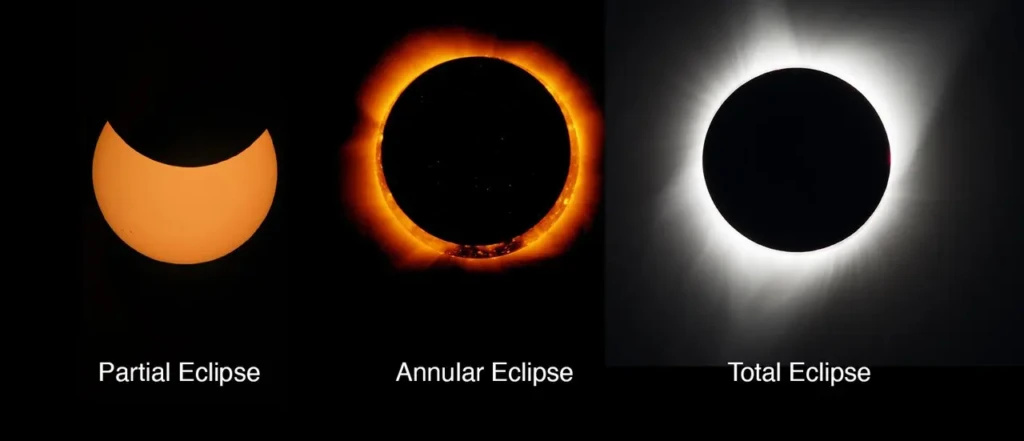
The annular solar eclipse will be the first solar eclipse of 2026 and it will occur on February 17. An annular solar eclipse occurs when the Moon is near or at the farthest distance from Earth and thus fails to entirely block the Sun. This creates a ring-of-fire effect (see pic below).
eclipse supermoon
Types of solar eclipses. Image: NASA

Unfortunately, the annular eclipse will be visible only from Antarctica. Regions across Africa, South America, Pacific Ocean, Atlantic Ocean, and Indian Ocean will, however, get to witness a partial eclipse.

Total lunar eclipse 

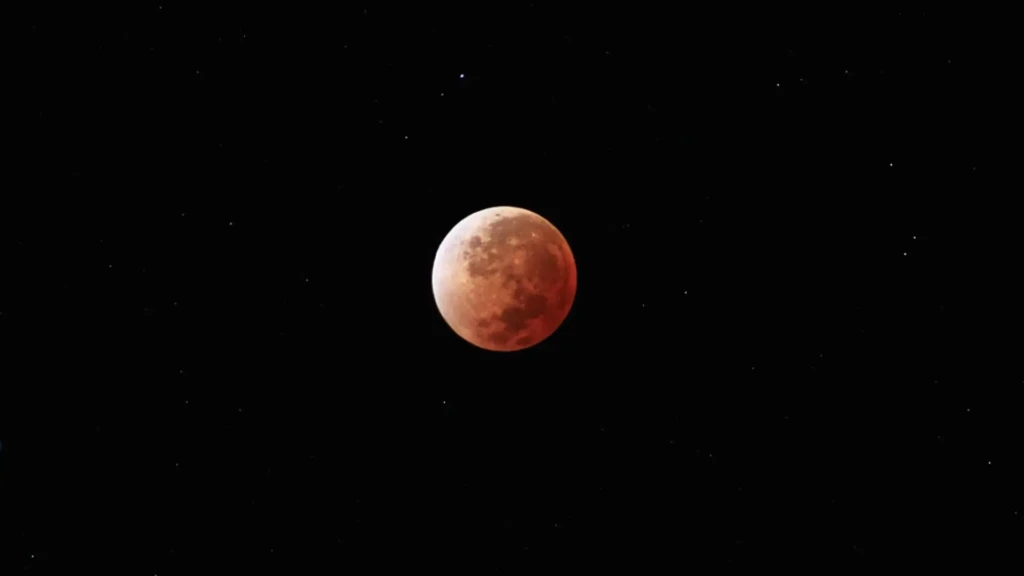
Total lunar eclipse will grace the skies on March 2-3. It will also be known as ‘Blood Moon’ due to the reddish-orange hue the Moon will take on while passing through Earth’s shadow.
eclipse supermoon
The Blood Moon appears slightly red as it passes through Earth’s shadow. Image: D. Schreiner and S. Degezelle/ESO

This lunar eclipse will be visible across Asia, Australia, Pacific Islands and the Americas.

Total solar eclipse

During the total solar eclipse on August 12, the Moon will completely block the Sun unlike the annular eclipse. NASA says it will be visible in Greenland, Iceland, Spain, Russia, and a small area of Portugal, whereas a partial eclipse will be visible in Europe, Africa, North America, the Atlantic Ocean, Arctic Ocean, and Pacific Ocean.

The totality – period of time the Moon completely covers the Sun – will reportedly last 2 minutes and 18 seconds.

December supermoon

December 24 brings another supermoon of the year as the full Moon will be closest to Earth since 2018. It will also be the last full Moon of 2026 and will appear bigger and brighter due to its orbital position around our planet.

ALSO READ: From NASA’s Artemis II To ISRO’s Gaganyaan, Biggest Space Events Awaiting Us In 2026

ALSO READ: Ax-4, NISAR And More: Reliving ISRO’s Biggest Spaceflight Milestones In 2025

TAGGED:eclipsemeteor showerNASASupermoontotal solar eclipse
Share This Article
Facebook Pinterest Whatsapp Whatsapp LinkedIn Copy Link Print

Latest News

The galactic bulge by Euclid telescope. Credit: European Space Agency
This Euclid Telescope Image Of Milky Way’s Centre With 60 Million Stars May Break Your Brain
Astronomy
UFO videos shared by US government
UFO Alert! US Government Releases New Videos Of Glowing Orbs Floating In The Sky
Astronomy
NASA Artemis III crew
NASA Artemis III: Meet The Astronauts Who Will Set The Stage For 2028 Moon Landing
Artemis
NASA's MAVEN orbiter
NASA’s MAVEN Orbiter Confirmed Dead On Mars; What Did It Achieve In 11 Years?
Spaceflight

You Might Also Like

Comet 3I/ATLAS captured by Lucy probe.
Astronomy

Why Are Comet 3I/ATLAS Images Released By NASA So Blurry?

November 23, 2025
NASA Apollo 8 image
Artemis

NASA Artemis II: Why This Moon Mission Is Our Generation’s Apollo 8

March 30, 2026
NASA Artemis I Orion spacecraft.
Artemis

US Government Shutdown To Eclipse NASA’s Chances In Lunar Race With China?

November 17, 2025
NASA ESCAPADE Mars spacecraft.
Spaceflight

ESCAPADE: Why It May Be NASA’s Most Important Mars Mission In Years

November 19, 2025
© 2026, Blue Terra Journal
  • About
  • Privacy Policy
  • Terms
  • Contact
Welcome Back!

Sign in to your account

Username or Email Address
Password

Lost your password?