Blue Terra Journal

  • Home
  • Spaceflight
    SpaceflightShow More
    NASA's MAVEN orbiter
    NASA’s MAVEN Orbiter Confirmed Dead On Mars; What Did It Achieve In 11 Years?
    June 5, 2026
    Blue Origin's New Glenn rocket.
    What Blue Origin’s New Glenn Explosion Means For NASA And Its Moon Ambitions
    June 10, 2026
    Elon Musk SpaceX Starship
    Elon Musk’s SpaceX launches new Starship V3 on 12th mission, but it wasn’t flawless
    June 5, 2026
    SpaceX Starship
    SpaceX Starship’s 12th Test Flight Targeted On May 20; No Booster Catch This Time
    May 31, 2026
    SpaceX's Starship during launch rehearsal.
    SpaceX Completes Starship’s Launch Rehearsal For Flight 12 This Week; What To Expect?
    May 13, 2026
  • Astronomy
    AstronomyShow More
    Meteor over Mayon volcano
    Watch: Flashy Green Meteor Streaks Over Erupting Volcano In The Philippines
    May 27, 2026
    Artist's impression of NASA's Psyche spacecraft.
    NASA’s Psyche Spacecraft Will Zoom Past Mars Today On Its Way To Metal-Rich Asteroid
    May 15, 2026
    Comet MAPS image
    Video: Comet MAPS destroyed after plunging into the Sun; event caught by NASA missions
    April 18, 2026
    Apophis asteroid flyby
    ‘God Of Chaos’: Apophis Asteroid Will Fly Dangerously Close To Earth Exactly 5 Years From Now
    April 14, 2026
    Meteor spotted over Houston.
    Video Captures 1-Ton Meteor Exploding Over Houston Skies, NASA Releases Statement
    March 22, 2026
  • India
    IndiaShow More
    Shubhanshu Shukla aboard the ISS.
    ISRO Astronaut Shubhanshu Shukla Awarded Ashoka Chakra For Heroic Ax-4 Mission
    February 9, 2026
    ISRO's PSLV lifts off to space.
    ISRO’s PSLV Rocket Suffers Third Stage Failure After Successful Liftoff; Payloads Lost
    January 23, 2026
    Dhruva Space team at ISRO facility.
    India’s Dhruva Space To Launch 10 Missions, Including 1st Northeastern Satellite, On ISRO’s PSLV
    January 12, 2026
    ISRO's PSLV rocket
    ISRO To Seek Redemption With PSLV-C62 Mission Launch On January 12
    January 12, 2026
    ISRO SSLV
    ISRO’s SSLV Rocket Just Got Better After Latest Third Stage Test Fire
    December 31, 2025
  • Artemis
    ArtemisShow More
    NASA Artemis III crew
    NASA Artemis III: Meet The Astronauts Who Will Set The Stage For 2028 Moon Landing
    June 10, 2026
    Blue Origin's New Glenn rocket.
    What Blue Origin’s New Glenn Explosion Means For NASA And Its Moon Ambitions
    June 10, 2026
    NASA Artemis II mission
    Welcome Home! NASA’s Artemis II Astronauts Are Back After Historic Moon Voyage
    April 22, 2026
    NASA Artemis II iPhone image
    iPhones Reigned Supreme On NASA’s Artemis II Moon Mission
    April 10, 2026
    Artemis II NASA
    All Eyes On Scary Artemis II Reentry As NASA Moon Mission Nears Completion
    April 9, 2026
  • More
    • About
    • Privacy Policy
    • Terms
    • Contact

Blue Terra Journal

  • Home
  • Spaceflight
  • Astronomy
  • India
  • Artemis
Search
  • Pages
    • About
    • Contact
    • Privacy Policy
    • Terms

Home - Spaceflight - NASA Shuts Down Another Voyager 1 Instrument; How Long Can This Spacecraft Last?

Spaceflight

NASA Shuts Down Another Voyager 1 Instrument; How Long Can This Spacecraft Last?

Eight instruments have been shut down in almost 49 years.

Blue Terra Journal
Last updated: April 22, 2026 6:08 PM
Blue Terra Journal
Share
4 Min Read
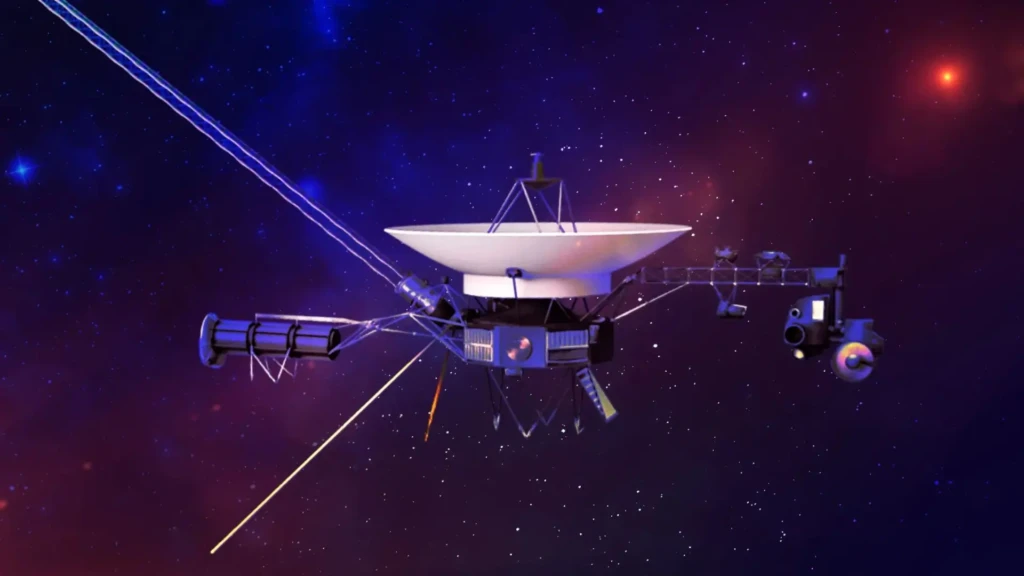
NASA Voyager 1 illustration
NASA Voyager 1 illustration. Image: NASA
SHARE

Another instrument of the Voyager 1 spacecraft has been shut down.

NASA announced on April 17 that the science team beamed a command 25 billion kilometres into space, shutting down the Low-energy Charged Particles experiment, or LECP, in order to keep the probe going.

Launched in 1977, the Voyager twin probes (1 and 2) are the oldest operating NASA missions to date. Like its twin, Voyager 1 launched with 10 primary science instruments but almost 49 years later, it only has two of them operating. The LCEP instrument, NASA says, measures low-energy charged particles, including ions, electrons, and cosmic rays and it has proven invaluable in providing data about the structure of the interstellar medium.

To conserve power, engineers at @NASAJPL have turned off an instrument on Voyager 1 – but the science continues!

Voyager 1 has two remaining science instruments – one that listens to plasma waves and one that measures magnetic fields. Learn more: https://t.co/sqOXjiSdaL pic.twitter.com/nDcSQF8XYJ

— NASA Solar System (@NASASolarSystem) April 20, 2026

Since the Voyager probes are the farthest any man-made object has ever been, they are the only source of this kind of data.

How long can NASA’s Voyager probes last?

According to NASA, the Voyager probes rely on a radioisotope thermoelectric generator – a device that converts heat from decaying plutonium into electricity – and each year, they lose about four watts of power. Since power is scarce, NASA has taken several instruments offline to ensure the spacecraft is alive and communicating with Earth while being warm enough to operate.

“While shutting down a science instrument is not anybody’s preference, it is the best option available,” Kareem Badaruddin, Voyager mission manager at Jet Propulsion Laboratory (JPL) said in a statement.
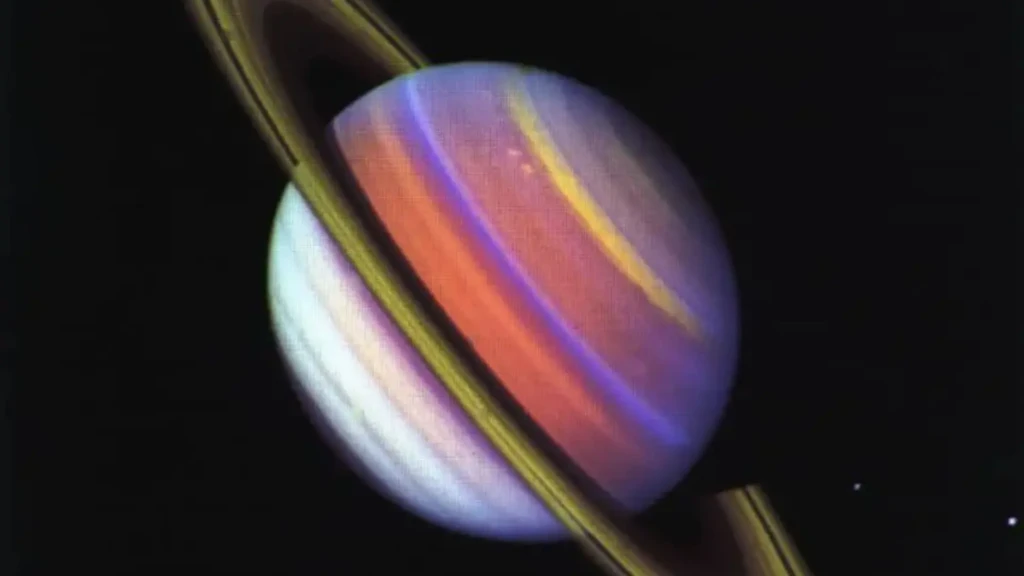
NASA Voyager 1's view of Saturn
Voyager 1’s view of Saturn in ultraviolet, violet and green filters. Image: NASA

“Voyager 1 still has two remaining operating science instruments — one that listens to plasma waves and one that measures magnetic fields. They are still working great, sending back data from a region of space no other human-made craft has ever explored. The team remains focused on keeping both Voyagers going for as long as possible,” Badaruddin further said.

The need to shut down LECP arose after Voyager 1’s power level fell unexpectedly in late February. To avoid the lengthy process of a recovery mission, the team chose to kill power of the instrument, which NASA says has given the spacecraft one year of breathing room.

Voyager 2’s LCEP was shut down in March 2025.

According to NASA, the science team is planning another power-saving technique called ‘the Big Bang’ which involves swapping a group of powered devices with lower-power alternatives all at once.

This technique will first be tested on Voyager 2 in May and June this year because it is closer to Earth as compared to Voyager 1. If this technique works, they will implement it on Voyager 1 in July and if the team’s lucky, they could turn the LCEP on again.

Interestingly, Voyager 2 launched first on August 20, 1977 followed by its twin on September 5, but the latter left the solar system first and entered interstellar space in August 2012. Voyager 2 followed, becoming the second spacecraft to achieve this feat in November 2018.

ALSO READ: NASA’s Voyager 1 Will Be One Light-Day Away From Earth In 2026 – What This Means

ALSO READ: Jupiter Just Got Smaller: NASA’s Juno Probe Reveals Gas Giant Is Smaller Than We Thought

TAGGED:NASAScienceSpaceVoyager 1Voyager 2
Share This Article
Facebook Pinterest Whatsapp Whatsapp LinkedIn Copy Link Print

Latest News

NASA Artemis III crew
NASA Artemis III: Meet The Astronauts Who Will Set The Stage For 2028 Moon Landing
Artemis
NASA's MAVEN orbiter
NASA’s MAVEN Orbiter Confirmed Dead On Mars; What Did It Achieve In 11 Years?
Spaceflight
Blue Origin's New Glenn rocket.
What Blue Origin’s New Glenn Explosion Means For NASA And Its Moon Ambitions
Spaceflight Artemis
Meteor over Mayon volcano
Watch: Flashy Green Meteor Streaks Over Erupting Volcano In The Philippines
Astronomy

You Might Also Like

ISRO NISAR satellite
India

ISRO Releases Image Of Godavari Delta Captured By $1.5 Billion NISAR Satellite

December 2, 2025
NASA Orion spacecraft
Artemis

NASA’s Artemis II Astronauts Are Moon-Bound After Successful Trans-Lunar Injection Burn

April 7, 2026
Blue Origin's Mars orbiter
Spaceflight

Meet Blue Origin’s Mars Orbiter Designed To Serve NASA’s Red Planet Connectivity Goals

February 12, 2026
image 18
Spaceflight

‘Mars Is Not A Great Place’: Avi Loeb Derides Elon Musk’s Colonisation Dream

November 8, 2025
© 2026, Blue Terra Journal
  • About
  • Privacy Policy
  • Terms
  • Contact
Welcome Back!

Sign in to your account

Username or Email Address
Password

Lost your password?