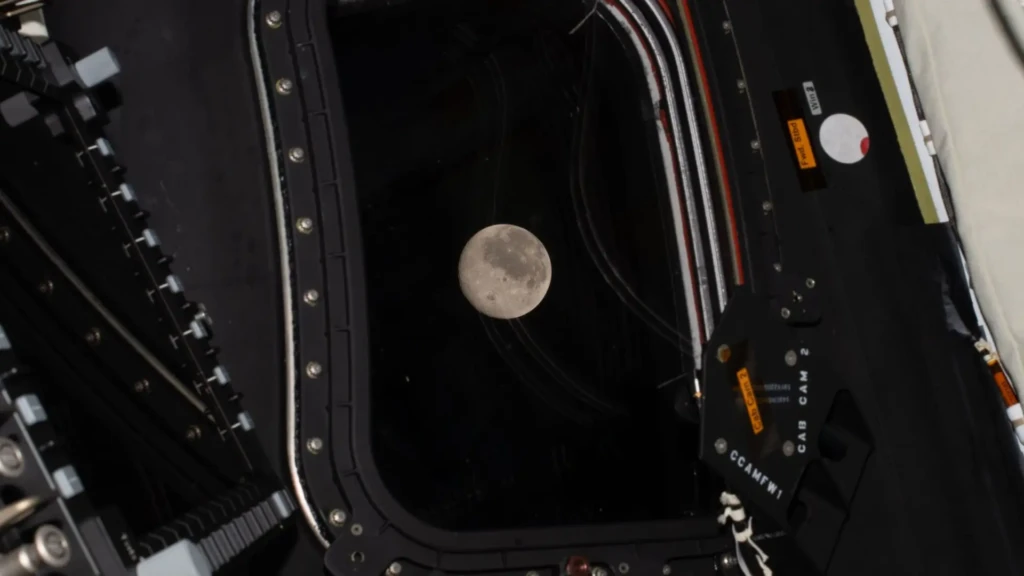
The day is finally here. NASA’s Artemis II astronauts will complete their flyby of the Moon on April 7, and observe parts of the lunar surface never seen by human eyes. The flyby is expected to last about seven hours and the crew will observe 35 different targets to complete 10 science objectives.
The lunar observation period will begin at 12:15 am IST on April 7 [2:45 pm EDT, April 6] and conclude at 6:50 am IST [9:20 pm EDT]. During this period, the crew will make its closest approach to the Moon and reach a maximum distance from Earth at about 4,06,777 km. With this milestone, Artemis II will break the maximum distance travelled from Earth during the Apollo 13 mission set in 1970.
POV: You’re flying by the Moon.
This visualization is designed to show you what exactly the Artemis II astronauts will see outside their window during their lunar flyby.
Here, the seven-hour visualization is compressed into 28 seconds. ⬇ (1/4) pic.twitter.com/2OMAy37oht
— NASA Solar System (@NASASolarSystem) April 5, 2026
Within this period, the Orion spacecraft will also experience a predicted loss of communication (estimated to last 40 minutes) and the astronauts will witness a solar eclipse when the Moon blocks the Sun for about an hour.
The live coverage of the flyby will begin at 10:30 pm IST [12 pm EDT] on NASA’s YouTube channel.
NASA Artemis II set for historic flyby
Artemis II launched on April 2 and it’s currently on its fourth day. The crew includes mission commander Reid Wiseman, mission pilot Victor Glover, mission specialist Christina Koch and mission specialist Jeremy Hansen. Among the three Americans, Hansen is the only foreign crew member (Canadian) and was awarded his gold astronaut pin to commemorate his first spaceflight.
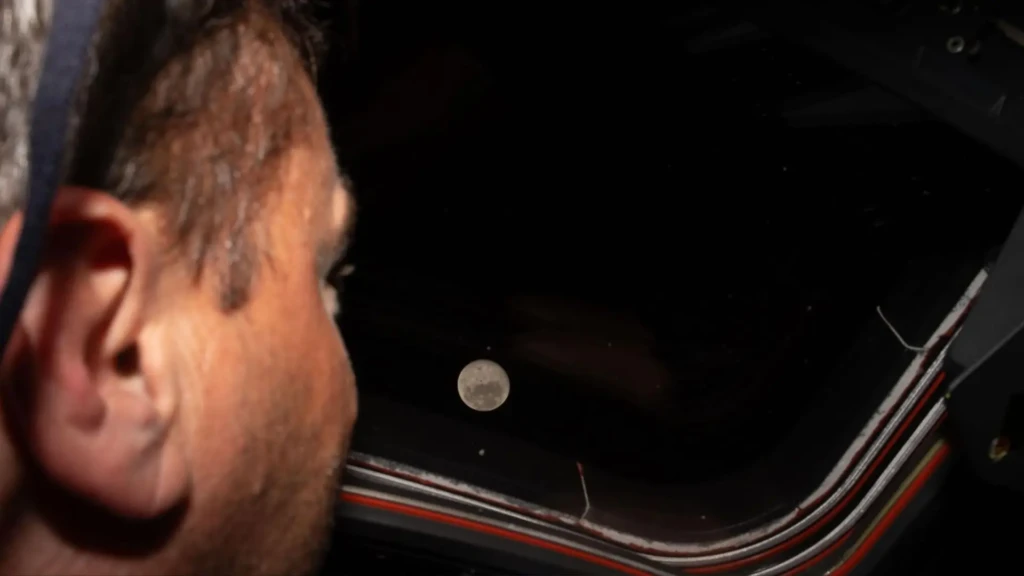
Earlier today, NASA shared a Lunar Targeting Plan showing the area that will be studied by the astronauts. These areas have been chosen based on both their science value and their visibility at the time of observation.
During the closest approach, the astronauts will see a waxing crescent Moon on the far side. About 20% of the lunar farside will be sunlit and 80% in the dark. The focus of the observation will be on the sunlit parts as the crew is tasked with taking pictures of surface ridges, slopes and crater rims. They will also look for bursts of light created when space debris slams into the Moon’s surface, aka “impact flashes.”
Lights inside the Orion spacecraft will be dimmed throughout the observation period when the astronauts are photographing the Moon. Two astronauts will begin photography from two different windows and record audio and take notes of their observations while the other two crew members will work as support. Each observation phase will last 15 minutes following which the two observers will swap positions with the supporting astronauts.
ALSO READ: NASA’s Christina Koch Turns ‘Space Plumber’ To Fix $30 Million Toilet On Artemis II Mission
ALSO READ: Meet Christina Koch, The Coolest Woman NASA Could’ve Chosen For Artemis II