Blue Terra Journal

  • Home
  • Spaceflight
    SpaceflightShow More
    NASA's SR-1 Freedom spacecraft.
    What Is NASA’s SR-1 Freedom Mission? The First Nuclear Reactor In Space Explained
    March 27, 2026
    Artist's impression of a NASA Moon base.
    NASA Moon Base: How The US Will Spend $20 Billion On This Ambitious Project
    March 25, 2026
    Russia's Soyuz rocket ascending to space.
    Russia’s Progress Spacecraft Suffers Mystery Glitch On Its Way To ISS; What Happened?
    March 23, 2026
    Robert Goddard
    Celebrating Robert Goddard – The Man Who Changed Rocketry 100 Years Ago
    March 17, 2026
    International Space Station gets extension to beat China
    Watch Out China! US Proposes Extending International Space Station Lifespan To 2032
    March 10, 2026
  • Astronomy
    AstronomyShow More
    Meteor spotted over Houston.
    Video Captures 1-Ton Meteor Exploding Over Houston Skies, NASA Releases Statement
    March 22, 2026
    NASA black hole simulation
    Fall Into A Black Hole With This Incredibly Scary Simulation Made By NASA
    March 18, 2026
    Comet C/2026 A1 MAPS
    Comet C/2026 A1 MAPS: What Are ‘Sun-Grazer’ Comets And Why Are They Special?
    March 12, 2026
    Moon is safe from asteroid 2024 YR4.
    The Moon Is Safe! James Webb Space Telescope Rules Out Asteroid 2024 YR4’s Collision
    March 6, 2026
    NASA Moon orbiter
    NASA Prepares To Save Its Orbiter During Total Solar Eclipse On The Moon
    March 3, 2026
  • India
    IndiaShow More
    Shubhanshu Shukla aboard the ISS.
    ISRO Astronaut Shubhanshu Shukla Awarded Ashoka Chakra For Heroic Ax-4 Mission
    February 9, 2026
    ISRO's PSLV lifts off to space.
    ISRO’s PSLV Rocket Suffers Third Stage Failure After Successful Liftoff; Payloads Lost
    January 23, 2026
    Dhruva Space team at ISRO facility.
    India’s Dhruva Space To Launch 10 Missions, Including 1st Northeastern Satellite, On ISRO’s PSLV
    January 12, 2026
    ISRO's PSLV rocket
    ISRO To Seek Redemption With PSLV-C62 Mission Launch On January 12
    January 12, 2026
    ISRO SSLV
    ISRO’s SSLV Rocket Just Got Better After Latest Third Stage Test Fire
    December 31, 2025
  • Artemis
    ArtemisShow More
    NASA Artemis II crew
    NASA’s Christina Koch Turns ‘Space Plumber’ To Fix $30 Million Toilet On Artemis II Mission
    April 3, 2026
    NASA Orion spacecraft
    NASA’s Artemis II Astronauts Are Moon-Bound After Successful Trans-Lunar Injection Burn
    April 3, 2026
    NASA Artemis II lifts off.
    Artemis II Lifts Off! NASA Launches 4 Astronauts To The Moon After Over 50 Years
    April 2, 2026
    NASA's Artemis II astronauts
    NASA Artemis II Launch Live: Watch Humanity Return To The Moon On April 2
    April 2, 2026
    NASA Apollo 8 image
    NASA Artemis II: Why This Moon Mission Is Our Generation’s Apollo 8
    March 30, 2026
  • More
    • About
    • Privacy Policy
    • Terms
    • Contact

Blue Terra Journal

  • Home
  • Spaceflight
  • Astronomy
  • India
  • Artemis
Search
  • Pages
    • About
    • Contact
    • Privacy Policy
    • Terms

Home - Astronomy - The Moon Is Safe! James Webb Space Telescope Rules Out Asteroid 2024 YR4’s Collision

Astronomy

The Moon Is Safe! James Webb Space Telescope Rules Out Asteroid 2024 YR4’s Collision

It will be a close encounter instead.

Blue Terra Journal
Last updated: March 6, 2026 10:40 AM
Blue Terra Journal
Share
4 Min Read
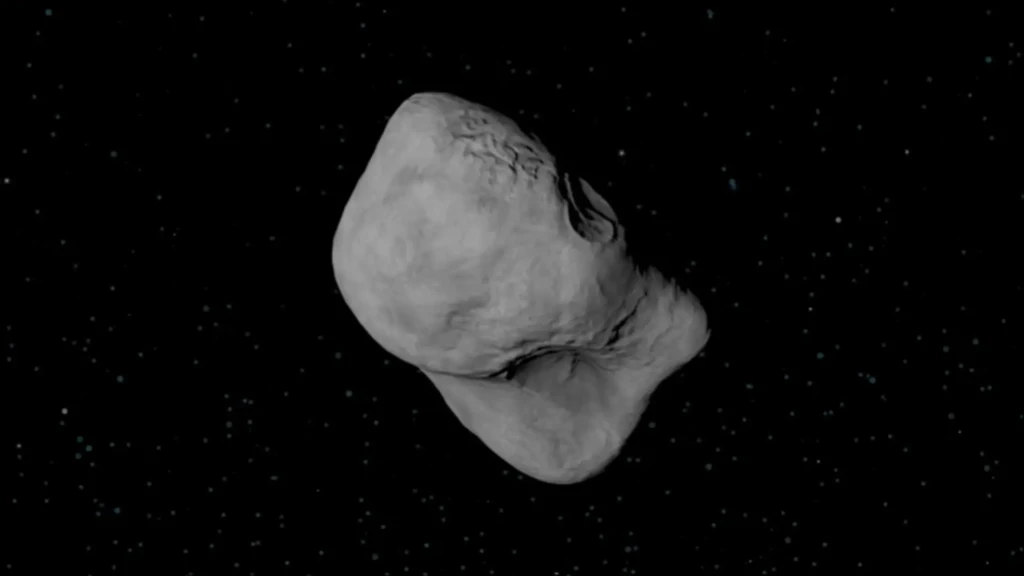
Moon is safe from asteroid 2024 YR4.
Artist's impression of asteroid 2024 YR4. Image: NASA
SHARE

There’s great news for the Moon. Turns out the once-hazardous asteroid 2024 YR4 is not going to strike our celestial neighbour next decade. According to the data collected by NASA’s James Webb Space Telescope, the space rock will fly over the Moon from a close but safe distance in 2032, eliminating any chances of collision.

The asteroid 2024 YR4 was discovered on December 27, 2024 by the NASA-funded Asteroid Terrestrial-impact Last Alert System (ATLAS) – the one which discovered interstellar comet 3I/ATLAS – and scientists initially predicted it had a slight chance of hitting Earth on December 22, 2032. As the asteroid’s trajectory became clearer in the following days, scientists confirmed that the chance had reduced significantly, eventually lowering to zero per cent.

JUST IN: Asteroid 2024 YR4 will not impact the Moon in 2032!

New observations from the NASA/ESA/CSA James Webb Space Telescope have confirmed that the object will pass safely at a distance of more than 20 000 km.

This result was made possible by a close collaboration between… pic.twitter.com/gHPEQqPRd9

— European Space Agency (@esa) March 5, 2026

However, the Moon still wasn’t out of danger as estimates suggested there’s a 4.3% chance of collision on the same day in 2032.

There’s a lot of uncertainty around impact probability of comets and asteroids because data collectors don’t know much about their orbit around the Sun. This is the reason why there have been several space rocks with high impact probability with Earth but they eventually turn out to be false alarms.
Moon is safe, NASA confirms
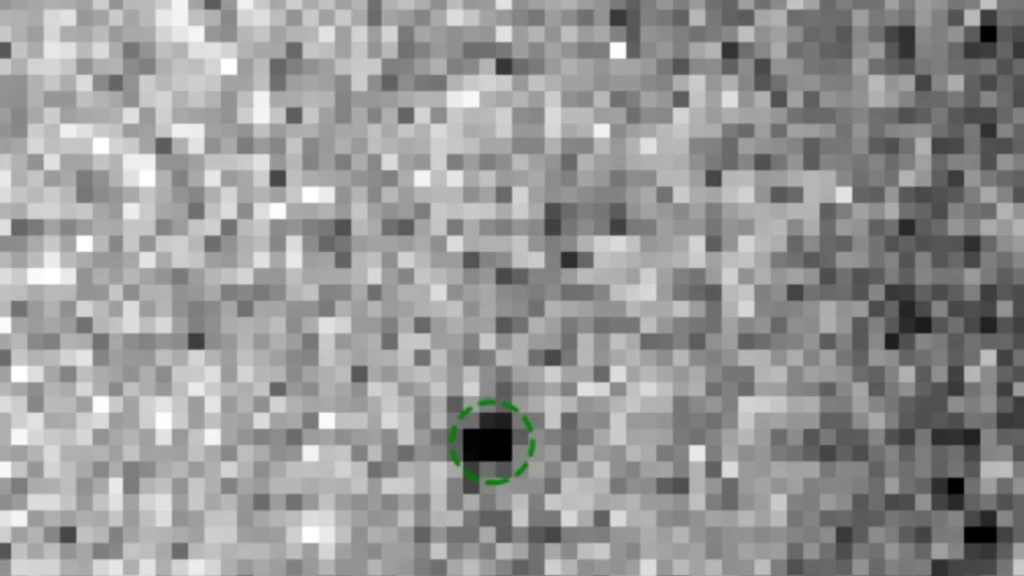
The asteroid 2024 YR4 observed by Webb telescope. Image: ESA/NASA

Same was the case with YR4. Researchers at the Johns Hopkins University Applied Physics Laboratory (JHUAPL), who observed the asteroid between February 18 and February 26 using the Webb telescope, have confirmed that it will pass more than 20,000 km above the Moon’s surface. There were fears that impact on the Moon would yeet out immense amount of debris into space, with a lot of it falling toward Earth and harming satellites and other assets in Earth orbit.

The precise prediction was made by Webb by studying the asteroid’s movement against a backdrop of stars whose positions were already determined by the European Space Agency’s (ESA) Gaia telescope.

The confirmation wasn’t easy as Webb, which is designed to study galaxies billions of light-years away, had to lock in on one of the faintest asteroids ever targeted by it. The scientists from JHUAPL collaborated with teams of ESA’s Near-Earth Object Coordination Centre and NASA’s Center for Near-Earth Object Studies to determine the possibility of impact.

“Despite the challenges, the observations were a success. By comparing 2024 YR4’s position relative to the background stars, the team was able to measure its orbit accurately enough to rule out a lunar impact in 2032,” ESA said in a statement.

ALSO READ: Ramses Mission Explained: Why Apophis Asteroid’s 2029 Rare Earth Flyby Matters

ALSO READ: Donald Trump Has Ordered Release Of Files On Aliens And UFOs; What Should We Expect?

TAGGED:asteroid 2024 YR4ESAJames Webb Space TelescopemoonNASA
Share This Article
Facebook Pinterest Whatsapp Whatsapp LinkedIn Copy Link Print

Latest News

NASA Artemis II crew
NASA’s Christina Koch Turns ‘Space Plumber’ To Fix $30 Million Toilet On Artemis II Mission
Artemis
NASA Orion spacecraft
NASA’s Artemis II Astronauts Are Moon-Bound After Successful Trans-Lunar Injection Burn
Artemis
NASA Artemis II lifts off.
Artemis II Lifts Off! NASA Launches 4 Astronauts To The Moon After Over 50 Years
Artemis
NASA's Artemis II astronauts
NASA Artemis II Launch Live: Watch Humanity Return To The Moon On April 2
Artemis

You Might Also Like

Blue Origin will attempt booster landing on November 10.
Spaceflight

Like SpaceX, Blue Origin Eyes Landing New Glenn Booster During ESCAPADE Launch

November 8, 2025
NASA astronaut Sunita Williams.
Spaceflight

608 Days, 3 Missions, 9 Spacewalks: Sunita Williams Retires From NASA After 27 Years

February 2, 2026
Menstruation cups
Spaceflight

Menstruation Cups May Be The Giant Leap Needed For Women’s Health In Space

December 12, 2025
Comet C/2026 A1
Astronomy

A New Comet Is Set To Dive Into The Sun And May Be Visible During The Day

March 11, 2026
© 2026, Blue Terra Journal
  • About
  • Privacy Policy
  • Terms
  • Contact
Welcome Back!

Sign in to your account

Username or Email Address
Password

Lost your password?