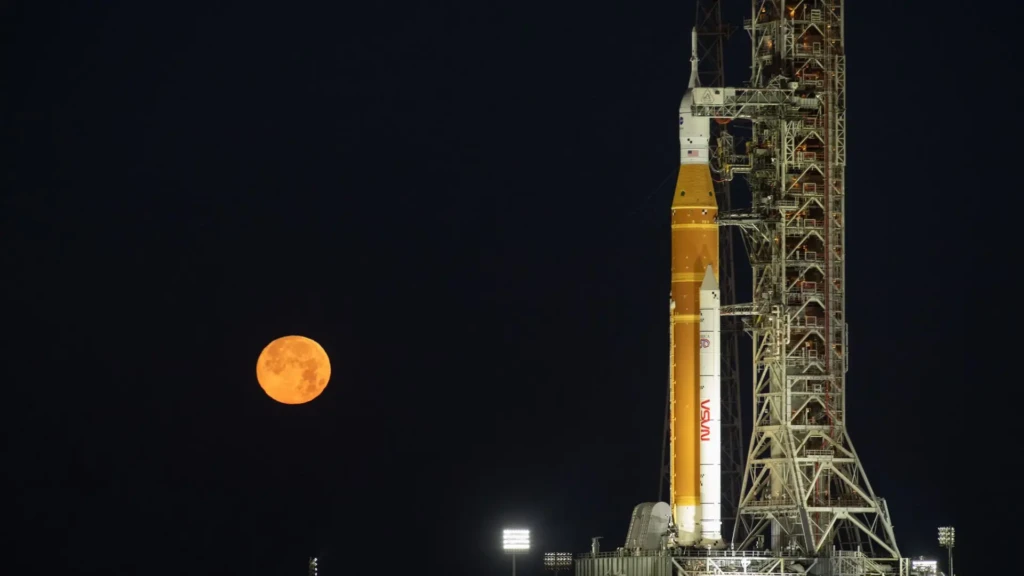
NASA administrator Jared Isaacman on Friday announced big changes to the Artemis Program in order to make it safer and more productive. During a press briefing, he said the Artemis III mission will no longer land on the Moon as it has been altered to a test flight for Artemis IV.
Artemis III, previously targeted for launch in 2028, has been moved up to mid 2027 as NASA wants to increase the launch frequency of Moon missions.
President Trump gave the world the Artemis Program, and NASA and our partners have the plan to deliver. We will standardize architecture where possible, add missions and accelerate flight rate, execute in an evolutionary way, and safely return American astronauts to the Moon,… pic.twitter.com/Qjm6BD5Ipi
— NASA Administrator Jared Isaacman (@NASAAdmin) February 27, 2026
The intention here is to fly lunar rockets as frequently as possible, something which NASA has been unable to do. Artemis I, the first mission of the Artemis Program, launched in 2021 and the subsequent mission has faced exhaustingly long delays.
“Launching a lunar rocket every three years is not a strategy consistent with success,” Isaacman said noting that Artemis has the lowest launch cadence of any other NASA programs such as Mercury, Gemini, Apollo or Space Shuttle. He announced that NASA will now aim for a lunar launch every 10 months instead of three years.
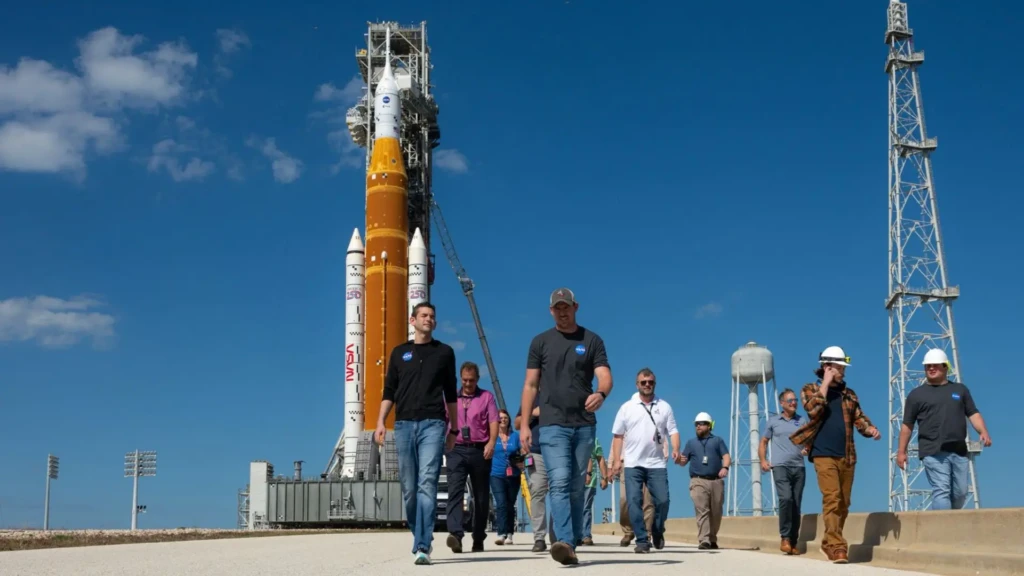
He also said that NASA is cancelling the SLS rocket‘s Exploration Upper Stage and Block IB upgrade to avoid complexities and delays. The rocket currently uses the Interim Cryogenic Propulsion Stage (CLPS) as the upper stage which is flight proven from Artemis I.
Changes NASA made in Artemis III
Under the Artemis III mission, astronauts will no longer land on the Moon but fly to Earth orbit in the Orion spacecraft. This spacecraft will rendezvous with a Moon lander built by SpaceX or Blue Origin to test it for a landing mission during Artemis IV – targeted for a 2028 launch.
Issacman said that NASA will prepare for not one but two Moon landings in 2028 meaning Artemis V is also likely to launch that year.
Explaining the rationale behind altering Artemis III, Issacman said – “We flew Mercury, Gemini and many Apollo missions before landing on the Moon. While we’ve learned much since then…we cannot always jump straight to the desired end state. We need less complexities, less distraction, more launches, more operational muscle memory and extreme focus on the mission.”
What about Artemis II?
The Artemis II mission is currently under repair after engineers found an issue with helium flow on the ICPS. The SLS rocket was rolled back to the Vehicle Assembly Building (VAB) from the launch pad for repair work and is likely to be rolled out again in a few weeks.

Since the March window is no longer plausible, NASA is eyeing April to launch the mission. It includes four astronauts who will fly around the Moon and return in approximately 10 days. The mission objective is to test the Orion spacecraft’s life support systems and other components when its out in high radiation deep space environment with humans onboard.
ALSO READ: Artemis 2 Explained: NASA’s First Crewed Moon Mission Since 1972
ALSO READ: NASA’s Artemis II To Carry Relic Of Humanity’s First Flight And More To The Moon