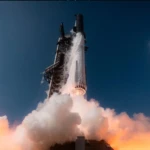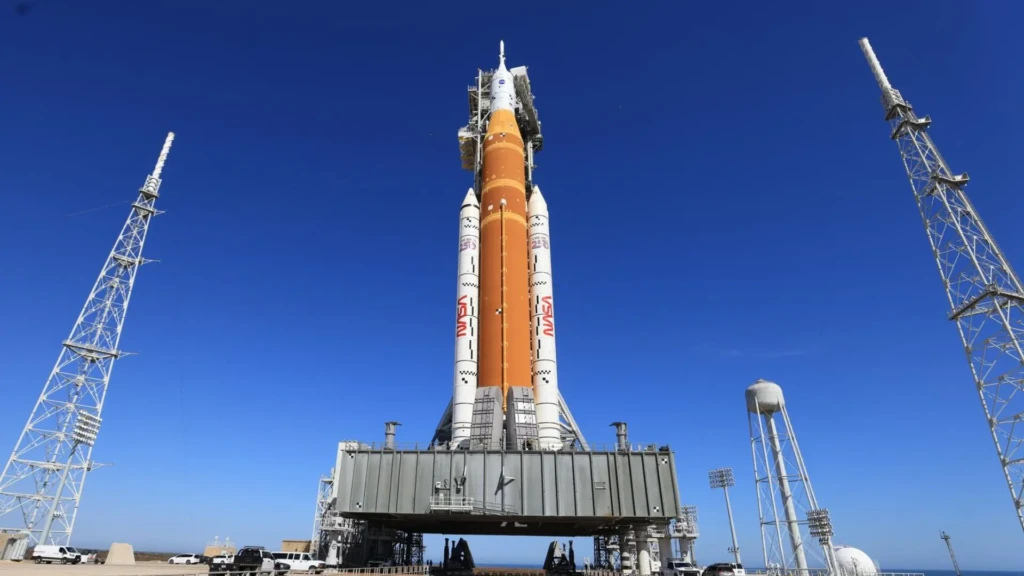
NASA, on Saturday, officially confirmed the launch date for the Artemis II Moon mission. If all goes according to plan, it could launch as early as March 6 as the first crewed lunar mission since 1972. NASA was holding off committing to a date until the successful completion of the SLS rocket‘s wet dress rehearsal. It is a mandatory pre-flight exercise to check the readiness of rocket and spacecraft systems as well as ground communication before launching the mission.
We are targeting no earlier than March 6 for the launch of Artemis II, pending completion of required work at the launch pad and analysis of test data.
The Artemis astronauts have entered quarantine to remain in good health before the mission. https://t.co/SEq4DPmluZ pic.twitter.com/udLNFXbn8P
— NASA Artemis (@NASAArtemis) February 20, 2026
During the two-day long rehearsal, mission teams also conducted a full launch countdown and filled the rocket with 7,30,000 gallons of propellant. The first rehearsal in early February was marred with problems, majorly a liquid hydrogen leakage at the supply line used for propellant loading. Engineers replaced two seals on the line which held up during the ‘confidence test’ last week and again during the rehearsal.
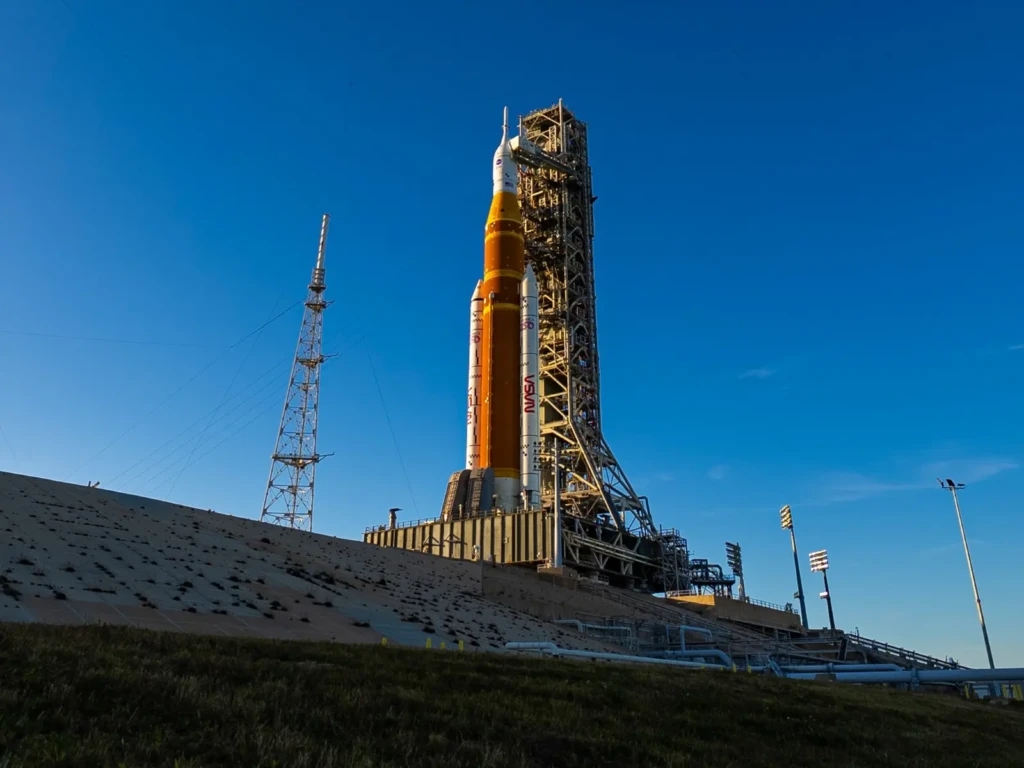
At a press conference on Friday after the rehearsal concluded, Artemis II Launch Director Charlie Blackwell-Thompson said that there was “really no leakage to speak of.” John Honeycutt, chair of the Artemis 2 Mission Management Team, also stated – “Obviously, yesterday was really a really good day for us. I felt the test went extremely well.”
NASA’s Artemis II astronauts enter quarantine
NASA astronauts Reid Wiseman, Victor Glover and Christina Koch, along with Canadian Space Agency’s Jeremy Hansen, have entered quarantine again. They’re currently housed at the Johnson Space Center in Houston, Texas, and will fly to the Kennedy Space Center in Florida five days prior to launch.

The quarantine typically lasts 14 days and it’s meant to protect the astronauts from infections or illnesses that could delay the mission.
Why NASA’s Artemis II is high stakes
The Artemis II mission will be the first to launch four astronauts to the Moon since Apollo 17, which launched in 1972. It’s also the highest number of humans flying on a lunar mission – the Apollo flights only had three.
Another factor that makes Artemis II high-stakes and high-risk is the unknown reliability of the Orion spacecraft with astronauts onboard. Orion has been tested in vacuum during Artemis I in 2022 and it encountered communication problems and more-than-expected erosion of its heat shield. NASA, however, is confident that this won’t be a recurring problem as it has modified Orion’s reentry trajectory to increase safety margins.
Artemis II will last approximately 10 days and it involves Orion taking a figure-8 path from the Earth and return after flying around the Moon once. Lori Glaze, acting associate administrator for NASA’s Exploration Systems Development Mission Directorate, said during the press conference that excitement for Artemis II is “really starting to build.”
“Every night, I look up at the moon and I see it, and I get real excited, because I can really feel she’s calling us. And we’re ready,” Glaze said.
ALSO READ: NASA’s Artemis II Astronauts Will Launch With Smartphones To The Moon, So Will Other Fliers
ALSO READ: NASA’s Artemis II To Carry Relic Of Humanity’s First Flight And More To The Moon