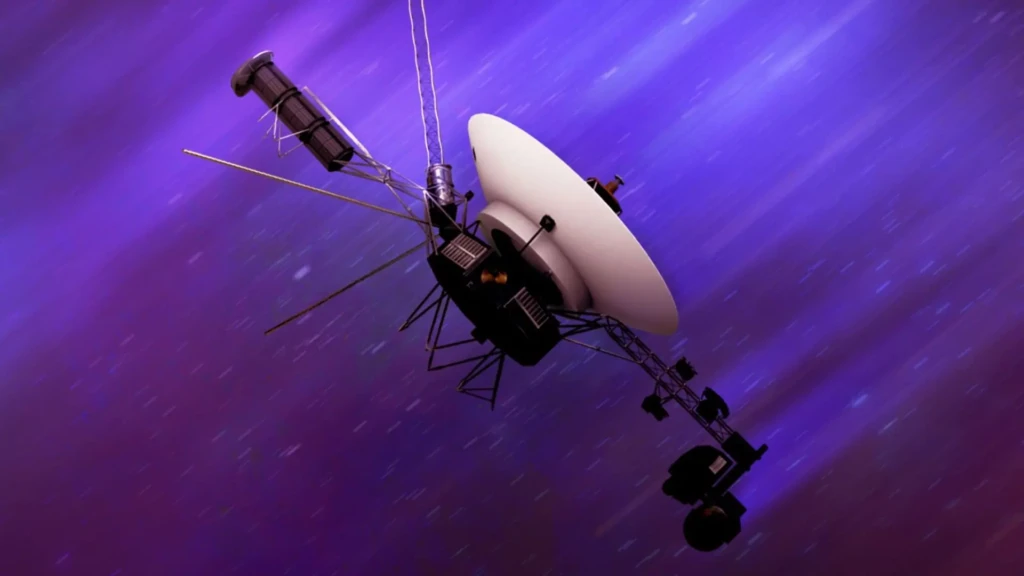
The Voyager 1 spacecraft is set to achieve a milestone this year that will be the first for humankind. In November 2026, the 48-year-old NASA probe will be one light-day away from Earth, 14 years after leaving the solar system. This means radio signals from the spacecraft will take one full day to reach Earth and back. Mars, for instance, is 12 light-minutes away from our planet. As of today, the probe is over 25 billion kilometres away.
Launched on September 5, 1977, Voyager 1 was designed to explore the outer solar system planets primarily Jupiter and Saturn along with their moons and other characteristics. In August 2012, it became the first human-made spacecraft to leave the solar system and enter interstellar space. This was determined by the changes in the atoms, particles, and magnetic fields detected by the onboard instruments outside the heliosphere – a protective bubble of particles created by the Sun.
Its twin – Voyager 2 – which was launched before Voyager 1 on August 20, 1977 – entered interstellar space in November 2018 and both probes together have significantly improved scientists’ understanding of the outer solar system.
Voyager 1 and its cosmic journey
Despite launching after Voyager 2, Voyager 1 was the first to exit the solar system due to its shorter and high-speed path. Its direct trajectory placed it perfectly for flybys of Jupiter and Saturn where stunning discoveries were unfolding. Using a suite of 10 instruments and two cameras, Voyager 1 discovered a thin ring around Jupiter and two new moons – Thebe and Metis – orbiting the gas giant. It discovered five more moons around Saturn and a new ring called the G-ring.
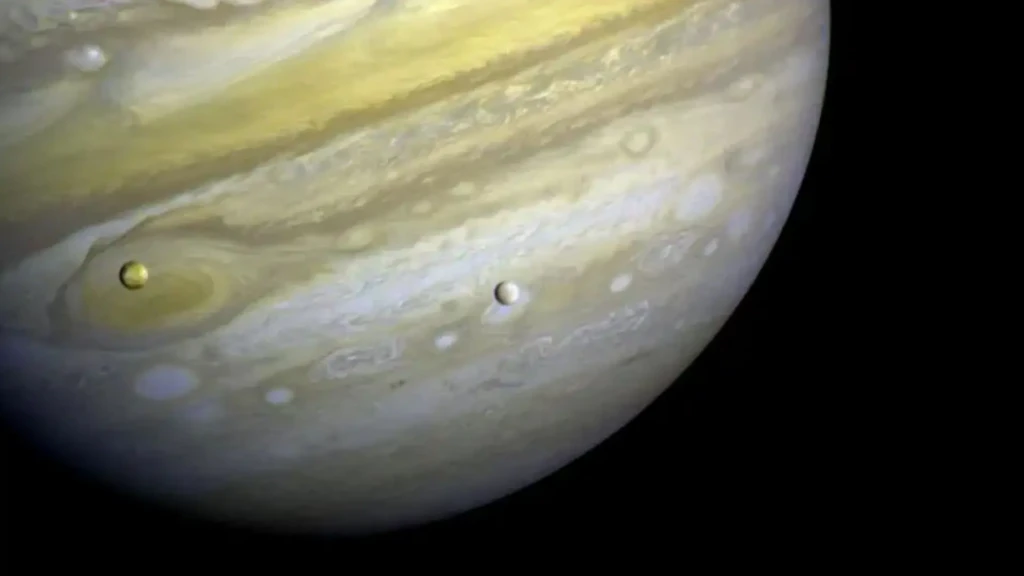
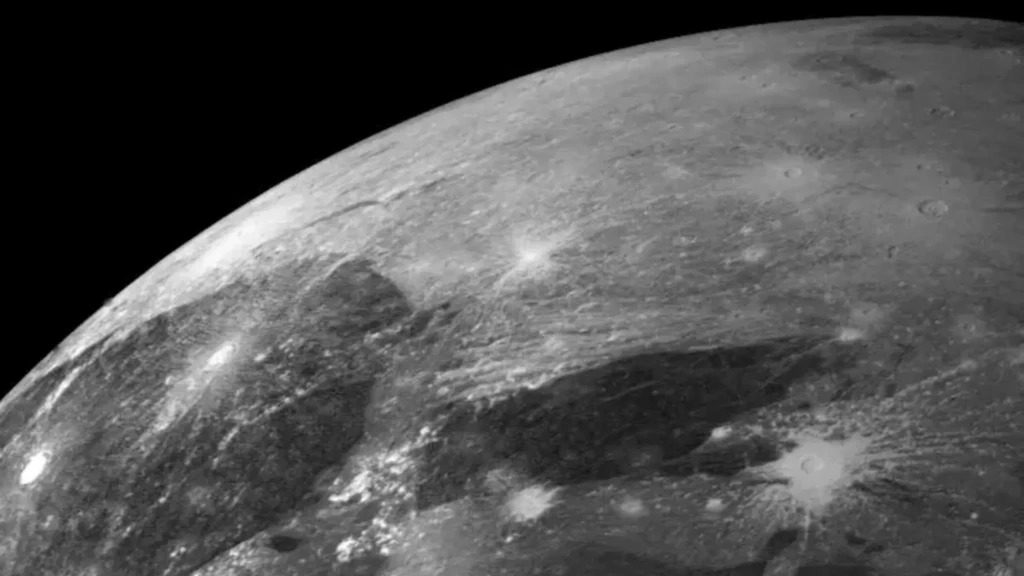
During the April 1978 observations, Voyager 1 revealed that Jupiter’s atmosphere is more turbulent than thought during the Pioneer 10 and 11 missions, and took invaluable closeup photos of the Jovian moons Amalthea, Io, Europa, Ganymede, and Callisto.
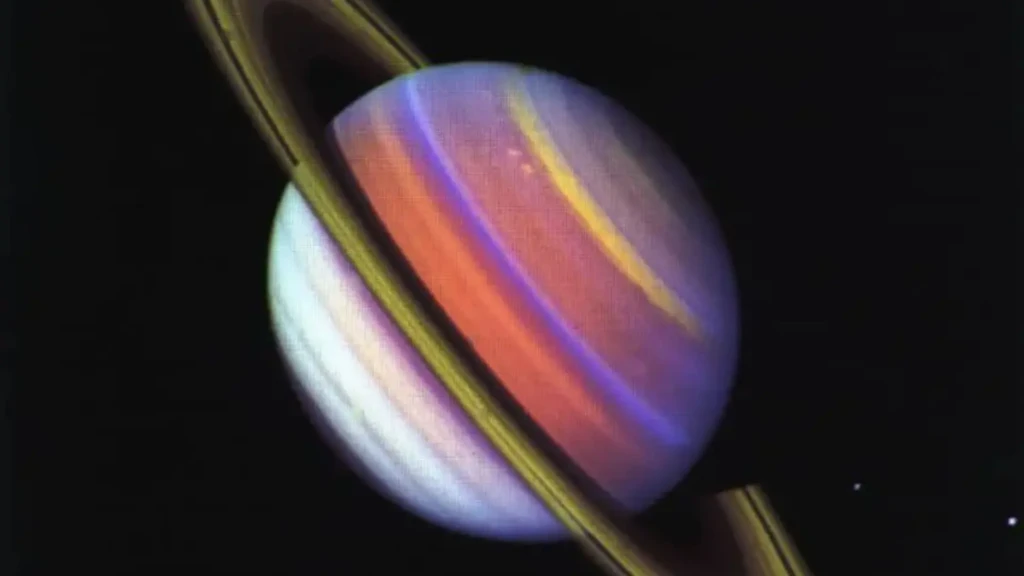
At its closest, the spacecraft was 2,80,000 km from Jupiter and 1,26,000 km from Saturn – where it photographed the moons Titan, Mimas, Enceladus, Tethys, Dione, and Rhea. Thanks to Voyager 1’s flyby, scientists were able to determine that Titan’s surface is hidden by a thick atmosphere composed of 90 percent nitrogen. The presence of methane and complex hydrocarbons also indicated that Titan might be a stage for prebiotic chemical reactions.
As of January 2026, Voyager 1 reportedly has three functional instruments as the rest were shut down to conserve energy. According to NASA, the Voyager twins use three radioisotope thermoelectric generators (RTGs) that generate electricity from the heat of decaying plutonium. Instruments that were drawing too much power and were of relatively less importance were turned off right after the planetary flybys decades ago. Voyager 1’s cameras – which delivered the iconic ‘pale blue dot’ image of Earth in 1990 – were among these devices that were shut down forever.
Since March 2025, only three instruments are active on both Voyager probes – those that NASA considers important to study interstellar space.
The passage of time seems to be having its effect on the probes as they repeatedly experience communication blackouts; the most recent was reported in December 2024. NASA expects that both probes would be active through early 2031 with at least one operational instrument, before the engineers have to bid farewell to the pioneers for good.
ALSO READ: NASA Losing Hope Of Recovering Its Mars Orbiter MAVEN; ‘Looking Very Unlikely’
ALSO READ: The Fermi Paradox: Why We’ve Never Seen Aliens