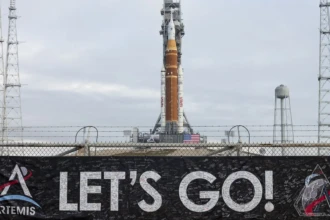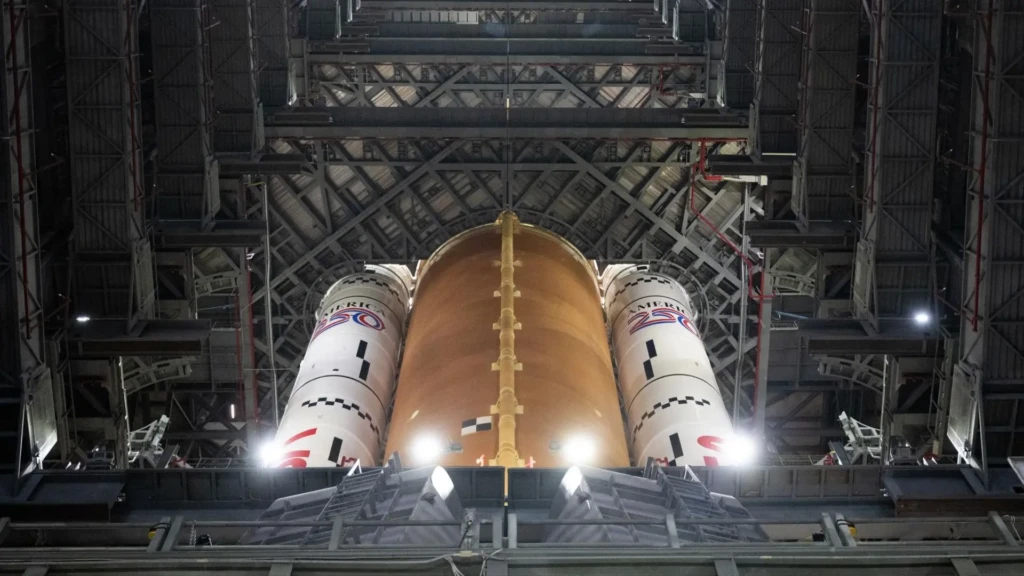
The Space Launch System (SLS) rocket will be rolled out to the launch pad for the Artemis 2 mission no earlier than January 17, NASA has announced. The rocket (322-feet-tall) is currently stacked with the Orion spacecraft inside the Kennedy Space Center’s Vehicle Assembly Building (VAB) in Florida. According to NASA, the 6.5 kilometres journey from the VAB to Launch Pad 39B will take up to 12 hours and teams are working to close out all crucial tasks prior to the rollout.
NASA is planning on rolling out the Artemis II rocket and spacecraft from the Vehicle Assembly Building to Launch Pad 39B at @NASAKennedy no earlier than Jan. 17. The four-mile journey will take up to 12 hours. pic.twitter.com/U4sAPzG5tJ
— NASA (@NASA) January 10, 2026
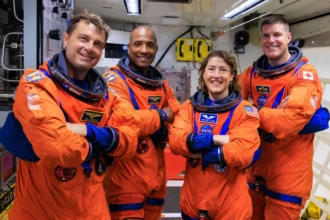
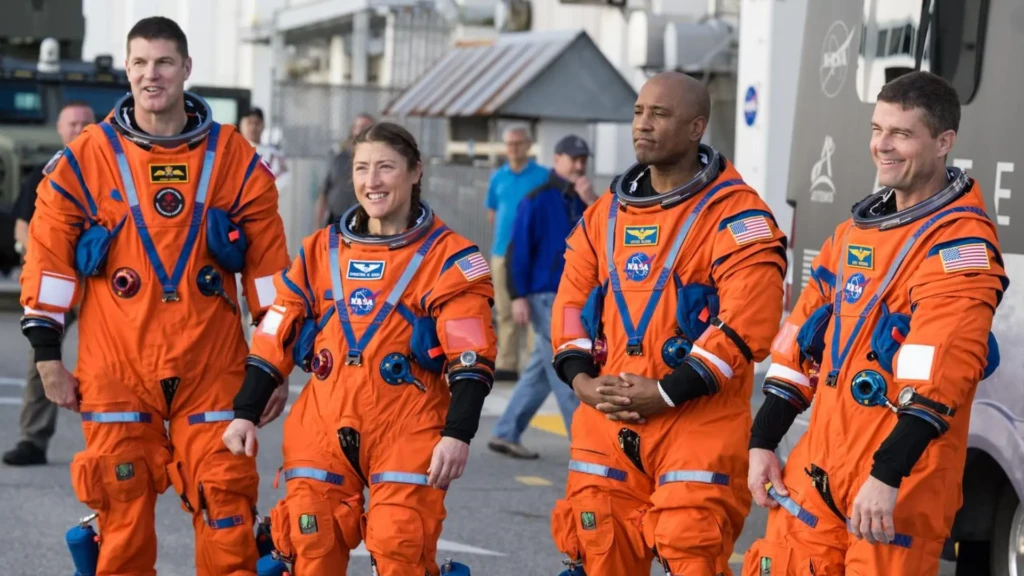
Artemis 2 is likely to launch as soon as February 6 although the launch window runs until April 6. The four crew members include Reid Wiseman (mission commander), Victor Glover (mission pilot), Christina Koch (mission specialist) and Jeremy Hansen (mission specialist).
The mission teams have been troubleshooting a few issues with the complex SLS-Orion systems. Technicians recently found a cable issue with the flight termination system; it will soon be replaced with a new one and tested in the following days. Orion also experienced some problems with its pressure valve, which has been replaced, and a leaky ground support hardware required for supplying oxygen into the spacecraft.
What’s next for NASA?
The agency has planned a wet dress rehearsal at the end of January. During a wet dress rehearsal, a rocket is loaded with propellant and teams conduct a launch countdown before safely unloading the propellant. More than 7,00,000 gallons of cryogenic propellants will be loaded into the SLS rocket during the rehearsal while the Artemis 2 astronauts are inside the Orion spacecraft.

“The wet dress rehearsal will include several “runs” to demonstrate the launch team’s ability to hold, resume, and recycle to several different times in the final 10 minutes of the countdown, known as terminal count,” NASA said in a statement.
“Following a successful wet dress rehearsal, the mission management team will assess the readiness of all systems before committing to a launch date,” it further said.
The first launch period begins on January 31 until February 14 with favourable dates being February 6, 7, 8, 10 and 11. The second phase starts February 28 to March 13 with launch dates being March 6, 7, 8, 9 and 11, and the third and final phase starts March 27 to April 10 with launch opportunities on April 1, 3, 4, 5 and 6.
Artemis 2 will mark NASA’s first crewed lunar mission in over 50 years [the last being Apollo 17 in 1972]. This lunar mission is aimed at testing the Orion spacecraft’s life support systems and other critical elements in deep space with humans. The astronauts will follow a figure 8 trajectory after launching from Earth and return after flying behind the Moon in 10 days.
Artemis 2 will be historic because it will make Glover the first person of colour and Koch the first woman to launch on a lunar mission.
ALSO READ: NASA’s Artemis II Crewed Moon Mission May Launch On Feb 6 – All The Records It Will Set
ALSO READ: Decoding NASA’s SLS Moon Rocket: A Powerful Launcher With A High Price Tag