If you’re looking forward to witness unforgettable cosmic events, 2026 will not disappoint. From solar and lunar eclipses to rare planetary alignments and supermoons, several such events are lined up starting as early as first week of January. Here are the biggest ones that will be the highlight of the year.
What’s up in the night sky for January?
Jupiter is at its biggest and brightest all year, Saturn and the Moon get close for a conjunction, and the Beehive Cluster buzzes into view! pic.twitter.com/bDNACdfQ1N
— NASA JPL (@NASAJPL) January 1, 2026
Quadrantids meteor shower
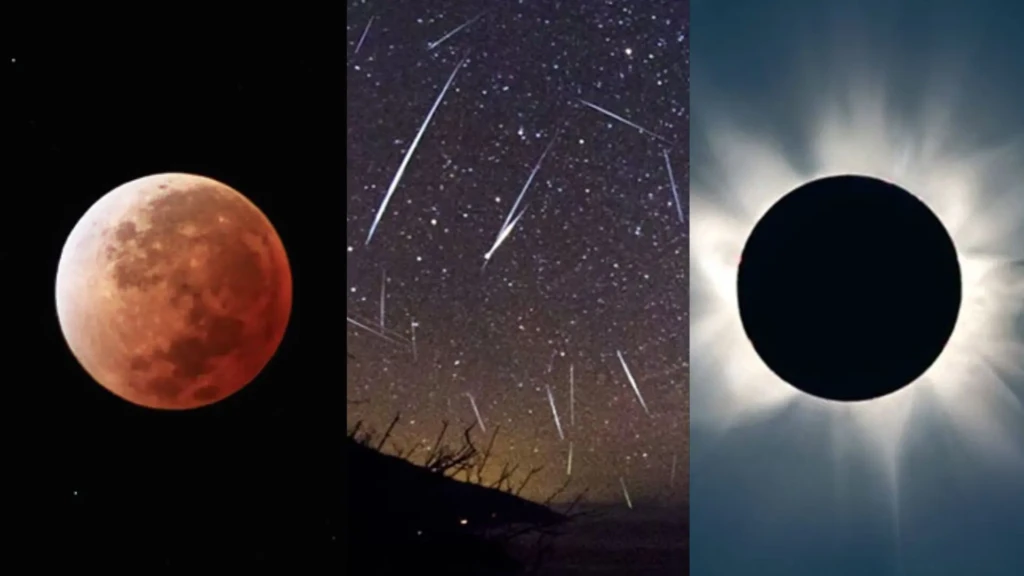
The Quadrantids meteor shower, which peaks on January 3-4, is considered one of the best of the year. According to NASA, one can see between 60 to as many as 200 meteors every hour under perfect conditions. The Quadrantids are visible in the northern hemisphere and appear to emerge from the Quadrans Muralis region located between the Bootes and Draco constellations near the end of the handle of the “Big Dipper.”
The Wolf Supermoon
The first supermoon of 2026 will rise on January 3 appearing visibly brighter and larger. The supermoon, also called the Wolf Moon, will be around 3,62,312 km from Earth and about 14% larger and 30% brighter.

Supermoons occur when the Moon reaches within 90% of its closest point to Earth. Because the Moon circles our planet in an elliptical orbit, its size and brightness change as it moves along its path.
Jupiter reaches opposition
On January 10, Jupiter will reach opposition, meaning Earth will be directly between this gas giant and the Sun. This planetary alignment will make Jupiter very easy to spot in the night sky. NASA says the planet will be brighter and bigger this month than it will all year.
To spot Jupiter, look towards east in the constellation Gemini. It will be the second brightest object post sunset after the Moon and Venus.
Saturn-Moon conjunction
On January 23, the Moon and Saturn will be positioned close to each other in what is called a ‘conjunction.’ During a conjunction, two objects appear to be just a few degrees apart in the sky even though they are millions of kilometres away from each other. In the western sky, Saturn will appear right below the Moon after sunset.
Annular solar eclipse
The annular solar eclipse will be the first solar eclipse of 2026 and it will occur on February 17. An annular solar eclipse occurs when the Moon is near or at the farthest distance from Earth and thus fails to entirely block the Sun. This creates a ring-of-fire effect (see pic below).
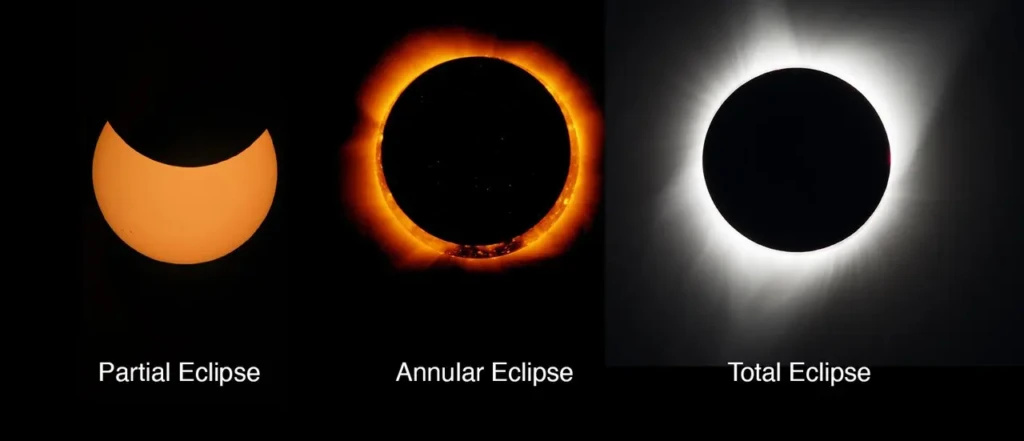
Unfortunately, the annular eclipse will be visible only from Antarctica. Regions across Africa, South America, Pacific Ocean, Atlantic Ocean, and Indian Ocean will, however, get to witness a partial eclipse.
Total lunar eclipse
Total lunar eclipse will grace the skies on March 2-3. It will also be known as ‘Blood Moon’ due to the reddish-orange hue the Moon will take on while passing through Earth’s shadow.
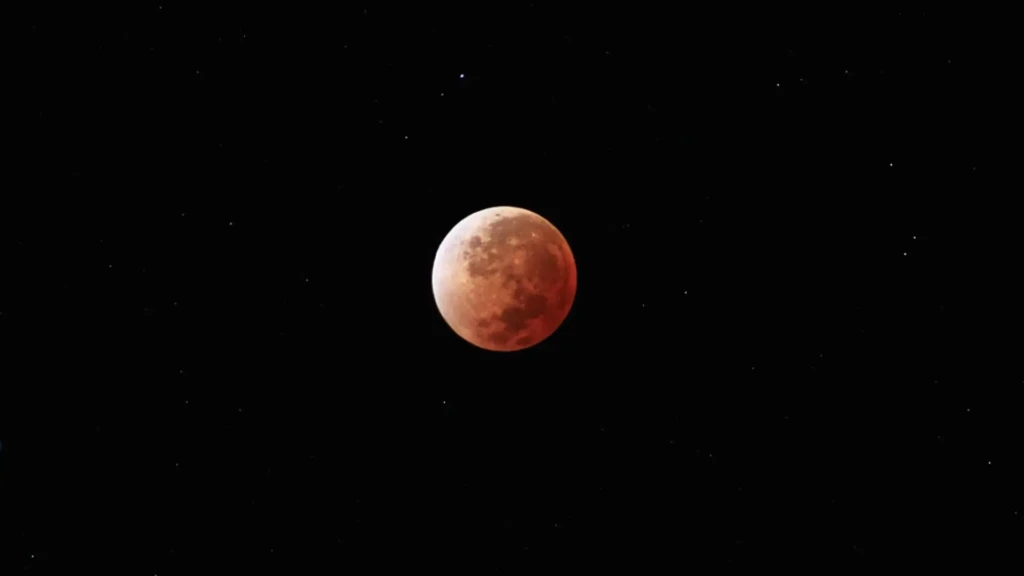
This lunar eclipse will be visible across Asia, Australia, Pacific Islands and the Americas.
Total solar eclipse
During the total solar eclipse on August 12, the Moon will completely block the Sun unlike the annular eclipse. NASA says it will be visible in Greenland, Iceland, Spain, Russia, and a small area of Portugal, whereas a partial eclipse will be visible in Europe, Africa, North America, the Atlantic Ocean, Arctic Ocean, and Pacific Ocean.
The totality – period of time the Moon completely covers the Sun – will reportedly last 2 minutes and 18 seconds.
December supermoon
December 24 brings another supermoon of the year as the full Moon will be closest to Earth since 2018. It will also be the last full Moon of 2026 and will appear bigger and brighter due to its orbital position around our planet.
ALSO READ: From NASA’s Artemis II To ISRO’s Gaganyaan, Biggest Space Events Awaiting Us In 2026
ALSO READ: Ax-4, NISAR And More: Reliving ISRO’s Biggest Spaceflight Milestones In 2025